Furnace Carbon Monoxide: Warning Signs, Causes and How to Stay Safe
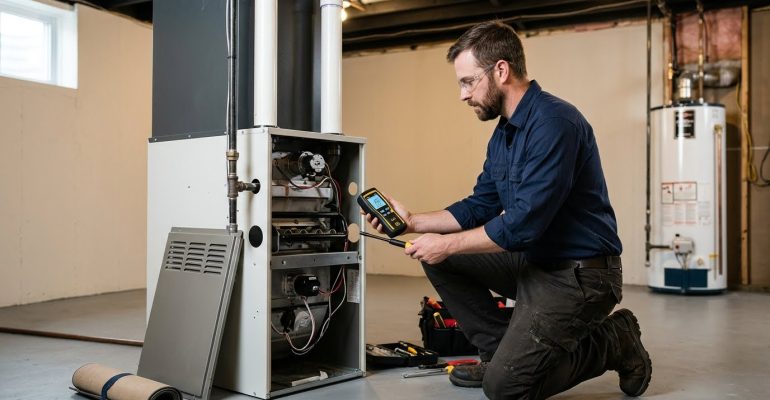
Furnace Carbon Monoxide: Warning Signs, Causes and How to Stay Safe

Aire One East Heating & Cooling, 1910 Dundas St E #117, Whitby
Furnace carbon monoxide is the colourless, odourless gas a fuel-burning furnace can release into your home when something goes wrong with combustion or venting, such as a cracked heat exchanger, a blocked vent, or dirty burners. A healthy, well-maintained furnace sends its exhaust safely outside, so the risk is low, but you cannot see, smell, or taste carbon monoxide, which is why working CO alarms and a yearly inspection matter so much in a Durham winter. This guide covers the warning signs, the most common causes, what to do if your alarm goes off, the 2026 Ontario CO alarm rules, and how to prevent problems. For a full tune-up checklist, see our furnace maintenance guide.
- Carbon monoxide has no colour, smell, or taste, so a working CO alarm is the only reliable way to know it is there.
- Furnace carbon monoxide problems usually come from a cracked heat exchanger, a blocked vent, poor combustion, or a damaged flue pipe.
- Flu-like symptoms such as headache, nausea, and dizziness that ease when you leave the house are a classic warning sign.
- Since January 1, 2026, Ontario homes with a fuel-burning appliance need CO alarms next to each sleeping area and on every storey.
- A yearly furnace inspection with a combustion and venting check is the best prevention.
Short answer: furnace carbon monoxide leaks happen when combustion gases cannot vent safely outside, most often because of a cracked heat exchanger, a blocked vent or flue, or dirty burners. Watch for a sounding CO alarm, flu-like symptoms that improve away from home, a yellow burner flame, soot, or heavy window condensation.
If your CO alarm sounds, get everyone outside and call 911. After emergency services clear the home, have a licensed gas technician inspect the furnace before you use it again. Aire One East offers 24/7 heating service across Durham Region. Call 905-576-7600.
- What is furnace carbon monoxide and how does it happen?
- 7 warning signs of furnace carbon monoxide
- What causes furnace carbon monoxide leaks
- What to do if your CO alarm goes off
- CO alarm rules in Ontario (2026)
- Warning signs at a glance
- How to prevent furnace carbon monoxide problems
- Key terms in this article
- Frequently asked questions
What is furnace carbon monoxide and how does it happen?
A gas furnace burns natural gas to make heat. When combustion is clean and complete, the main exhaust gases are carbon dioxide and water vapour, and the venting system carries them outside through a chimney or PVC vent pipes. Carbon monoxide forms when the fuel does not burn completely, for example when the burners are dirty or the furnace is not getting enough air. It only becomes dangerous inside your home when that exhaust cannot get out the way it should, because of a crack, a blockage, a disconnected pipe, or air pressure that pulls the exhaust back in. That is why furnace carbon monoxide is mostly a venting and maintenance problem, and why it is so preventable.

7 warning signs of furnace carbon monoxide
1. Your CO alarm sounds
This is the clearest sign of all. A CO alarm sound is different from a smoke alarm, so learn the difference, along with the separate low-battery and end-of-life chirps. Treat a full alarm as real until a technician rules out furnace carbon monoxide.
2. Flu-like symptoms that ease when you leave
Headache, nausea, dizziness, tiredness, and confusion are common early symptoms of carbon monoxide exposure. A key clue is that several people or pets in the home feel unwell at the same time, without a fever, and feel better after spending time away from the house. If that sounds familiar, furnace carbon monoxide could be the cause, so get outside and call 911.
3. A yellow or flickering burner flame
On most gas furnaces, a healthy burner flame is steady and mostly blue. A lazy yellow or orange flame, or one that flickers or lifts off the burner, can mean incomplete combustion, which is how furnace carbon monoxide is produced. Never open the burner compartment yourself, but if you notice this through the sight glass, book an inspection.
4. Soot or streaks around the furnace or vents
Black or brown soot on the furnace cabinet, around the flue pipe, or near the vent outside is a sign of poor combustion or exhaust escaping where it should not, and one of the most visible signs of furnace carbon monoxide risk.
5. Heavy condensation on windows
Lots of moisture on the inside of windows in winter can have many causes, but combined with other signs it can point to exhaust gases, which contain water vapour, not venting properly.
6. Rust, water, or damage on the flue pipe
Rust streaks, corrosion, water stains, or a sagging or disconnected section of flue or vent pipe all mean the exhaust path may not be sealed, a common source of furnace carbon monoxide.
7. A burner or pilot that keeps going out
On older furnaces with a standing pilot, a pilot that keeps going out can mean a venting or draft problem. On newer furnaces, frequent lockouts or a furnace that keeps shutting off can also point to venting faults that a technician should check.
What causes furnace carbon monoxide leaks
Most furnace carbon monoxide problems trace back to one of these causes. All of them are jobs for a licensed gas technician, and in Ontario gas appliance work must be done by a TSSA-certified technician.
- Cracked heat exchanger: years of heating and cooling can crack the metal that separates combustion gases from your household air. This is the most serious cause and often means repair or replacement.
- Blocked vent or chimney: snow, ice, a bird nest, or debris can block the vent, so exhaust backs up into the home. High-efficiency furnaces vent through two white PVC pipes that must stay clear in a Durham winter.
- Dirty or poorly adjusted burners: dust, rust, or the wrong gas pressure leads to incomplete combustion and more carbon monoxide.
- Damaged or disconnected flue pipe: rusted, cracked, or loose joints let exhaust escape into the basement.
- Backdrafting: strong exhaust fans, a fireplace, or a very tight home can create negative pressure that pulls exhaust back down the vent.
- Improper installation or sizing: a furnace that was installed without proper venting, combustion air, or sizing is more likely to have problems.

If a technician finds a cracked heat exchanger on an older furnace, our guide on whether to repair or replace your furnace explains the options.
What to do if your CO alarm goes off
- If anyone has symptoms, get everyone, including pets, out of the house right away.
- Call 911 from outside, not from inside the home.
- Do not go back inside until emergency services tell you it is safe.
- If no one has symptoms, check whether the alarm is signalling a low battery or end-of-life, which sound different from a full alarm. If you are not sure, treat it as a real alarm.
- Before you use the furnace again, have a licensed gas technician inspect it and confirm whether furnace carbon monoxide was the source.
Carbon monoxide has no smell. If you smell rotten eggs, that is natural gas, not CO: leave the house and call the Enbridge Gas emergency line at 1-866-763-5427 or 911 from outside.
CO alarm rules in Ontario (2026)
Under the Ontario Fire Code, a home with a fuel-burning appliance, such as a gas furnace, gas water heater, or fireplace, or with an attached garage, must have a working CO alarm next to each sleeping area. As of January 1, 2026, alarms are also required on every storey of the home. Landlords must install and maintain CO alarms for tenants. Test your alarms every month, learn the difference between the alarm, low-battery, and end-of-life signals, and replace each unit by the end-of-life date printed on it, following the manufacturer's instructions. Most Durham homes with a gas furnace need at least one alarm per floor plus one outside the bedrooms to catch furnace carbon monoxide early.
Warning signs at a glance
| What you notice | What it may mean | What to do |
|---|---|---|
| CO alarm sounding | Carbon monoxide in the home | Get out, call 911 from outside |
| Headache, nausea, dizziness at home | Possible CO exposure | Get out, call 911 from outside |
| Yellow or flickering burner flame | Incomplete combustion | Turn heat down, book inspection |
| Soot around furnace or vents | Poor combustion or exhaust leak | Book inspection soon |
| Rust or gaps on flue pipe | Exhaust path not sealed | Book inspection soon |
| Snow or ice over PVC vents | Blocked exhaust | Clear by hand, call if it keeps happening |
| Rotten egg smell | Natural gas leak, not CO | Leave, call Enbridge 1-866-763-5427 from outside |
Warning signs of furnace carbon monoxide and gas problems, verified October 2026.
How to prevent furnace carbon monoxide problems
The best protection against furnace carbon monoxide is a yearly inspection before the heating season. A licensed technician checks the heat exchanger for cracks, cleans and adjusts the burners, measures combustion and CO levels in the flue, and tests the venting and draft. At home:
- Install CO alarms next to each sleeping area and on every storey, and test them monthly.
- Keep the outside vent pipes and chimney clear of snow, ice, and debris after every storm.
- Change the furnace filter every one to three months so the furnace does not overheat.
- Keep the area around the furnace clear so it gets enough combustion air.
- Never run a generator, barbecue, or car inside a home or attached garage.
Our maintenance and protection plans include a yearly furnace inspection and priority service. If your furnace has other symptoms, such as a furnace blowing cold air or one that has stopped heating, see our furnace not working guide. Our team also handles emergency furnace repair in Ajax and furnace repair in Oshawa, 24/7.
Key terms in this article
- Carbon monoxide (CO): a colourless, odourless, poisonous gas produced when fuel does not burn completely.
- Heat exchanger: the metal chamber that transfers heat to your household air while keeping combustion gases separate.
- Flue or vent pipe: the pipe that carries exhaust gases from the furnace to the outdoors.
- Backdrafting: when exhaust flows back into the home instead of out the vent, often because of negative air pressure.
- Combustion analysis: a technician's test that measures how cleanly the furnace burns and how much CO is in the exhaust.
Frequently asked questions
| Your carbon monoxide questions, answered |
|---|
| What are the signs of carbon monoxide from a furnace? The clearest sign is a sounding CO alarm. Other signs of furnace carbon monoxide include flu-like symptoms such as headache, nausea, and dizziness that ease when you leave home, a yellow or flickering burner flame, soot around the furnace or vents, heavy window condensation, and rust or gaps on the flue pipe. |
| What should I do if my carbon monoxide alarm goes off? If anyone has symptoms, get everyone out of the house right away and call 911 from outside. Do not go back in until emergency services say it is safe. Before you use the furnace again, have a licensed gas technician inspect it and find the source. |
| Can a furnace leak carbon monoxide when it is off? A furnace that is not running is not burning fuel, so it is not producing carbon monoxide. The risk comes when it runs with a cracked heat exchanger, a blocked vent, or poor combustion. Other fuel-burning appliances, such as a water heater, can still produce CO, so keep your alarms working at all times. |
| Where do CO alarms need to go in an Ontario home? Under the Ontario Fire Code, homes with a fuel-burning appliance, fireplace, or attached garage need a working CO alarm next to each sleeping area, and as of January 1, 2026, on every storey. Test them monthly and replace them by the end-of-life date on the unit. |
| How often should a furnace be checked for carbon monoxide? Once a year, ideally in the fall before the heating season. A yearly inspection should include a heat exchanger check, a combustion test, and a venting and draft check. Call 905-576-7600 to book one in Durham Region. |
Do not take our word for it alone. Read our 364 verified reviews on Google, and see the Heating, Refrigeration and Air Conditioning Institute of Canada for what accredited contractors are expected to deliver.