Furnace Igniter Problems: Signs, Causes and Fixes
 Ben Amina
Aire One East Heating & Cooling, 1910 Dundas St E #117, Whitby
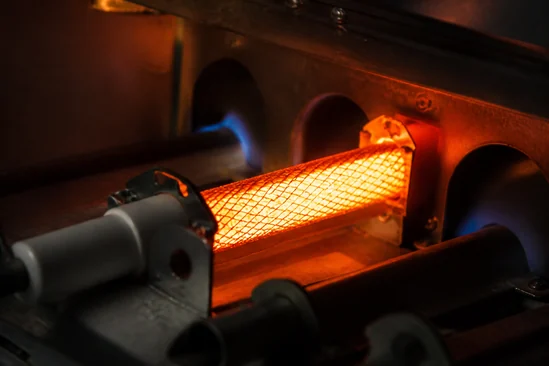
A furnace igniter is the small part that lights the gas burners every time your furnace starts a heating cycle. On most furnaces built in the last few decades it is a hot surface igniter, a thin ceramic element that glows bright orange, though some use a spark igniter or an intermittent pilot. When the igniter weakens or cracks, the furnace tries to start, fails to light, and eventually locks out, leaving your Durham home without heat, often on the coldest night of the year. The good news is that a failed igniter is one of the most common and most affordable furnace repairs. This guide explains how igniters work, the seven signs of a bad one, what causes them to fail, and what a repair involves. If your furnace has no heat for another reason, see our furnace not working guide.
- Most modern furnaces use a hot surface igniter that glows orange to light the gas; older units may use a spark igniter or standing pilot.
- A furnace that clicks or hums, tries to start, then shuts down without a flame often has a weak or cracked igniter.
- Igniters wear out with age and heat cycling, and they crack easily if touched or knocked.
- A furnace that locks out after several failed tries usually needs a technician, not repeated resets.
- Igniter replacement is a quick repair, but it is gas appliance work for a licensed technician.
Short answer: a bad furnace igniter shows up as a furnace that starts its cycle, runs the inducer fan, but never lights, then tries again and locks out. You may see no orange glow, a visible crack, or a blinking error light on the control board.
Check that the thermostat is calling for heat, the power switch is on, and the filter is clean, then call a technician. Aire One East offers 24/7 furnace repair across Durham Region. Call 905-576-7600.
What does a furnace igniter do?
Every heating cycle follows the same sequence. The thermostat calls for heat, the inducer fan starts to clear the combustion chamber, and a pressure switch confirms the venting is working. Then the furnace igniter heats up or sparks. Once it is hot enough, the gas valve opens and the burners light. A flame sensor confirms the flame within a few seconds, and if it does not, the gas valve closes for safety. After the burners warm the heat exchanger, the blower starts and sends warm air through your home. If the igniter fails at its step, the gas never lights, so the furnace shuts the gas off, waits, and tries again. After a few failed tries, most furnaces lock out to protect your home.
Types of furnace igniter
| Type | How it works | Common on |
|---|---|---|
| Hot surface igniter | A ceramic element heats until it glows orange, then lights the gas | Most furnaces built from the 1990s on |
| Intermittent pilot or spark igniter | A spark lights a small pilot flame, which then lights the burners | Some mid-efficiency and older models |
| Standing pilot | A small flame burns all the time to light the burners | Older conventional furnaces |
7 signs of a bad furnace igniter
- No heat, but the inducer fan runs: you hear the furnace start, the small fan runs, but the burners never light.
- Repeated start attempts: the furnace tries to light, stops, waits, and tries again.
- Lockout: after a few failed tries the furnace stops completely until it is reset or the lockout timer ends.
- No orange glow: through the sight glass you see no glow when the furnace should be lighting.
- A dim or slow glow: a weak igniter may glow faintly or take longer, lighting some times and not others.
- A visible crack or white spot: damage on the ceramic element is a sure sign it needs replacing.
- A blinking error light: the control board's LED flashes an ignition failure code, often listed on a label inside the furnace door.
Clicking or rapid on and off cycling can also come from other parts, such as a dirty flame sensor or a pressure switch problem, which is why a technician tests before replacing. Our furnace blowing cold air guide covers the flame sensor in more detail.
Why a furnace igniter fails
- Age and heat cycling: heating up and cooling down thousands of times each winter wears the element out.
- Touch and handling: oils from bare fingers can create hot spots that crack the ceramic, and the element is fragile if knocked.
- Voltage problems: wiring faults or voltage spikes can overheat and burn out the igniter.
- Dirt and dust: buildup on the element can affect how it heats.
- Short cycling: a furnace that turns on and off too often uses up the igniter faster. See our furnace short cycling guide.
- Wrong replacement part: an igniter that does not match the furnace may fail early.
Quick checks you can do safely
Before you call, these checks rule out simple causes. None of them involve opening the burner area or touching the igniter.
- Set the thermostat to HEAT and a few degrees above room temperature, and replace weak batteries.
- Make sure the furnace power switch is on and the breaker has not tripped.
- Make sure the front panel is closed tightly, since a door switch stops the furnace when it is loose.
- Replace a dirty filter, and clear snow or ice from the outdoor PVC vent pipes.
- Look at the control board light through the sight glass and note the blink pattern for the technician.
Furnace igniter replacement
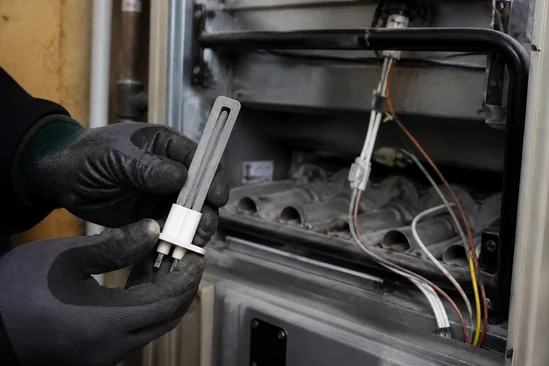
When a technician confirms the furnace igniter is the problem, replacement is usually quick. The technician shuts off power and gas, removes the burner access panel, tests the igniter's resistance and the voltage reaching it, and installs the correct replacement for your furnace model, handling the new element only by its base. Then they test several full heating cycles, check the flame sensor and gas pressure, and confirm the furnace lights reliably. Because it involves the gas burner area, igniter work in Ontario should be done by a TSSA-certified gas technician. Our team handles emergency furnace repair in Ajax, furnace repair in Oshawa, and furnace repairs across Durham Region 24/7.
If your furnace is older and other parts are failing too, our guides on how long a furnace lasts in Ontario and whether to repair or replace your furnace can help you decide.
How to make an igniter last
You cannot make an igniter last forever, but you can help it last longer. Book a yearly furnace tune-up so a technician can inspect the igniter for cracks, clean the burners and flame sensor, and check voltage before the cold arrives. Change the filter every one to three months so the furnace does not overheat or short cycle. Keep the furnace area clean and dry, and never touch the igniter when the panel is off. Our furnace maintenance guide lists what a visit covers, and our maintenance and protection plans include it every year, with priority service if your furnace fails in a cold snap.
Key terms in this article
- Hot surface igniter: a ceramic element that glows hot enough to light the gas burners.
- Inducer fan: a small fan that clears the combustion chamber before the burners light.
- Flame sensor: a rod that confirms the burners are lit, so gas only flows with a flame.
- Lockout: a safety shutdown after several failed ignition attempts.
- Delayed ignition: gas lighting late after building up, often causing a bang.
Frequently asked questions
| Your furnace igniter questions, answered |
|---|
| How do I know if my furnace igniter is bad? Common signs of a bad furnace igniter are a furnace that runs its inducer fan but never lights, repeated start attempts, a lockout after several tries, no orange glow or a dim glow, a visible crack or white spot on the element, and a blinking ignition error light on the control board. |
| How long does a furnace igniter last? A hot surface igniter typically lasts several years, but its life depends on how often the furnace cycles, voltage, dust, and handling. Short cycling and touching the element can shorten it. A yearly tune-up helps catch a weak igniter before it fails. |
| Can I replace a furnace igniter myself? Igniter replacement involves the gas burner area, so in Ontario it should be done by a TSSA-certified gas technician. The element is fragile, must match the furnace model, and should be tested along with the flame sensor and gas pressure after installation. |
| Why does my furnace click but not light? Clicking without lighting often means the furnace igniter is weak or cracked, but it can also be a dirty flame sensor, a gas supply problem, or a pressure switch fault. Do not keep resetting it. Check the thermostat, power, filter, and vents, then call a technician. |
| Is a bad furnace igniter dangerous? A failed igniter itself usually just leaves you without heat, because the furnace shuts the gas off when it cannot light. Repeated resets, however, can let gas build up and cause a delayed ignition. If you smell gas, leave and call Enbridge at 1-866-763-5427 from outside. |
Do not take our word for it alone. Read our 364 verified reviews on Google, and see the Heating, Refrigeration and Air Conditioning Institute of Canada for what accredited contractors are expected to deliver.
References and further reading