Furnace Flame Sensor: Signs, Cleaning and Replacement
 Ben Amina
Aire One East Heating & Cooling, 1910 Dundas St E #117, Whitby
A furnace flame sensor is a thin metal rod that sits in the burner flame and tells your furnace the gas has actually lit. It is one of the most important safety parts in a gas furnace, because it stops gas from flowing when there is no flame to burn it. It is also one of the most common reasons a furnace lights, runs for a few seconds, then shuts off and tries again. Over time the rod collects a thin coating from combustion, the signal gets weak, and the furnace thinks the flame has gone out even when it has not. In Durham Region we see this on the first cold weeks of every heating season. This guide explains how a flame sensor works, the six signs of a dirty or failing one, what cleaning and replacement involve, and how to keep it working all winter.
- The flame sensor confirms the burners are lit, and closes the gas valve within seconds if it cannot detect a flame.
- The classic sign of a dirty sensor is a furnace that lights, runs a few seconds, then shuts off and tries again.
- Most problems come from carbon and oxide buildup, which a technician can clean off in minutes.
- A cracked porcelain base, a corroded rod, or a bad connection means the sensor needs replacing.
- A yearly tune-up includes flame sensor cleaning and testing, which prevents most no-heat calls.
Short answer: if your furnace lights, the burners run for a few seconds, and then they shut off and the furnace retries or locks out, the flame sensor is the most likely cause. Usually it just needs cleaning. Sometimes it needs replacing.
Check the filter, thermostat, and outdoor vents first, then call a technician to clean and test the sensor. Aire One East offers 24/7 furnace repair across Durham Region. Call 905-576-7600.
- What does a furnace flame sensor do?
- 6 signs of a bad furnace flame sensor
- Why a furnace flame sensor gets dirty or fails
- Furnace flame sensor or igniter?
- Cleaning a furnace flame sensor
- When to replace a furnace flame sensor
- How to prevent furnace flame sensor problems
- Key terms in this article
- Frequently asked questions
What does a furnace flame sensor do?
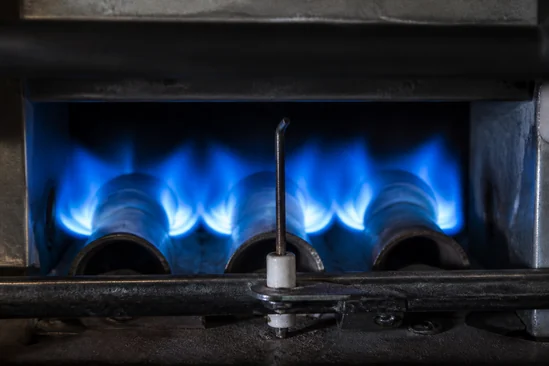
When your thermostat calls for heat, the furnace runs its inducer fan, checks that venting is safe, heats the igniter, and opens the gas valve. The burners light, and within a few seconds the control board looks for proof of flame. That proof comes from the flame sensor. The board sends a small voltage to the rod, and because a flame conducts a tiny electrical current, current flows from the rod through the flame to the burner, which is grounded. This is called flame rectification, and the current is so small it is measured in microamps.
If the board sees enough current, it keeps the gas valve open and the heating cycle continues. If it does not, it closes the gas valve right away, because unburned gas in the combustion chamber is dangerous. Most furnaces then wait and try again, and after a few failed tries they lock out. A furnace flame sensor does not measure heat. It only proves a flame is present, which is why a thin coating on the rod can shut down a furnace that is otherwise working fine.
6 signs of a bad furnace flame sensor
- Burners light, then shut off within seconds: this is the textbook sign. You hear the click and whoosh of ignition, then the flames go out after a few seconds.
- Repeated restart attempts: the furnace cycles through the startup sequence again and again without ever reaching steady heat.
- Lockout and no heat: after several failed tries the furnace stops completely until the lockout timer ends or it is reset.
- Cold air from the vents: the blower may run while the burners keep dropping out. Our furnace blowing cold air guide covers this symptom.
- Short cycling: very short run times with frequent starts can come from a weak flame signal. See our furnace short cycling guide.
- A flame failure error code: the control board light blinks a code for flame loss or ignition failure, usually listed on a label inside the furnace door.
These symptoms overlap with other problems, such as a weak igniter, low gas pressure, a poor ground, or a pressure switch fault. That is why a technician measures the furnace flame sensor signal before deciding what to fix.
Why a furnace flame sensor gets dirty or fails
- Carbon and oxide buildup: combustion leaves a thin, dull coating on the rod that acts like insulation and weakens the signal. This is the most common cause.
- Dust and household chemicals: dust, drywall dust from renovations, and vapours from laundry products, paint, or cleaners near the furnace can speed up buildup.
- Poor burner flame: dirty burners or incorrect gas pressure can push the flame away from the rod.
- Bent or misaligned rod: if the rod is not sitting in the flame, it cannot read it.
- Cracked porcelain base: a crack can let current leak to ground before it reaches the flame.
- Loose wire or bad ground: a corroded terminal or poor burner ground breaks the circuit the signal needs.
Furnace flame sensor or igniter?
Both parts are in the burner area, and both can leave you without heat, but the symptoms are different.
| What you notice | Likely part |
|---|---|
| Inducer fan runs, but the burners never light | Igniter |
| No orange glow through the sight glass | Igniter |
| Burners light, then go out after a few seconds | Flame sensor |
| Furnace lights every time but will not stay lit | Flame sensor |
If the burners never light at all, our furnace igniter guide explains that part in detail.
Cleaning a furnace flame sensor
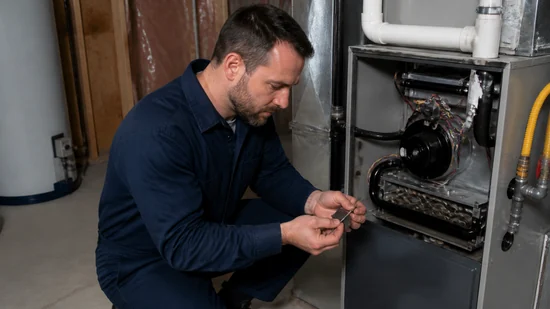
In most cases a dirty furnace flame sensor does not need to be replaced. It needs to be cleaned. During a service call, the technician shuts off power and gas, removes the single screw holding the sensor, and slides it out. The rod is cleaned gently with a fine, non-metallic abrasive pad until it is bright, without scratching it deeply or touching the porcelain base. Then the sensor goes back in the exact position, the wire is reconnected, and the technician runs several heating cycles while measuring the flame signal with a meter to confirm it is strong and steady.
Some handy homeowners clean the sensor themselves. If you do, turn off the furnace power switch and the gas valve first, handle the sensor gently, and never use coarse sandpaper. Because the sensor sits in the burner compartment, we recommend leaving it to a licensed technician, who can also check the burners, gas pressure, and ground at the same time. In Ontario, work on the gas burners and controls should be done by a TSSA-certified gas technician.
When to replace a furnace flame sensor
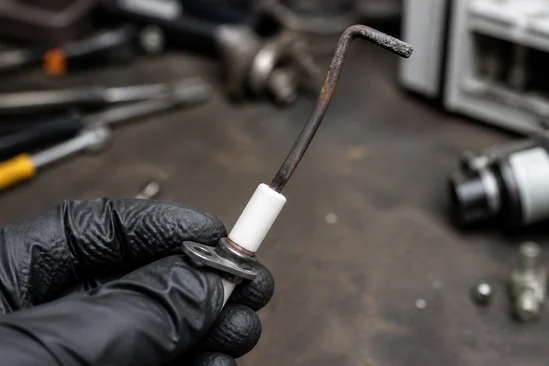
Replacement makes sense when the sensor is physically damaged or cleaning does not bring the signal back. Signs include a cracked or chipped porcelain base, a rod that is pitted, corroded, or burned thin, a sensor that keeps fouling within weeks of cleaning, or a signal that stays weak after cleaning and adjustment. The part is small and the job is quick, but it must match your furnace model, and the technician should still look for the reason it failed, such as poor burner flame or a bad ground. Our team handles furnace repairs, emergency furnace repair in Ajax, and furnace repair in Oshawa across Durham Region 24/7. If the furnace has no heat for another reason, our furnace not working guide walks through the other causes.
How to prevent furnace flame sensor problems
The best protection is a yearly furnace tune-up before the cold arrives. A technician cleans and tests the furnace flame sensor, checks the igniter, burners, and gas pressure, and confirms the safety controls are working. Between visits, change your filter every one to three months, keep the furnace area free of dust, and store laundry products, paint, and chemicals away from the furnace. Cover the furnace and turn it off when sanding drywall nearby, since that fine dust ends up on the burners. Our furnace maintenance guide lists everything a visit covers, and our maintenance and protection plans include it every year, with priority service in a cold snap.
Key terms in this article
- Flame sensor: a metal rod in the burner flame that proves to the control board that the gas has lit.
- Flame rectification: the way a flame conducts a tiny current from the sensor to the grounded burner.
- Microamp: one millionth of an amp, the unit used to measure the flame signal.
- Lockout: a safety shutdown after several failed ignition or flame attempts.
- Control board: the furnace's electronic brain that runs the heating sequence and safety checks.
Frequently asked questions
| Your furnace flame sensor questions, answered |
|---|
| How do I know if my furnace flame sensor is bad? The most common sign of a bad furnace flame sensor is a furnace that lights, runs for a few seconds, then shuts the burners off and tries again. Other signs are repeated restarts, a lockout with no heat, short cycling, cold air from the vents, and a flame failure error code on the control board. |
| Can a dirty flame sensor be cleaned instead of replaced? Yes. Most flame sensor problems come from carbon and oxide buildup that a technician can clean off with a fine, non-metallic abrasive pad. The sensor only needs replacing if the porcelain base is cracked, the rod is corroded or pitted, or the signal stays weak after cleaning. |
| How often should a furnace flame sensor be cleaned? A furnace flame sensor should be cleaned and tested during a yearly furnace tune-up. Homes with renovation dust, pets, or chemicals stored near the furnace may need it checked more often if the furnace starts shutting off after lighting. |
| Is it safe to run a furnace with a bad flame sensor? The furnace will shut itself off safely when it cannot detect a flame, so it is not dangerous by itself, but it will not heat your home reliably. Never bypass the flame sensor, and do not keep resetting the furnace. If you smell gas, leave and call Enbridge at 1-866-763-5427 from outside. |
| Is it the flame sensor or the igniter? If the burners never light, the igniter is the more likely problem. If the burners light and then go out after a few seconds, the flame sensor is the more likely problem. A technician measures the flame signal to confirm before replacing anything. |
Do not take our word for it alone. Read our 364 verified reviews on Google, and see the Heating, Refrigeration and Air Conditioning Institute of Canada for what accredited contractors are expected to deliver.
References and further reading