Window Condensation in Winter: Causes, Ideal Humidity and Fixes
Window Condensation in Winter: Causes, Ideal Humidity and Fixes
 Ben Amina
Aire One East Heating & Cooling, 1910 Dundas St E #117, Whitby
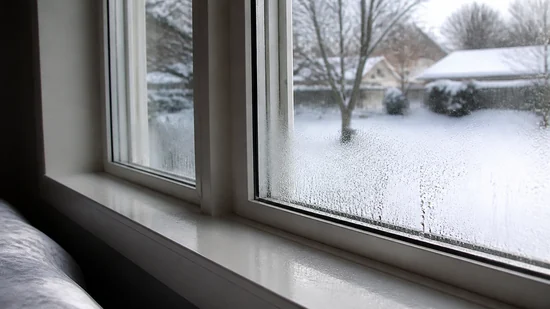
Window condensation is the water, fog, or frost that forms on the inside of your windows when warm, moist indoor air touches cold glass. In Durham Region it shows up every winter, usually on the first cold snap of November and again during the deep freezes of January and February. A little fog at the bottom corner of the glass on a frosty morning is common. Water running onto the sill every day, black spots on the frame, or frost building up inside the glass is a sign your home is holding more moisture than it can handle in cold weather. This guide explains what causes it, gives you a simple chart for the right indoor humidity at each outdoor temperature, and lists the fixes that work, including the HVAC settings most homeowners never think to check.
- Window condensation forms when indoor moisture meets glass that is colder than the air's dew point.
- The colder it gets outside, the lower your indoor humidity needs to be to keep windows dry.
- CMHC says winter humidity should not go over 50 percent, and very cold weather may call for 30 percent or lower.
- Lowering a furnace humidifier, running bath and kitchen fans, and using an HRV are the biggest fixes.
- Moisture between the panes of a sealed window is a failed seal, not a humidity problem.
Short answer: window condensation in winter means your indoor humidity is too high for how cold it is outside. Measure it with a hygrometer, then lower it to about 30 to 35 percent when it is between minus 18 and minus 7 degrees Celsius, and lower again in a deep freeze.
Turn down your furnace humidifier, run exhaust fans longer, and keep your HRV on. If it keeps happening, Aire One East can check your humidifier and ventilation across Durham Region. Call 905-576-7600.
What causes window condensation in winter?
Warm air holds more moisture than cold air. When the air in your living room touches a surface that is colder than its dew point, it cannot hold all its water vapour, so the extra turns into droplets on that surface. In winter, the coldest surface in most rooms is the window glass, especially the bottom edge and corners where the frame and spacer bar meet. That is why window condensation usually starts there first.
Two things push window condensation up. The first is colder weather, which makes the glass colder. The second is more moisture indoors. The Canada Mortgage and Housing Corporation (CMHC) estimates that a home releases 10 to 50 litres of water into the air every day from people breathing, cooking, showers, laundry, plants, and pets. Newer, tighter homes trap more of that moisture, and a furnace humidifier set too high adds even more.
Air movement matters too. Natural Resources Canada notes that air flowing across the glass keeps it warmer, while closed blinds, heavy drapes, deep sills, and furniture pushed against a window trap cold air against the glass and make window condensation worse.
Ideal indoor humidity to prevent window condensation
A single "ideal" number does not work in a Canadian winter. Our whole-house vs portable humidifier guide covers the general 30 to 50 percent comfort range. When it comes to window condensation, the real limit depends on the outdoor temperature. CMHC says winter humidity should not exceed 50 percent and that in very cold weather a level of 30 percent or lower may be needed to keep windows dry. The widely used University of Minnesota guideline below, published by window maker Loewen, gives a maximum for each outdoor range, assuming an indoor temperature of about 21 degrees Celsius.
| Outdoor temperature | Keep indoor humidity at or below |
|---|---|
| Minus 7 to plus 5 °C | 40% |
| Minus 12 to minus 7 °C | 35% |
| Minus 18 to minus 12 °C | 30% |
| Minus 23 to minus 18 °C | 25% |
| Minus 29 to minus 23 °C | 20% |
| Minus 29 °C or colder | 15% |
Treat this chart as a starting point, not a rule. CMHC notes that upgraded, energy efficient windows can handle higher humidity without condensing, so a home with new triple pane windows may stay dry at a few points higher. Older double pane or aluminum frame windows may need you to go lower. The easiest way to find your number is to watch your windows: if they fog, lower the humidity a few points and check again the next morning.
Inside, outside, or between the panes
Where the window condensation sits tells you what is causing it.
- On the inside of the glass: this is the common kind of winter window condensation. It means indoor humidity is too high for the outdoor temperature, or air is not moving across the glass. The fixes in this guide apply.
- On the outside of the glass: this usually appears on cool, calm, humid mornings and burns off as the sun warms the glass. Natural Resources Canada explains it is a sign of an efficient window with a low-e coating that keeps heat inside. It is not a problem.
- Between the panes: fog or droplets trapped inside a sealed window mean the seal has failed. Humidity changes will not fix it. The glass unit needs to be repaired or replaced by a window company.
Is window condensation a problem?
Light fog that clears by mid morning is normal on the coldest days. Heavy window condensation that drips onto the sill every day is a different story. Over a winter, that water can soak into wood frames and drywall, peel paint, rot sills, and feed mould around the window. Natural Resources Canada lists dampness, mould growth on walls, and heavy condensation on windows as signs of too much moisture in a home. If the same moisture is condensing on your windows, it may also be condensing where you cannot see it, such as inside exterior walls or in the attic. The US Environmental Protection Agency recommends keeping indoor humidity below 60 percent, and ideally between 30 and 50 percent, to limit mould growth.
Watch for these warning signs:
- Water pooling on sills or running down the wall below a window
- Black or grey spots on frames, caulking, or blinds
- Frost or ice building up on the inside of the glass
- A musty smell in bedrooms or the basement
- Peeling paint or swollen wood around the window
How to stop window condensation: 9 fixes
Start with the free fixes, then move to the equipment. Most homes see a big drop in window condensation within a few days once humidity is under control.
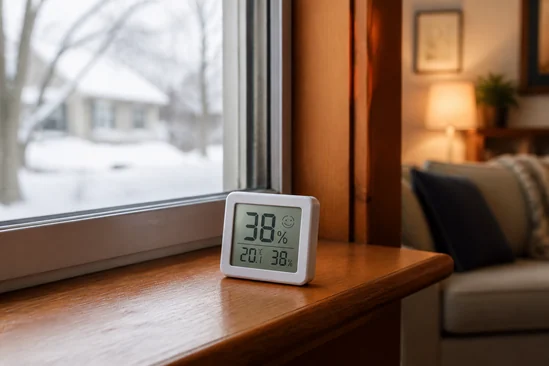
- Measure first: put a digital hygrometer in a main room and a bedroom so you know your real humidity, not a guess.
- Turn down the furnace humidifier: Natural Resources Canada advises setting it lower if humidity is too high, and lowering it again each time the forecast drops.
- Run bathroom fans longer: CMHC recommends running the fan for 15 minutes or more after a shower, and making sure it vents outdoors, not into the attic.
- Use the kitchen range hood: run it every time you boil, steam, or simmer, and choose one that vents outside.
- Keep your HRV on: a heat recovery ventilator swaps stale, moist indoor air for fresh, dry outdoor air while keeping most of the heat. Natural Resources Canada says to make sure it is running if you have one.
- Let air reach the glass: open blinds and drapes during the day, pull furniture back from windows, and keep heat registers under windows clear.
- Limit indoor moisture sources: vent the dryer outdoors, avoid drying laundry on racks indoors, cover pots, and move large groups of plants away from windows.
- Run the furnace fan: setting the fan to circulate helps mix warm air across the house and over cold glass. Our furnace maintenance guide explains how to keep the blower and filter in good shape.
- Upgrade the windows when it is time: ENERGY STAR certified windows with triple glazing, low-e coatings, and warm edge spacers keep the inside glass warmer and show far less window condensation.
When window condensation points to your HVAC
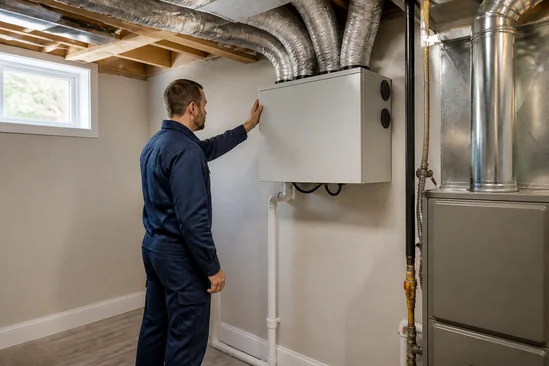
If you have done the basics and your windows still drip, the cause is often in the mechanical room. These are the problems our technicians find most often on winter condensation calls:
- A humidifier set too high or stuck open: a manual dial left on summer or fall settings, a failed humidistat, or a solenoid valve that will not close keeps adding water all winter. Our humidifier installation team in Whitby can replace it with an automatic control that adjusts to the outdoor temperature.
- An HRV that is off, unbalanced, or clogged: dirty filters or a frozen core can shut down fresh air exchange without you noticing.
- Bath fans that vent into the attic: the moisture comes back as frost on the roof deck and stains on ceilings.
- A furnace venting or combustion problem: heavy condensation that appears suddenly, together with stale air, can be a sign that combustion gases are not venting properly. Have the furnace checked by a licensed technician.
A yearly tune-up is the easiest way to catch these issues before the deep freeze. Our maintenance and protection plans include a furnace and humidifier check every year, and our technicians handle furnace repairs across Durham Region 24/7.
Key terms in this article
- Relative humidity: how much moisture the air holds compared with the most it could hold at that temperature.
- Dew point: the temperature at which air must release moisture as water droplets.
- Hygrometer: a small meter that measures indoor relative humidity.
- HRV: a heat recovery ventilator that exchanges stale indoor air for fresh outdoor air while keeping most of the heat.
- Humidistat: the control that tells a furnace humidifier when to add moisture.
- Low-e coating: a thin metal layer on window glass that reflects heat back into the room.
Frequently asked questions
| Your window condensation questions, answered |
|---|
| What causes window condensation in winter? Window condensation in winter happens when warm, moist indoor air touches glass that is colder than the air's dew point. Cold weather makes the glass colder, and cooking, showers, laundry, a furnace humidifier set too high, and poor ventilation add moisture to the air. |
| What humidity should my house be in winter to stop condensation? It depends on the outdoor temperature. A widely used guideline keeps indoor humidity at or below 40 percent from minus 7 to plus 5 degrees Celsius, 35 percent from minus 12 to minus 7, and 30 percent from minus 18 to minus 12, dropping further in a deep freeze. CMHC says winter humidity should not exceed 50 percent. |
| Is it normal to have condensation on windows in the morning? A little fog at the bottom of the glass that clears by mid morning on a very cold day is common. Water that runs onto the sill every day, frost inside the glass, or mould on the frame means humidity is too high and should be lowered. |
| Does a dehumidifier help with window condensation in winter? It can help in a damp basement, but in winter the better first steps are lowering the furnace humidifier, running bathroom and kitchen exhaust fans, and keeping an HRV running. Those remove moisture at the source and bring in drier outdoor air. |
| Why is there condensation between my window panes? Moisture trapped between the panes of a sealed window means the seal has failed. Adjusting indoor humidity will not fix it. The sealed glass unit needs to be repaired or replaced by a window company. |
Do not take our word for it alone. Read our 364 verified reviews on Google, and see the Heating, Refrigeration and Air Conditioning Institute of Canada for what accredited contractors are expected to deliver.
References and further reading
- Natural Resources Canada, Condensation on windows, doors and skylights
- Natural Resources Canada, Humidity levels
- Canada Mortgage and Housing Corporation, Moisture and Air: Householder's Guide, Problems and Remedies
- Loewen, Window Condensation (University of Minnesota humidity guideline)
- US EPA, A Brief Guide to Mold, Moisture and Your Home