Furnace Inducer Motor: Noises, Failure Signs and Fixes
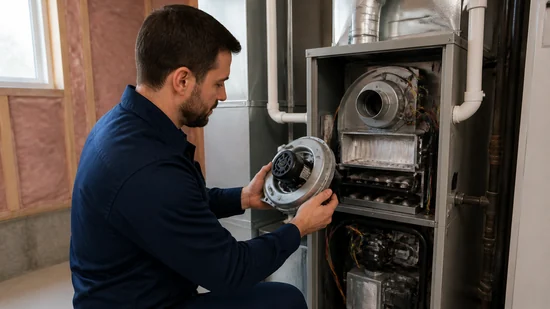
 Ben Amina
Aire One East Heating & Cooling, 1910 Dundas St E #117, Whitby
A furnace inducer motor is the small motor and fan that starts first every time your furnace turns on. Its job is to pull combustion gases through the heat exchanger and push them out the vent pipe, so the burners can light safely and the exhaust leaves your home. It runs before, during, and for a short time after every heating cycle, which adds up to thousands of hours each winter. When its bearings wear or the fan wheel gets damaged, you start to hear it: a hum, a squeal, a rattle, or a grinding sound from the furnace. Eventually it stops pulling enough draft, and the furnace will not light at all. This guide explains what a furnace inducer motor does, the seven signs it is failing, how it differs from the blower motor, and what a repair or replacement involves for homes across Durham Region.
- The inducer motor clears combustion gases out of the furnace before the burners light and while they burn.
- New humming, squealing, rattling, or grinding when the furnace starts often comes from a failing inducer.
- A weak inducer cannot create enough draft, so the pressure switch keeps the furnace from lighting.
- Worn bearings, a damaged fan wheel, and water from a blocked condensate drain are the most common causes of failure.
- Inducer replacement is venting and combustion work for a licensed gas technician, and the motor must never be bypassed.
Short answer: a failing furnace inducer motor usually shows up as a new noise at startup, followed by a furnace that hums but does not start, or starts the fan and then never lights. You may also see a pressure switch error code on the control board.
Clear snow from the outdoor vent pipes and check the filter, then call a technician. Aire One East offers 24/7 furnace repair across Durham Region. Call 905-576-7600.
- What does a furnace inducer motor do?
- 7 signs of a failing furnace inducer motor
- Furnace inducer motor noises and what they mean
- Inducer motor vs blower motor
- Why a furnace inducer motor fails
- Furnace inducer motor repair or replacement
- How to make the inducer last
- Key terms in this article
- Frequently asked questions
What does a furnace inducer motor do?
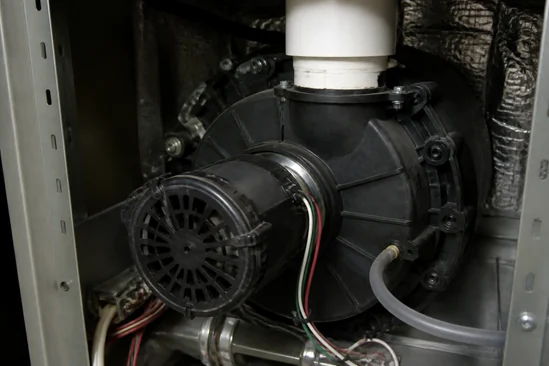
When the thermostat calls for heat, the control board turns on the inducer motor first. The fan pulls air through the burner area and heat exchanger and pushes it into the vent pipe, which purges any leftover gases and creates a steady draft. A pressure switch confirms that draft is strong enough, and only then does the igniter heat and the gas valve open. While the burners run, the furnace inducer motor keeps the combustion gases moving out of the house. After the burners shut off, it runs for a short post purge to clear the last of them.
On a high efficiency furnace, the inducer also pushes the cooler, moisture heavy exhaust out through PVC pipes on the side of the house. On many mid efficiency furnaces, it pushes exhaust up a metal vent or chimney liner. Either way, the furnace cannot light without it, and it should never be bypassed. If you want to know how the pressure switch reads the inducer's draft, see our furnace pressure switch guide.
7 signs of a failing furnace inducer motor
- New noise at startup: humming, squealing, rattling, or grinding in the first seconds of a heating cycle.
- Humming but not spinning: the motor gets power but the fan does not turn, or turns very slowly.
- The furnace never lights: the inducer runs, but the igniter never heats because the draft is too weak.
- Pressure switch error codes: the control board flashes a pressure switch open or did not close code.
- Repeated restarts and lockout: the furnace tries several times, then shuts down.
- Overheating or a hot electrical smell: a motor with seized bearings can run hot and trip its internal overload.
- Vibration or a wobbling fan: a cracked or out of balance fan wheel shakes the housing.
If the noise comes from the larger fan that blows warm air through the house, it is more likely the blower. Our furnace making noise guide covers every sound a furnace can make.
Furnace inducer motor noises and what they mean
| Sound at startup | What it usually means |
|---|---|
| Loud hum, little or no spinning | Seized or failing bearings, or an electrical fault in the motor |
| High pitched squeal or whine | Dry or worn bearings |
| Rattling or vibration | Loose mounting screws, a cracked fan wheel, or debris in the housing |
| Grinding or scraping | Fan wheel rubbing the housing, or bearings near the end of their life |
| Gurgling or water sloshing | Condensate backing up into the inducer or collector box |
A noise that started recently and is getting louder is a warning. Inducers often give weeks of notice before they stop, and replacing one on a scheduled visit is far better than losing heat on the coldest night of January.
Inducer motor vs blower motor
Homeowners often mix up the two motors in a furnace, but they do very different jobs.
| Inducer motor | Blower motor | |
|---|---|---|
| Job | Pulls combustion gases out through the vent | Pushes warm air through your ducts and rooms |
| Size | Small motor with a fan housing near the top of the burner area | Larger motor and fan in the lower cabinet |
| When it runs | First, before the burners light, and briefly after | After the burners warm up, and during the fan only setting |
| If it fails | The furnace will not light | The burners may light, but little or no warm air reaches the rooms |
Why a furnace inducer motor fails
- Bearing wear: the most common cause. Bearings wear out after years of starts and long winter run times.
- Water damage: on high efficiency furnaces, a clogged condensate drain or trap can back water into the inducer housing and corrode the motor. Our furnace leaking water guide explains the drain system.
- Damaged fan wheel: corrosion, cracks, or debris can unbalance the wheel and strain the motor.
- Blocked vents: snow, ice, or a nest in the vent pipe makes the motor work against a restriction.
- Short cycling: frequent starts add wear. See our furnace short cycling guide.
- Electrical faults: loose connections, voltage problems, or a control board fault can stop the motor or burn it out.
- Age: on an older furnace, the inducer is often one of several parts reaching the end of its life.
Furnace inducer motor repair or replacement
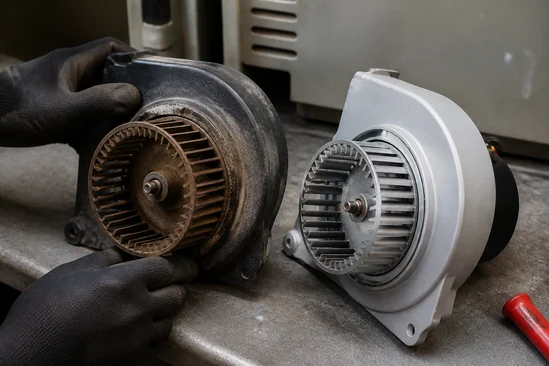
A technician first confirms the inducer is really the problem. They listen to the motor, check that the vent and intake are clear, clear the condensate trap, measure the voltage reaching the motor and its current draw, and measure the draft with a manometer. They also inspect the fan wheel and the housing gasket. Loose mounting screws or a clogged drain can sometimes be fixed without new parts. If the bearings or the motor itself have failed, the furnace inducer motor is usually replaced as a complete assembly with the matching part for your furnace model, along with a new gasket so the housing seals properly.
After the replacement, the technician runs several heating cycles, confirms the pressure switch closes reliably, checks for exhaust leaks around the housing, and tests for carbon monoxide. Because it involves the venting and combustion system, inducer work in Ontario should be done by a TSSA-certified gas technician. Our team handles furnace repairs, emergency furnace repair in Ajax, and furnace repair in Oshawa across Durham Region 24/7. If the furnace has no heat for another reason, our furnace not working guide walks through the other causes.
If your furnace is older and other parts are failing too, our guides on how long a furnace lasts in Ontario and whether to repair or replace your furnace can help you decide.
How to make the inducer last
Keep the outdoor vent pipes clear of snow and ice all winter, especially after storms. Change the furnace filter every one to three months so the furnace is not short cycling. Have the condensate drain, trap, and pump cleaned once a year so water never backs into the furnace inducer motor. Most of all, book a yearly tune-up, where a technician listens to the inducer, checks its current draw, and spots worn bearings before they fail. Our furnace maintenance guide lists everything a visit covers, and our maintenance and protection plans include it every year, with priority service in a cold snap.
Key terms in this article
- Inducer motor: also called the draft inducer or combustion blower, the small motor and fan that vents combustion gases.
- Blower motor: the larger motor that moves warm air through the ducts.
- Pre purge and post purge: the short inducer run times before ignition and after the burners shut off.
- Pressure switch: the safety switch that proves the inducer is creating enough draft.
- Current draw: how much electricity a motor uses, measured to judge its condition.
Frequently asked questions
| Your furnace inducer motor questions, answered |
|---|
| How do I know if my furnace inducer motor is bad? Common signs of a bad furnace inducer motor are a new humming, squealing, rattling, or grinding noise at startup, a motor that hums but does not spin, a furnace that never lights, pressure switch error codes, repeated restarts and lockout, overheating, and vibration from the fan housing. |
| Can a furnace run without an inducer motor? No. A gas furnace will not light without a working inducer motor, because the pressure switch must prove the inducer is venting combustion gases first. The inducer and pressure switch should never be bypassed, since that can let carbon monoxide into your home. |
| What does a bad inducer motor sound like? A failing inducer motor often hums loudly without spinning, squeals or whines from worn bearings, rattles from a loose or cracked fan wheel, or grinds when the wheel rubs the housing. The noise is usually loudest in the first seconds of a heating cycle. |
| What is the difference between an inducer motor and a blower motor? The inducer motor is the small fan that pulls combustion gases out through the vent before and during burning. The blower motor is the larger fan that pushes warm air through your ducts. If the inducer fails the furnace will not light. If the blower fails little warm air reaches your rooms. |
| How long does a furnace inducer motor last? A furnace inducer motor often lasts many years, but its life depends on run time, short cycling, water from a blocked condensate drain, and blocked vents. A yearly tune-up helps catch worn bearings before the motor fails. |
Do not take our word for it alone. Read our 364 verified reviews on Google, and see the Heating, Refrigeration and Air Conditioning Institute of Canada for what accredited contractors are expected to deliver.
References and further reading