HRV vs ERV: Which Is Better for an Ontario Home?
 Ben Amina
Aire One East Heating & Cooling, 1910 Dundas St E #117, Whitby
The HRV vs ERV question comes up for almost every homeowner who builds, renovates, or replaces a ventilation system in Ontario. Both units do the same basic job. They pull stale, moist, polluted air out of your home and bring fresh outdoor air in, while recovering heat so you are not paying to warm freezing air all winter. The difference is moisture. A heat recovery ventilator, or HRV, transfers heat only. An energy recovery ventilator, or ERV, transfers heat and some moisture too. That one difference changes how dry or humid your home feels in a Durham winter and how comfortable it feels in a muggy summer. This guide explains how each works, compares them side by side, and shows how to choose between an HRV and an ERV for your house.
- The HRV vs ERV difference comes down to moisture.
- Both bring in fresh air and send stale air out while recovering heat. Natural Resources Canada calls them the most effective way to ventilate a tightly built home.
- An HRV transfers heat only, so it tends to dry a house in winter. An ERV transfers heat and moisture, so it keeps more humidity indoors.
- An HRV usually suits homes that run humid in winter, with window condensation or many occupants.
- An ERV usually suits homes that run dry in winter, or homes with air conditioning in humid summers.
- Whichever you choose, pick an ENERGY STAR certified unit rated for cold climates, and have it balanced by a professional.
Short answer: in the HRV vs ERV choice, an HRV is usually better for Ontario homes that get too humid in winter, and an ERV is usually better for homes that get too dry in winter or feel sticky in summer. There is no single right answer, so the best choice depends on your home, how many people live there, and how it is built.
Aire One East installs and services HRVs and ERVs across Durham Region. Call 905-576-7600.
Why homes need mechanical ventilation
Older houses leaked air through gaps around windows, doors, and walls. That wasted heat, but it also let stale air out. Newer and renovated homes are built much tighter to save energy, so they need a planned way to bring in fresh air. Without it, moisture from showers, cooking, and breathing builds up, along with odours, cooking fumes, and chemicals from furniture and cleaners. You may notice it as window condensation, a stuffy feel, or lingering smells. Bathroom and kitchen fans help, but they only remove air from a few rooms and do not recover any heat. That is where the HRV vs ERV decision comes in. A balanced ventilation system exchanges air for the whole house while keeping most of the heat. Natural Resources Canada describes these systems as the most effective way to ventilate a tightly built home.
How HRV vs ERV systems work
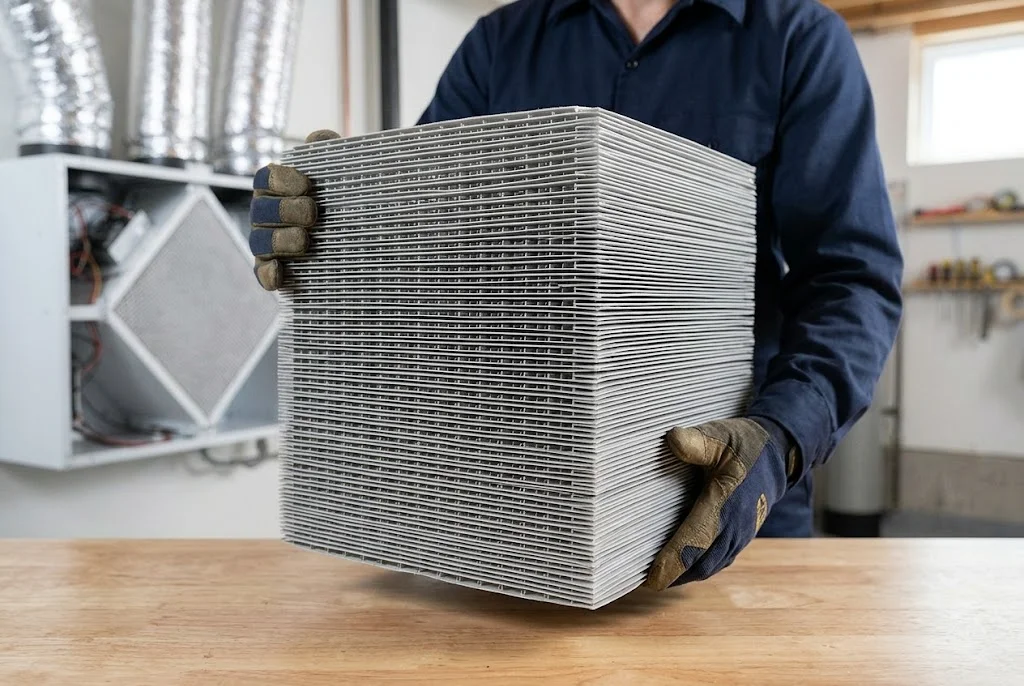
In the HRV vs ERV comparison, both units have a core, a box of thin channels where the two air streams pass close to each other without mixing. Stale indoor air flows out through one set of channels, and fresh outdoor air flows in through the other. In winter, the warm outgoing air heats the cold incoming air as they pass, so the fresh air reaches your ducts much warmer than it was outside. Two small fans keep the flows moving, and filters keep dust out of the core.
The difference in the HRV vs ERV comparison is the core material. An HRV core transfers heat only, so the moisture in your stale air leaves the house. An ERV core is made of a material that also lets some water vapour pass from one air stream to the other, so part of the indoor humidity stays inside in winter, and part of the outdoor humidity stays out in summer. Many systems connect to your furnace ducts, so the furnace fan helps spread the fresh air. Our furnace blower motor guide explains how the blower moves that air.
HRV vs ERV side by side
This HRV vs ERV table shows the main differences at a glance.
| HRV | ERV | |
|---|---|---|
| Full name | Heat recovery ventilator | Energy recovery ventilator |
| What it transfers | Heat only | Heat and some moisture |
| Effect on winter humidity | Lowers indoor humidity, can dry the house | Keeps more humidity indoors |
| Effect on summer humidity | Lets outdoor humidity in | Keeps some outdoor humidity out |
| Best fit | Homes that run humid in winter | Homes that run dry in winter, or humid summers with AC |
| Winter frost control | Needs a defrost strategy in deep cold | Needs a cold-climate rated core and defrost strategy |
HRV vs ERV: which is right for your home?
Natural Resources Canada is clear that there is no single right choice. It depends on your climate, your home, and how you live. These questions point you in the right direction.
- Do your windows fog or drip in winter? A home with too much winter humidity usually does better with an HRV, which removes more moisture. Our window condensation guide explains why.
- Does your home feel dry in winter? Static shocks, dry skin, and cracking wood point to low humidity. An ERV keeps more moisture indoors and may reduce how much you need a humidifier.
- How many people live there? A busy household produces more moisture, which often favours an HRV. A large home with few occupants often runs dry, which favours an ERV.
- Do you run air conditioning in summer? An ERV keeps some of the humid summer air out, which can help your air conditioner.
- Do you already have a humidifier? If you run a whole-house humidifier, an ERV can work with it rather than against it. Our whole-house humidifier guide covers that option.
For a confident HRV vs ERV decision, a licensed contractor can measure your home’s humidity, size the unit to your house, and recommend the better fit. Our indoor air quality solutions include both HRVs and ERVs, and our guide to improving indoor air quality covers filters, purifiers, and humidity together.
HRV vs ERV in Ontario winters
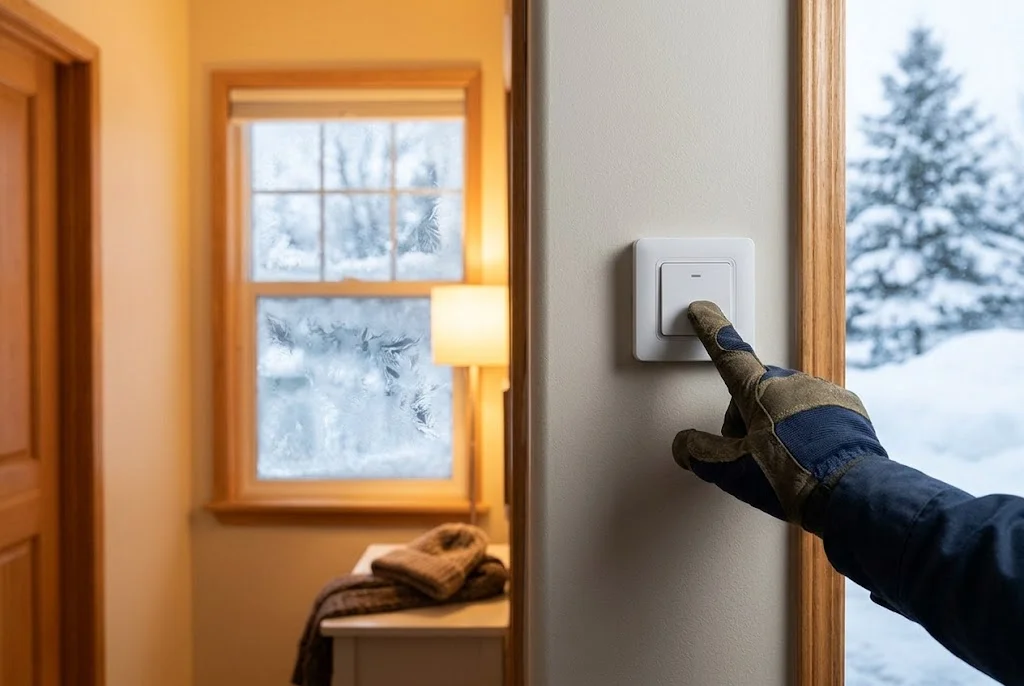
When it is very cold outside, moisture in the outgoing air can freeze inside the core and block the airflow. Both HRVs and ERVs used in Ontario need a way to deal with that, such as a defrost cycle that briefly recirculates warm air or a damper that pauses the cold intake. Early ERVs had trouble with repeated freezing and thawing, so in the HRV vs ERV decision for a cold climate, choose an ERV designed and rated for freezing conditions. Make sure any unit you buy is ENERGY STAR certified, as Natural Resources Canada recommends, and have the system balanced after installation so the incoming and outgoing airflows match. An unbalanced system can pressurize or depressurize the house, which can push moisture into walls or affect how gas appliances vent.
HRV vs ERV maintenance
Whichever side of the HRV vs ERV choice you land on, the unit only works if air can move through it. Check and clean the filters every few months, as the manufacturer recommends. Clean the core once or twice a year, following the instructions for your model, since some ERV cores cannot be washed with water. Clear snow, leaves, and lint from the outdoor hoods, and make sure the condensate drain on an HRV is not blocked. Once a year, have a technician check the fans, dampers, defrost control, and airflow balance. Our maintenance and protection plans can include your ventilation system with your yearly furnace service, and our furnace maintenance guide explains what else a visit covers.
Key terms in this article
- HRV: a heat recovery ventilator, which exchanges stale and fresh air and recovers heat.
- ERV: an energy recovery ventilator, which recovers heat and some moisture.
- Core: the part where the two air streams pass each other to transfer heat, and in an ERV, moisture.
- Balanced ventilation: a system that brings in as much air as it removes.
- Defrost cycle: a routine that keeps the core from freezing in very cold weather.
- Relative humidity: how much moisture the air holds compared with the most it could hold.
Frequently asked questions
| Your HRV vs ERV questions, answered |
|---|
| What is the difference between an HRV and an ERV? Both exchange stale indoor air for fresh outdoor air while recovering heat. An HRV transfers heat only, so moisture leaves with the stale air. An ERV transfers heat and some moisture, so it keeps more humidity indoors in winter and keeps some outdoor humidity out in summer. |
| Is an HRV or ERV better for Ontario winters? It depends on the home. An HRV usually suits homes that run humid in winter, with window condensation or many occupants. An ERV usually suits homes that run dry in winter. Natural Resources Canada says there is no single right choice and recommends asking a local accredited HVAC contractor. |
| Does an HRV dry out a house? An HRV can lower indoor humidity in winter because it sends moist indoor air outside and brings in dry cold air. That helps homes with condensation problems, but in a home that is already dry, an ERV may be the better fit. |
| Do I still need a humidifier with an ERV? An ERV keeps some of your indoor moisture, so it may reduce how much humidification you need, but a very dry home may still need a humidifier. A contractor can measure your humidity and recommend the right combination. |
| How often should an HRV or ERV be cleaned? Check and clean the filters every few months as the manufacturer recommends, clean the core once or twice a year following your model’s instructions, and keep the outdoor hoods clear of snow and debris. A yearly professional check covers fans, dampers, defrost, and airflow balance. |
Do not take our word for it alone. Read our 364 verified reviews on Google, and see the Heating, Refrigeration and Air Conditioning Institute of Canada for what accredited contractors are expected to deliver.
References and further reading