Furnace Pilot Light: Why It Goes Out and How to Fix It
 Ben Amina
Aire One East Heating & Cooling, 1910 Dundas St E #117, Whitby
A furnace pilot light is a small gas flame that burns inside an older furnace and lights the main burners whenever your home needs heat. Furnaces with a standing pilot keep that flame burning all the time, and a safety device called a thermocouple sits in it to prove it is lit. If the pilot goes out, the thermocouple cools and the gas valve shuts off, so the furnace cannot heat. Most furnaces made in the last few decades use an electronic igniter instead, but many older homes in Durham Region still have a furnace with a standing pilot. This guide explains how a furnace pilot light works, what a healthy flame looks like, the six common reasons a pilot goes out or will not stay lit, what you should and should not do, and when it makes more sense to replace an aging furnace.
- A standing pilot burns all the time and lights the burners. A thermocouple proves it is lit and keeps the gas valve open.
- A healthy pilot flame is mostly blue and wraps around the tip of the thermocouple.
- A pilot that goes out often points to a weak thermocouple, a dirty pilot opening, a draft, or a gas supply problem.
- If you smell gas, leave first and call Enbridge Gas from outside. Never relight with a gas smell.
- A furnace old enough to have a standing pilot is often a good candidate for a high efficiency replacement.
Short answer: if your furnace pilot light goes out, the most common causes are a worn thermocouple, a dirty pilot opening, a draft blowing it out, or a gas supply issue. A pilot that will not stay lit needs a licensed gas technician, not repeated relighting.
If you smell gas, leave and call Enbridge Gas at 1-866-763-5427 from outside. For repairs, Aire One East offers 24/7 furnace service across Durham Region. Call 905-576-7600.
How a furnace pilot light works
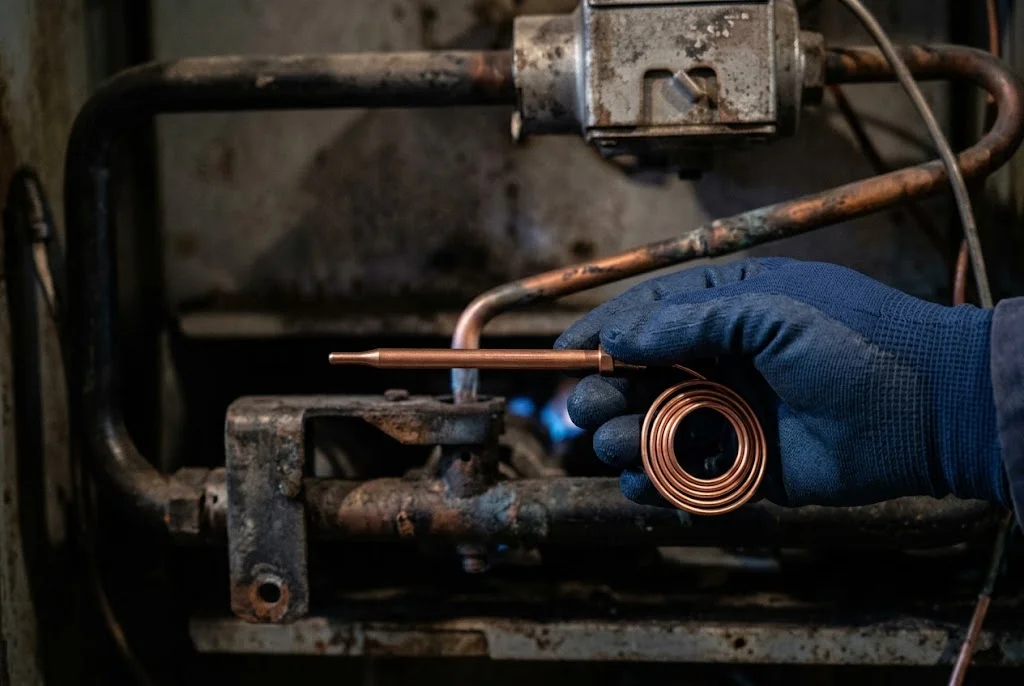
A standing pilot system has three main parts. The pilot burner is a small tube that feeds a tiny, steady flame. The thermocouple is a metal rod that sits in that flame. When it is heated, it produces a very small electrical current, which holds a safety magnet open inside the gas valve. The gas valve then lets gas reach the pilot, and when the thermostat calls for heat, it also sends gas to the main burners, where the pilot lights them.
If the furnace pilot light goes out for any reason, the thermocouple cools within a minute or so, the current drops, and the safety magnet closes the gas valve. That stops gas from flowing to a burner with no flame. It is a simple, reliable safety, but it means a weak thermocouple or a flickering pilot can leave you with no heat. Some mid efficiency furnaces use an intermittent pilot instead, which is lit by a spark only when heat is needed. Most newer furnaces skip the pilot entirely and use a hot surface igniter, explained in our furnace igniter guide.
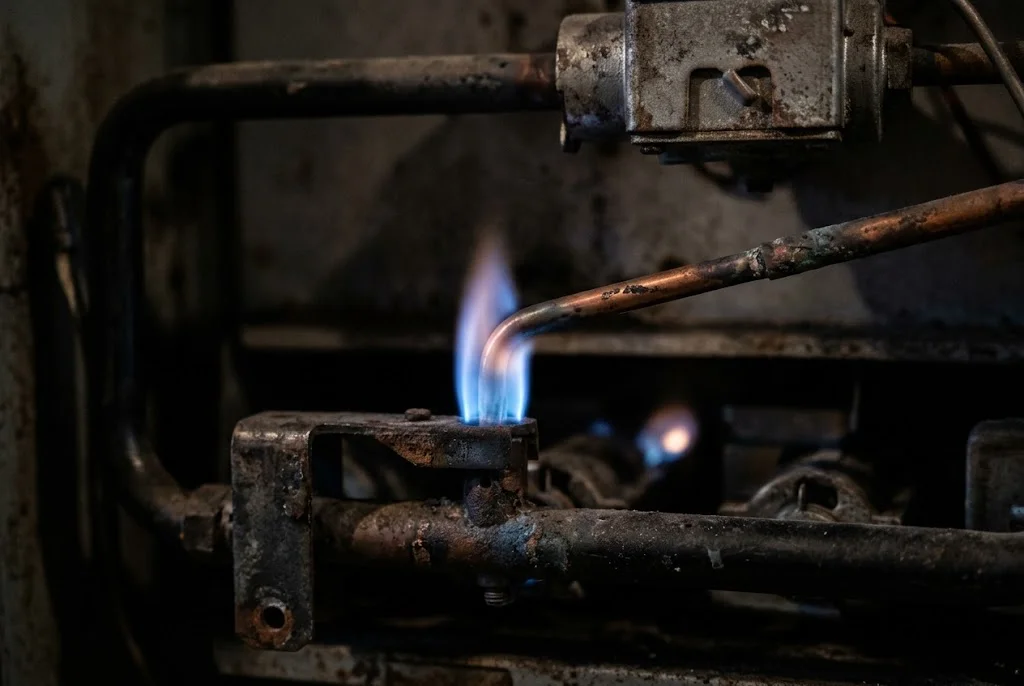
What colour should a furnace pilot light be?
The colour and shape of the flame tell you a lot about how well the gas is burning.
| What you see | What it usually means | What to do |
|---|---|---|
| Strong blue flame with a small blue or slightly yellow tip, wrapping the thermocouple | Normal, clean combustion | Nothing, keep up yearly service |
| Weak, small, or flickering blue flame | Low gas pressure, a partly blocked pilot opening, or a draft | Book service |
| Mostly yellow or orange flame | Incomplete combustion from dirt, poor air supply, or an adjustment problem | Turn the furnace off and book service promptly |
| Flame that lifts away, dances, or splits | Too much air, a draft, or a venting or heat exchanger concern | Book service promptly and check your CO alarms |
A yellow or lazy flame can produce more carbon monoxide, so treat it seriously. Our furnace carbon monoxide guide explains the warning signs.
6 reasons a furnace pilot light goes out
- A worn or misplaced thermocouple: the most common cause. An aging thermocouple produces less current, or the pilot flame no longer reaches it, so the gas valve closes even though the flame is lit.
- A dirty or partly blocked pilot opening: dust, rust, or soot in the tiny pilot orifice makes the flame weak and easy to blow out.
- Drafts: a draft from an open window, a basement door, or a venting problem can blow the pilot out.
- Gas supply problems: low gas pressure, an interrupted supply, or air in the line after gas work can starve the pilot.
- A failing gas valve: a worn safety magnet or valve may not hold the gas on even with a good thermocouple.
- Venting or combustion problems: a blocked flue or poor combustion air can disturb the flame. If you also notice soot or a CO alarm, see our cracked heat exchanger guide.
Should you relight a furnace pilot light?
Many older furnaces have lighting instructions printed on a label inside the door. Some homeowners follow those steps, but only when there is no smell of gas at all, and only exactly as the label describes. If you are not comfortable working near the burners, or the furnace pilot light goes out again after relighting, stop and call a licensed gas technician. A pilot that will not stay lit is a sign that a part has failed, and repeated relighting does not fix it.
Furnace pilot light repair
A technician starts by checking that gas is reaching the furnace and the pilot at the right pressure. They inspect the furnace pilot light flame, clean the pilot opening and burner, and confirm the flame wraps the thermocouple correctly. They test the thermocouple’s output with a meter and replace it if it is weak, which is a common and quick repair. If the thermocouple is good but the valve will not hold, they test the gas valve. They also check the venting, combustion air, and burners, then leak test any connections they touched and run the furnace through several cycles. In Ontario, work on gas appliances must be done by a TSSA-certified gas technician. Our team handles furnace repairs, emergency furnace repair in Ajax, and furnace repair in Oshawa across Durham Region 24/7.
When to replace a furnace with a pilot light
A furnace with a standing pilot is usually an older, lower efficiency model. The pilot itself burns gas all day, all year, and older conventional furnaces turn a smaller share of their fuel into heat than modern ones. New gas furnaces sold in Canada must meet a minimum of 95 percent efficiency, so an upgrade can cut gas use noticeably. If your furnace pilot light keeps going out, parts are getting hard to find, or other repairs are adding up, it is worth comparing a repair with a replacement. Our guides on high efficiency furnaces, how long a furnace lasts in Ontario, and whether to repair or replace your furnace can help you decide.
A yearly tune-up keeps an older furnace safe and reliable as long as you keep it. Our furnace maintenance guide lists what a visit covers, and our maintenance and protection plans include it every year.
Key terms in this article
- Standing pilot: a small gas flame that burns all the time to light the main burners.
- Intermittent pilot: a pilot lit by a spark only when the furnace needs to heat.
- Thermocouple: a heat sensing rod that proves the pilot is lit and keeps the gas valve open.
- Pilot orifice: the tiny opening that meters gas to the pilot flame.
- Gas valve: the valve that controls gas to the pilot and main burners.
- AFUE: annual fuel utilization efficiency, the share of fuel turned into heat over a season.
Frequently asked questions
| Your furnace pilot light questions, answered |
|---|
| Why does my furnace pilot light keep going out? The most common reason a furnace pilot light keeps going out is a worn or misplaced thermocouple. Other causes are a dirty pilot opening, drafts, low gas pressure, a failing gas valve, or a venting problem. A pilot that will not stay lit needs a licensed gas technician. |
| What colour should a furnace pilot light be? A healthy furnace pilot light is mostly blue, sometimes with a small yellow tip, and wraps around the top of the thermocouple. A mostly yellow, orange, weak, or dancing flame points to a combustion problem and should be checked. |
| Can I relight my furnace pilot light myself? Many older furnaces have lighting instructions on a label inside the door, and some homeowners follow them when there is no gas smell at all. If you smell gas, leave and call Enbridge Gas from outside. If the pilot goes out again, call a licensed gas technician instead of relighting it repeatedly. |
| What does a thermocouple do on a furnace? A thermocouple sits in the pilot flame and produces a small electrical current when heated. That current holds the gas valve open. If the pilot goes out, the thermocouple cools and the gas valve closes for safety. |
| Should I replace a furnace that has a pilot light? A furnace with a standing pilot is usually older and less efficient. New gas furnaces sold in Canada must meet at least 95 percent efficiency, so if repairs are adding up or the furnace is near the end of its life, replacement is worth comparing. |
Do not take our word for it alone. Read our 364 verified reviews on Google, and see the Heating, Refrigeration and Air Conditioning Institute of Canada for what accredited contractors are expected to deliver.
References and further reading