Cold Air Return: What It Does and How to Keep Air Flowing
Cold Air Return: What It Does and How to Keep Air Flowing
 Ben Amina
Aire One East Heating & Cooling, 1910 Dundas St E #117, Whitby
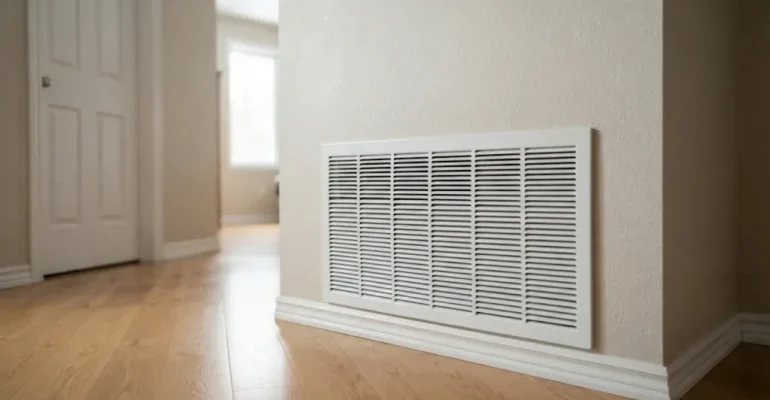
Cold air return vents pull air out of your rooms and send it back to the furnace or heat pump to be filtered and heated again. Most people pay attention to the vents that blow warm air, but the returns are just as important. Your heating system can only push out as much air as it can pull back in. If a cold air return is blocked, closed, or missing from part of the house, rooms stay cold, the furnace works harder, and dust builds up faster. Many older homes in Oshawa, Whitby, and across Durham Region have only one or two large returns for the whole house, which can leave upstairs bedrooms short on airflow. This guide explains how a cold air return works, where returns should be, the signs of a return problem, and the simple things you can do to keep air moving.
- A cold air return pulls room air back to the furnace so it can be filtered and heated again.
- Supply vents blow air out, while return grilles pull air in. A tissue held near the grille shows which is which.
- Blocked or closed returns cause cold rooms, a furnace that runs longer, and more dust.
- Never cover a return with furniture, rugs, or curtains, and never close it to save heat.
- Rooms with no return can be helped with door gaps, transfer grilles, or a new return run.
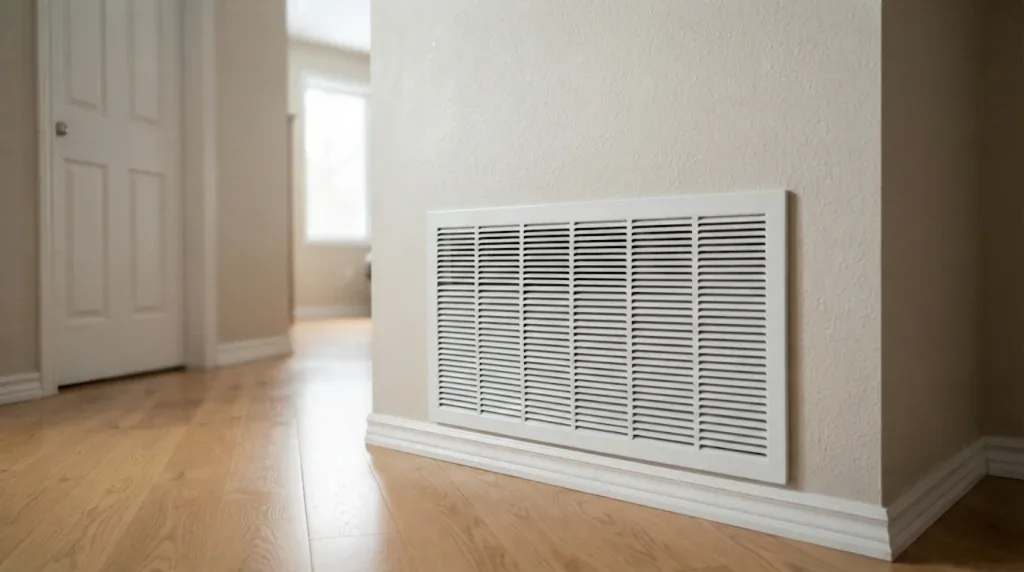
Short answer: A cold air return is a vent, usually a large grille on a wall or floor, that draws air from your rooms back to the furnace or heat pump. Keeping returns open and unblocked lets the system move enough air to heat evenly and run efficiently. Closed or blocked returns cause cold rooms and extra strain on the furnace.
Aire One East checks airflow and ductwork in homes across Durham Region. Call 905-576-7600.
How a cold air return works
Your heating system moves air in a loop. The furnace blower pushes warm air through supply ducts to the registers in each room. At the same time, the return side pulls cooler room air back through return ducts to the furnace, where it passes through the filter and over the heat exchanger or coil before going out again. If the return side cannot pull enough air, the whole loop slows down.
That is why a blocked return can cause the same problems as a dirty filter. Restricted airflow makes the furnace run hotter and longer, and in some cases it can trip the safety control explained in our furnace high limit switch guide.
How to tell a return from a supply vent
- Size: returns are usually larger than supply registers, often with a plain grille and no adjustable louvres.
- The tissue test: with the furnace fan running, hold a tissue near the grille. If it is pulled toward the grille, it is a return. If it blows away, it is a supply.
- Location: returns are often in hallways, on interior walls, or low on a wall. Supply registers are usually under windows or on outside walls.
- No damper: most returns have no lever to close them, and they should stay open.
Signs of a cold air return problem
- A room stays cold, especially when its door is closed.
- A door slams or whistles when the furnace starts, because the room is pressurized.
- Weak airflow from supply registers even with a clean filter.
- More dust than usual, or dusty streaks around the return grille.
- A furnace that runs for long stretches or shuts off on a safety limit.
Uneven temperatures have other causes too, which our uneven heating guide walks through.
How to keep your returns working
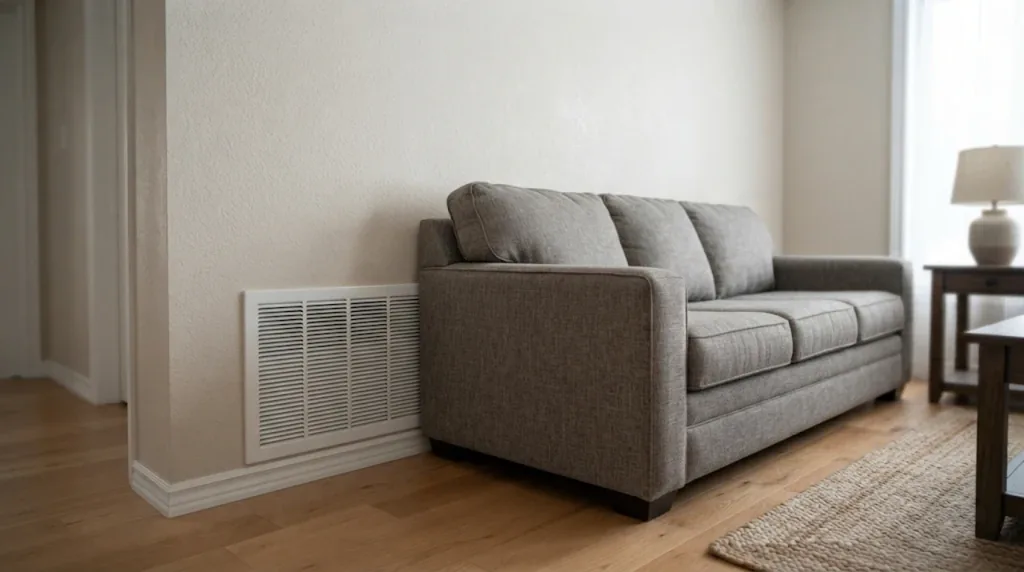
- Keep sofas, beds, dressers, rugs, and curtains away from every return grille.
- Never close or tape over a cold air return to push more heat into another room. It reduces airflow for the whole house.
- Vacuum the grille every few months and wipe off any dust.
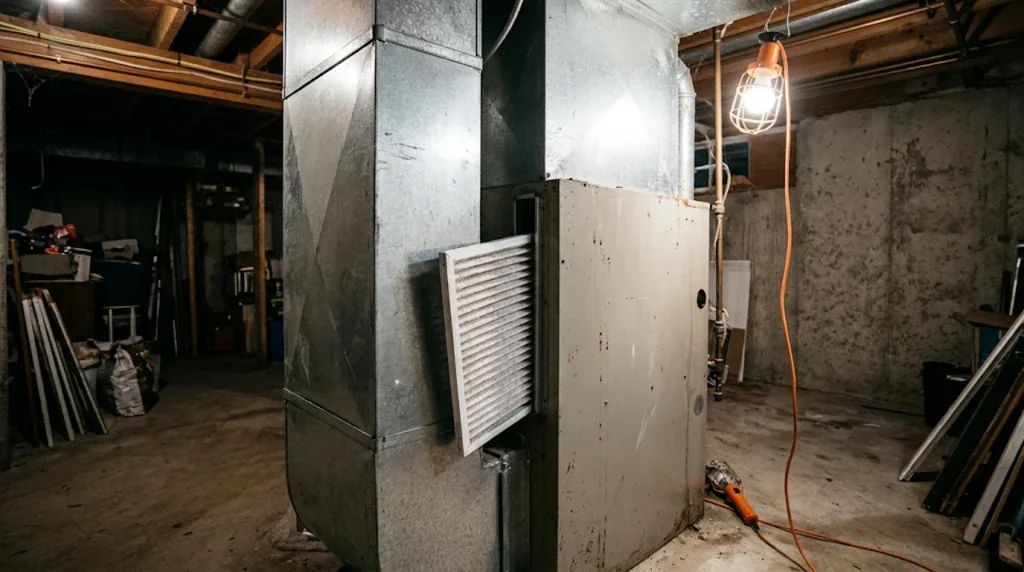
- Change the furnace filter on schedule. In many homes the filter sits right where the main return meets the furnace. Our furnace filter guide explains how often.
- Leave bedroom doors open when you can, or make sure there is a gap under the door.
Fixing rooms that do not have a return
Many older Durham homes were built with one or two central returns, so bedrooms and additions have no return of their own. When the door is closed, air has nowhere to go and the room stays cold. Common fixes include trimming the bottom of the door, adding a transfer grille above the door or through the wall, or running a new return duct to the room. Leaky return ducts in the basement can also pull in dusty, unheated air, which our duct sealing guide explains. For homes with very different temperatures between floors, our HVAC zoning guide covers another option.
When to have your cold air return checked
Call a technician if rooms stay cold with the doors open and the returns clear, if you hear whistling at the return or the furnace keeps shutting off, or if you are finishing a basement or adding a room. A technician can measure airflow, check the return ducts for leaks or crushed sections, and recommend changes. Pairing that with a tune up, as described in our furnace maintenance guide, and a cleaning through our vent and air duct cleaning service keeps the whole system moving air the way it should. Our air duct cleaning and dust guide explains when cleaning helps.
Key terms in this article
- Cold air return: a vent that pulls room air back to the furnace or heat pump
- Supply register: a vent that blows heated or cooled air into a room
- Return duct: the duct that carries air from the returns back to the furnace
- Transfer grille: an opening that lets air move from a closed room to a hallway
- Pressurized room: a room with more air coming in than can get out
- Airflow: the amount of air the system moves through the ducts
Frequently asked questions
| Your cold air return questions, answered |
|---|
| What does a cold air return do? A cold air return pulls air from your rooms back to the furnace or heat pump, where it is filtered and heated again before going back out through the supply vents. |
| Should I close my cold air returns in winter? No. Closing or blocking returns reduces airflow for the whole system, making rooms colder and the furnace work harder. Keep every return open and clear. |
| Can furniture block a cold air return? Yes. A sofa, bed, rug, or curtain in front of a return grille restricts airflow. Keep at least some open space in front of every return. |
| How do I know if a vent is a return or a supply? With the fan running, hold a tissue near the grille. If it is pulled toward the grille, it is a return. If air blows it away, it is a supply. |
| What if a room has no cold air return? Leave the door open, trim the bottom of the door, add a transfer grille, or have a technician add a return duct to the room. |
Do not take our word for it alone. Read our 364 verified reviews on Google, and see the Heating, Refrigeration and Air Conditioning Institute of Canada for what accredited contractors are expected to deliver.
References and further reading