Why Is One Room Colder Than the Rest of the House? Fixing Uneven Heating
Why Is One Room Colder Than the Rest of the House? Fixing Uneven Heating
 Ben Amina
Aire One East Heating & Cooling, 1910 Dundas St E #117, Whitby
Uneven heating is when some rooms in your home stay cold while others are warm or even too hot, even though the furnace is running normally. It is one of the most common comfort complaints in Durham homes, especially in two-storey houses, rooms over garages, and finished basements. The cause is usually airflow or heat loss, not a broken furnace: closed vents, a dirty filter, ducts that leak or are badly balanced, drafty windows, or a room that is simply far from the furnace. This guide covers the eight most common causes, the easy fixes you can try today, and the longer-term solutions that solve cold rooms for good. If no room is getting heat at all, see our furnace blowing cold air guide.
- Most uneven heating comes from airflow problems or heat loss, not a faulty furnace.
- Start with the easy fixes: open every vent, clear blocked registers, and replace a dirty filter.
- Leaky or unbalanced ductwork is a top cause in older Durham homes, and a technician can balance and seal it.
- Rooms over garages, bonus rooms, and rooms with many windows often need better insulation or air sealing.
- Zoning, smart thermostats with room sensors, or a ductless unit can fix a stubborn cold room.
Short answer: uneven heating is usually caused by closed or blocked vents, a dirty filter, leaky or unbalanced ducts, poor insulation or drafts in certain rooms, a badly placed thermostat, or a furnace that is the wrong size. Open all vents and change the filter first.
If one room is still cold, a technician can balance the dampers, seal ducts, add a return, or recommend zoning or a ductless unit. Aire One East solves cold rooms across Durham Region. Call 905-576-7600.
Why is one room colder than the rest?
Your furnace heats the air, but the ductwork decides where that heat goes. Every room needs enough warm air coming in through its supply vents, a way for cool air to get back to the furnace through a return, and walls and windows that hold the heat. When one of those links is weak, that room falls behind. Rooms at the end of a long duct run, rooms over an unheated garage, and upstairs bedrooms in a two-storey home are the usual trouble spots. Heat also rises, so upper floors can run warm in one season and cold in another depending on how the system is balanced. Uneven heating is rarely one big failure. It is usually two or three small problems adding up in the same room.
8 causes of uneven heating
1. Closed or blocked vents
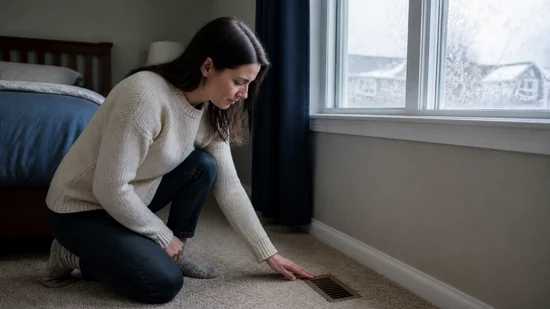
A closed supply register, or one hidden under a couch, rug, or curtain, starves a room of warm air and is the simplest cause of uneven heating. Blocked return grilles are just as bad, because air cannot flow into a room that has no easy way out. Walk through the house and make sure every register is open and clear.
2. A dirty furnace filter
A clogged filter cuts airflow to the whole house, and the rooms farthest from the furnace feel it first. Replacing the filter is the cheapest fix for uneven heating, and our furnace filter guide explains the right size and how often to change it.
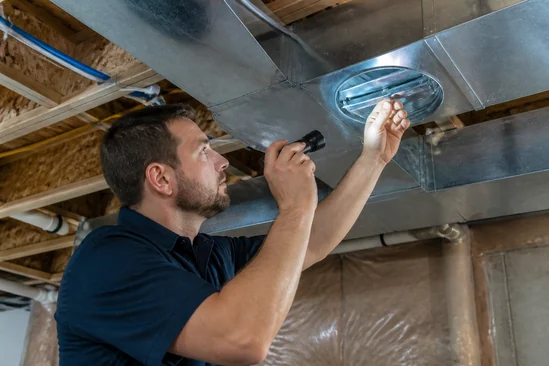
3. Leaky or unbalanced ductwork
Ducts lose a lot of heat through gaps at joints and seams, especially where they run through an unheated garage, attic, or crawl space. In many homes the ducts were never balanced, so rooms close to the furnace get too much air and distant rooms get too little. A technician can adjust the balancing dampers and seal leaks to send warm air where it is needed.
4. Drafts and poor insulation
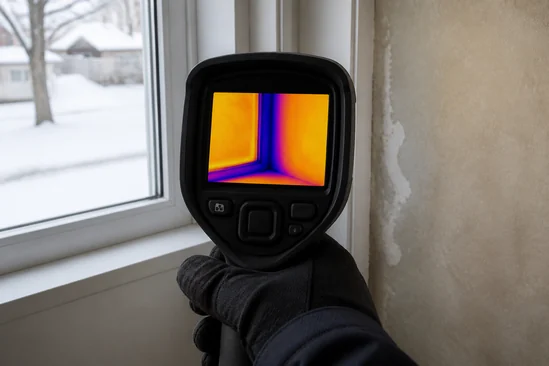
Rooms over a garage, bonus rooms, older additions, and rooms with large or old windows often lose heat faster than the furnace can replace it. Air leaks around windows, doors, outlets, and baseboards make it worse. Sealing drafts and adding insulation fixes the cause of uneven heating instead of just pushing more heat at the problem.
5. Thermostat location
If the thermostat sits in a warm hallway, near a kitchen, in sunlight, or close to a supply vent, it shuts the furnace off when that spot is warm, even though far rooms are still cold. Moving the thermostat, or using a smart thermostat with remote room sensors, can even out uneven heating between rooms. See our winter thermostat settings guide for sensible temperatures.
6. Heat rising in a multi-storey home
Warm air rises, so upstairs rooms can overheat while the basement stays cool, or the reverse if the upstairs ducts are weak. Running the furnace fan on a low continuous or circulate setting during very cold weather can help mix the air between floors, though it uses more electricity. Partly closing a few dampers on the warmer floor can also push more heat where it is needed.
7. Missing return air
Rooms without their own return grille, especially bedrooms with the door closed, cannot move cool air back to the furnace, so warm air struggles to get in. Leaving a gap under the door or adding a return or transfer grille often makes a big difference to uneven heating in bedrooms.
8. A furnace or blower that is the wrong size
An undersized furnace cannot keep up in a cold snap, and the far rooms lose first. An oversized one short cycles, shutting off before the whole house warms evenly. A weak or worn blower motor can also fail to push air to the end of the duct runs. When uneven heating comes with these symptoms, a technician can check the blower and confirm whether the furnace matches your home's heat loss.
Causes and fixes at a glance
| Cause | Typical sign | Fix |
|---|---|---|
| Closed or blocked vents | Little or no air at the register | Open and clear vents and returns |
| Dirty filter | Weak airflow in far rooms | Replace the filter |
| Leaky or unbalanced ducts | Rooms near the furnace hot, far rooms cold | Balance dampers, seal ducts |
| Drafts and poor insulation | Room over garage or with old windows is cold | Air seal and insulate |
| Thermostat location | Furnace stops while far rooms are cool | Move thermostat or add room sensors |
| Heat rising | Upstairs hot, basement cool | Fan circulate setting, adjust dampers |
| Missing return air | Room colder with the door closed | Door gap, return or transfer grille |
| Wrong furnace or weak blower | Short cycling, or cannot keep up | Blower check, proper sizing |
Common causes of uneven heating on Durham Region service calls, verified November 2026.
Quick uneven heating fixes you can try today
- Open every supply register and move furniture, rugs, and curtains off vents and return grilles.
- Replace the furnace filter if it looks grey or dusty.
- Leave bedroom doors open, or make sure there is a gap under them, so air can return.
- Close blinds and curtains at night on large, cold windows.
- Try the fan circulate or low continuous setting for a few days in very cold weather to see if the floors even out.
Long-term fixes for uneven heating
When the quick fixes are not enough, these solutions deal with the root cause of uneven heating:
- Duct balancing and sealing: adjusting dampers and sealing leaky joints, especially on runs through unheated spaces.
- Adding returns: a return or transfer grille in rooms that have none.
- Air sealing and insulation: fixing the drafts and thin insulation that make one room lose heat faster.
- Zoning: motorized dampers and separate thermostats that heat different floors or areas to their own setting.
- Smart thermostat with room sensors: averages temperatures across several rooms instead of reading one spot.
- A ductless unit for one room: a ductless heat pump can heat and cool a hard-to-reach room, addition, or garage conversion on its own.
- Right-sizing the furnace: if the furnace is due for replacement, a heat loss calculation makes sure the new one matches your home.
If dust or debris is blocking airflow, our vent and air duct cleaning service can help, and a dry home feels colder than it is, so a whole-house humidifier can improve comfort too.
When to call a technician for uneven heating
Call a technician if a room stays cold after you have opened the vents and changed the filter, if the furnace short cycles or runs nonstop, if you hear weak or uneven airflow from the registers, or if you are planning a renovation, addition, or basement finish. A technician can measure airflow at each register, check the blower, balance and seal the ducts, and tell you whether zoning or a ductless unit makes sense. If your furnace is older and the problems keep adding up, our guide on whether to repair or replace your furnace can help. Our furnace repair team serves all of Durham Region, and our maintenance and protection plans include a yearly check of the blower and airflow. Our furnace maintenance guide lists what each visit covers.
Key terms in this article
- Supply register: the vent where warm air enters a room.
- Return grille: the vent that pulls room air back to the furnace.
- Balancing damper: a plate inside a duct branch that controls how much air goes to that room.
- Zoning: a system of motorized dampers and thermostats that heats areas of a home separately.
- Ductless heat pump: a wall-mounted heating and cooling unit that serves one room without ductwork.
Frequently asked questions
| Your comfort questions, answered |
|---|
| Why is one room in my house colder than the others? Uneven heating is usually caused by closed or blocked vents, a dirty filter, leaky or unbalanced ductwork, drafts and poor insulation in that room, a badly placed thermostat, a missing return, or a furnace or blower that is the wrong size. Rooms far from the furnace or over a garage are the most common trouble spots. |
| How do I fix uneven heating in my house? Start by opening and clearing every vent and return, replacing the furnace filter, and leaving doors open. If a room is still cold, a technician can balance the duct dampers, seal leaky ducts, add a return, or recommend zoning, a smart thermostat with room sensors, or a ductless unit. |
| Should I close vents in unused rooms to push heat elsewhere? Closing a few vents slightly can help balance a system, but closing many can raise pressure in the ducts, reduce airflow across the furnace, and make it run hotter and less efficiently. It is better to have the dampers balanced by a technician. |
| Why is my upstairs colder than downstairs in winter? Upstairs rooms are often at the end of long duct runs, have more exposed walls and windows, or sit over an unheated garage. Leaky ducts, too little return air, and an unbalanced system can all leave upper floors cold. Balancing the ducts or adding zoning usually fixes it. |
| Can a ductless heat pump fix a cold room? Yes. A ductless heat pump mounted in the cold room heats and cools it on its own, which works well for additions, bonus rooms, rooms over garages, and finished basements that the main ductwork cannot reach well. |
Do not take our word for it alone. Read our 364 verified reviews on Google, and see the Heating, Refrigeration and Air Conditioning Institute of Canada for what accredited contractors are expected to deliver.
References and further reading