Should You Cover Your Air Conditioner in Winter? What Ontario Homeowners Should Know

Should You Cover Your Air Conditioner in Winter? What Ontario Homeowners Should Know
 Ben Amina
Aire One East Heating & Cooling, 1910 Dundas St E #117, Whitby
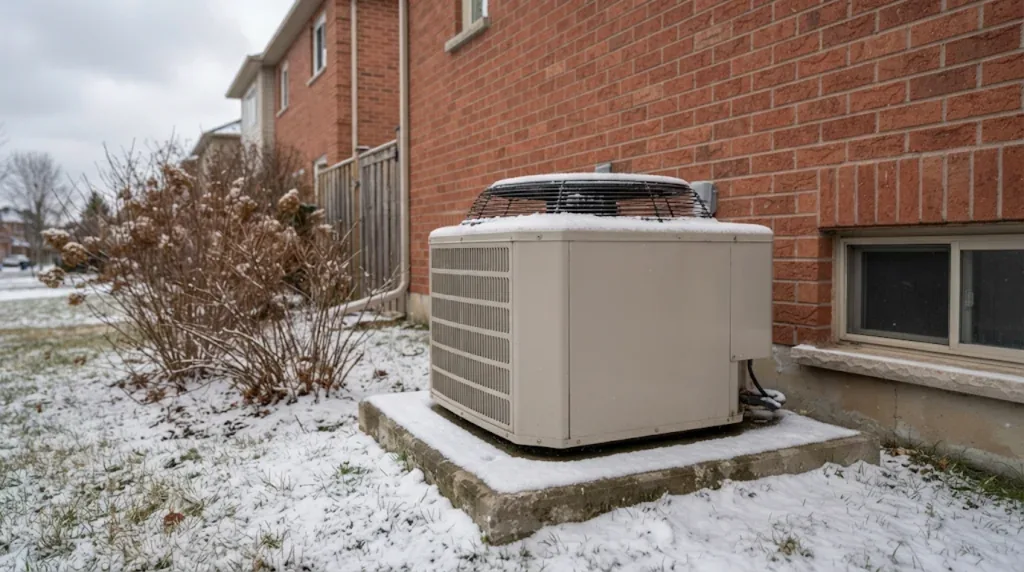
Air conditioner in winter care is a common question every November in Ontario, and the honest answer surprises many homeowners: most outdoor units do not need a full cover at all. Air conditioners are built to sit outside through rain, snow, and cold. A tight plastic or vinyl wrap can actually do harm by trapping moisture, which leads to rust and gives mice a warm, dry place to nest. What can help is a breathable cover over the top only, to keep falling ice, icicles, and leaves out of the fan. This guide explains when to cover an air conditioner in winter, how to do it the right way, the one system you should never cover, and the simple steps that protect your unit until spring in Whitby, Oshawa, and across Durham Region.
- Most air conditioners do not need a full winter cover, because they are built to sit outside year round.
- A full plastic wrap can trap moisture, cause rust, and invite mice to nest inside.
- If you cover an air conditioner in winter, cover the top only, with a breathable cover or a weighted board.
- Never cover a heat pump. It runs all winter and needs open airflow.
- Keep snow and ice clear of the unit and wait a day after restoring power before running it in spring.
Short answer: You usually do not need to cover an air conditioner in winter. A full plastic cover can trap moisture and attract rodents. If falling ice, icicles, or leaves are a problem, cover only the top with a breathable cover or a weighted board, leave the sides open, and never cover a heat pump, because it runs in winter.
Aire One East services air conditioners and heat pumps across Durham Region. Call 905-576-7600.
Do you need to cover an air conditioner in winter?
For most homes, no. The outdoor unit, called the condenser, has a metal cabinet, a coated coil, and a fan designed to handle Ontario weather. Rain and snow fall through the top and drain out the bottom. Manufacturers do not require a cover, and many installers advise against a full one. The decision to cover an air conditioner in winter really comes down to where the unit sits. If it sits under a roof edge where icicles form, under a tree that drops leaves and seeds, or in a spot where snow slides off the roof, a top cover can help.
Why a full cover can cause problems
- Trapped moisture: a tight plastic or vinyl cover holds in moisture, which can rust the cabinet, the coil fins, and the electrical parts.
- Rodents: a wrapped unit is a sheltered space, and mice may chew wiring and build nests inside.
- Mould and debris: wet leaves trapped under a cover can sit against the coil all winter.
- Forgetting it in spring: running the unit with a full cover still on can damage the compressor.
How to cover an air conditioner in winter the right way
If your unit needs protection from above, cover the air conditioner in winter like this:
- Clean leaves, twigs, and grass clippings off and around the unit first.
- Use a breathable mesh top cover made for condensers, or a piece of plywood slightly larger than the top, held down with a brick or two.
- Leave the sides open so air moves through and moisture can escape.
- Check the unit after big storms and clear snow or ice from around it.
- Remove the cover in spring before the first warm day.
Our air conditioner lifespan guide explains how this kind of care helps a unit last longer.

Never cover a heat pump in winter
Many outdoor units in Durham Region are heat pumps, not air conditioners, and they look almost the same. A heat pump heats your home in winter, so it runs on cold days and needs open airflow on every side. Covering it can block that airflow and interfere with its defrost cycle, which our heat pump defrost mode guide explains. If you are not sure which one you have, check whether the outdoor unit runs when the heat is on. If it does, it is a heat pump, and it should never be covered. Our heat pump vs air conditioner guide explains the difference.
Power, snow, and other winter care
- Power: some homeowners switch off the outdoor disconnect for winter so the AC cannot start by mistake. Many units have a crankcase heater, so if you do this, restore power at least a day before you first run the AC in spring, or follow your manual.
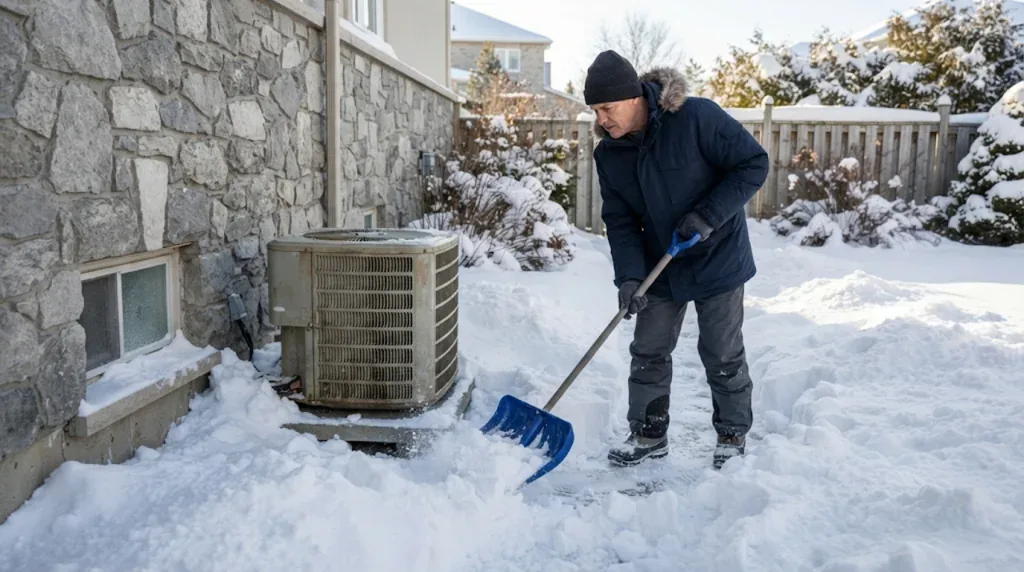
- Snow and ice: keep snow from piling up against the unit and keep the area around it clear.
- Drainage: make sure the pad is level so melt water drains away.
- Furnace vents: if your furnace vents sit near the AC, keep them clear too, as our furnace vent blocked by snow guide explains.
Getting your air conditioner ready in spring
When warm weather returns, remove any cover, clear debris, and restore power ahead of the first hot day. A spring tune up is the best time to catch winter damage, such as rust, bent fins, or chewed wiring. Our maintenance protection plans include a yearly AC check, and our air conditioner repair service covers Durham Region if anything is wrong. If your unit is old and you are thinking about replacing it, our air conditioners page shows current options. Whether or not you cover an air conditioner in winter, a spring check keeps it ready for summer.
Key terms in this article
- Condenser: the outdoor part of a central air conditioner
- Coil: the metal fins and tubing that release heat from the refrigerant
- Disconnect: the outdoor switch box that cuts power to the unit
- Crankcase heater: a small heater that keeps compressor oil warm in some units
- Heat pump: an outdoor unit that cools in summer and heats in winter
- Defrost cycle: the routine a heat pump uses to melt frost off its coil
Frequently asked questions
| Your air conditioner in winter questions, answered |
|---|
| Should I cover my air conditioner in winter? Usually not. An air conditioner in winter does not need a full cover. It is built to sit outside all year. If ice or leaves fall on the unit, cover only the top with a breathable cover or a weighted board. |
| Can covering an air conditioner damage it? A tight plastic or vinyl cover can trap moisture, cause rust, and give mice a place to nest. A breathable top cover does not have these problems. |
| Should you cover a heat pump in winter? No. A heat pump runs in winter to heat your home and needs open airflow. Covering it can block airflow and interfere with defrost. |
| Should I turn off my air conditioner breaker in winter? You can switch off the outdoor disconnect so the AC cannot start by mistake. Restore power at least a day before using it in spring, or follow your manual. |
| What can I use to cover the top of my air conditioner? A mesh cover made for condensers or a piece of plywood slightly larger than the top, held down with a brick, both work well. |
Do not take our word for it alone. Read our 364 verified reviews on Google, and see the Heating, Refrigeration and Air Conditioning Institute of Canada for what accredited contractors are expected to deliver.
References and further reading