Heat Pump Water Heaters: Are They Worth It?

A heat pump water heater is one of the most efficient ways to make hot water, but whether it is worth it depends on your home, not the marketing. It costs more upfront than a standard tank and needs the right space and electrical setup, yet it can cut water-heating energy use dramatically and qualify for Ontario rebates. This guide gives you the honest cost-benefit math for a Durham Region home, including the situations where we tell customers to keep their money. It links to our water heater options where relevant.
The short answer: a heat pump water heater is worth it for many Durham homes because it uses roughly 60 to 70 percent less energy than a standard electric tank, cutting water-heating costs by hundreds of dollars a year. The trade-offs are a higher upfront price, about $4,500 to $7,000 CAD installed, plus the need for 240V power, a nearby drain, and enough warm indoor air. With Ontario rebates it usually pays back in a few years. It makes the most sense if you have no gas line, are converting from oil, or already run on electricity, and the least sense if cheap natural gas is already piped to your tank.
Aire One East is a Carrier Factory Authorized contractor, family-owned and serving Durham Region homeowners since 1991, with licensed technicians, 4.8 stars from 364 Google reviews, and 24/7 emergency service. For an honest assessment of whether one fits your home, call 905-576-7600 or request a quote.

How a Heat Pump Water Heater Works
A heat pump water heater does not make heat directly the way a standard electric or gas tank does. Instead, it uses the same technology as a home heat pump: it pulls warmth out of the surrounding air and moves it into the water tank. Because it moves heat rather than generating it, it does the same job on a fraction of the energy, which is where the savings come from. Picture a refrigerator running in reverse, dumping heat into your water instead of pulling it out of your groceries.
That efficiency comes with two practical requirements. The unit needs a reasonable volume of warm indoor air to draw from, typically a basement or utility room that stays above about 10 degrees Celsius, and it needs 240V electrical service plus a condensate drain. In a Durham Region home, a basement usually fits the bill nicely.
Cost, Savings, and Payback
Here is the honest money picture. This type of unit costs more to buy and install than a basic tank, but far less to run. The way to judge it is not the sticker price, it is the extra cost over a standard replacement versus the yearly savings.
| Water heater type | Typical installed cost (CAD) | Running cost | Best for |
|---|---|---|---|
| Standard electric tank | $1,500 to $2,500 | Highest to run | Lowest upfront budget |
| Heat pump water heater | $4,500 to $7,000 | 60 to 70% less than electric tank | Long-term savings, no gas line |
| Gas tank | $1,500 to $2,500 | Lower than electric tank | Homes with an existing gas line |
Typical Ontario ranges in Canadian dollars, verified July 2026, subject to change. Your exact cost depends on your home, electrical work, and model.
For a typical family, the unit can save several hundred dollars a year against a standard electric tank. Run a realistic middle case: a family of four paying roughly $2,500 more than a straight electric replacement and saving $400 a year is looking at a 6 year payback before rebates, on a unit that lasts 10 to 15 years. Subtract a meaningful rebate and the payback drops to just a few years, with everything after that as pure savings. The payback is fastest if you are converting from electric resistance or oil, and slowest for a small, low-usage home with cheap power.
Ontario Rebates in 2026
Rebates change often, so treat these as a starting point and confirm the current amounts before you commit. As of mid-2026, the main provincial program is the ENERGY STAR-aligned Home Renovation Savings Program, which offers rebates toward qualifying heat pump equipment, with larger amounts for homes converting from oil, propane, or electric resistance heat.
Home Renovation Savings Program (HRS): the current provincial route for qualifying energy-efficient upgrades. Amounts vary by equipment and your home’s heating source.
Oil-to-heat-pump programs: homes converting from oil can often stack additional federal support, which shortens payback further.
Note on closed programs: the older federal Greener Homes Grant and the Enbridge HER+ tankless rebate have wound down, so do not count on them for a 2026 install.
The single biggest swing factor in your payback is which rebate you qualify for, so confirm your eligibility before choosing equipment. A registered contractor can tell you which programs apply to your situation and handle the paperwork.
The Trade-offs Brochures Skip
It cools the room it lives in. The unit pulls heat from the surrounding air, so its room gets cooler and drier. In a Durham July, a basement gets free dehumidification out of the deal, a genuine bonus. In January, that same unit borrows heat your furnace paid to make, which quietly trims a slice of the savings. This is why an unfinished basement beats a closet near living space.
It needs room to breathe. Manufacturers specify a minimum air volume, commonly around 700 to 1,000 cubic feet. Squeeze one into a tight closet without louvered doors and it suffocates on its own cooled air, efficiency drops, and the backup elements run more.
It hums, and recovery is slower. Expect roughly 45 to 55 decibels while the compressor runs, about the level of a modern dishwasher. Fine beside a furnace, annoying beside a bedroom wall. Hybrid mode with backup elements covers back-to-back shower mornings.
Condensate needs somewhere to go. Like an air conditioner, it produces water as it runs and needs a drain or a small condensate pump. Minor cost, but it surprises people at quote time.
Is a Heat Pump Water Heater Right for Your Home?
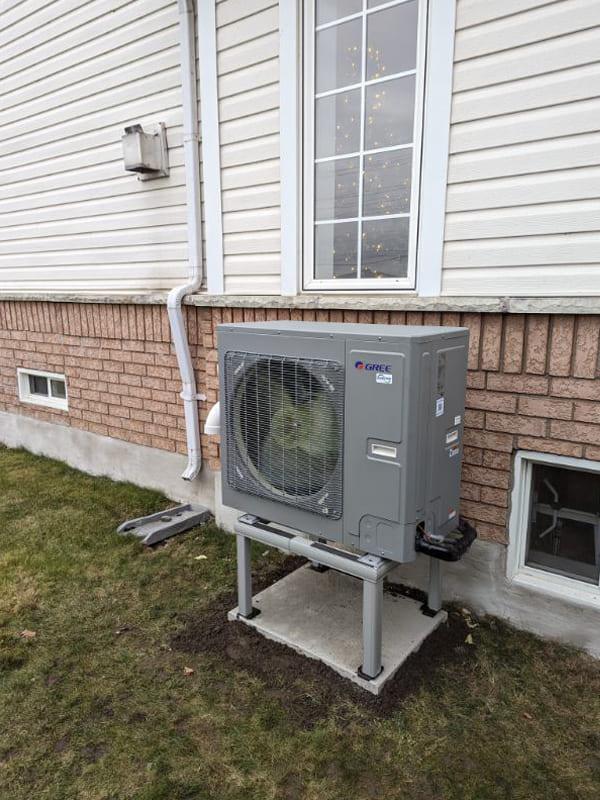
Honest guidance beats a hard sell here, because it is not the right answer for every home. A heat pump water heater is an especially strong fit when you have no gas line or extending one would be expensive, when you are converting from oil where the savings and stacked rebates are largest, when you already heat with electricity since the efficiency gain over a resistance tank is huge, and when you have a suitable space with enough warm air, 240V power, and a drain.
It is a weaker fit if cheap natural gas is already piped to the tank, if your home is very small or low-usage, or if there is no suitable indoor space for the unit. Replacing a healthy tank under 10 years old to chase the savings rarely pays either. The smarter move is choosing the efficient model when replacement time genuinely arrives.
Here is why Durham families across Whitby, Oshawa, Ajax, Pickering, Courtice, Bowmanville, Port Perry, and Uxbridge trust Aire One East to give it to them straight: Carrier Factory Authorized training and service standards, family-owned since 1991 and serving a third generation of Durham Region homeowners, 4.8 stars from 364 Google reviews earned one visit at a time, an honest fit assessment where we tell you when a simpler tank is the smarter buy, and upfront pricing with your approval before any work starts. If upfront cost is the barrier, ask about water heater financing.
Heat Pump Water Heater FAQ for Durham Homeowners
Are heat pump water heaters worth it in Ontario?
For many homes, yes. One uses about 60 to 70 percent less energy than a standard electric tank, saving hundreds of dollars a year, and with Ontario rebates it usually pays back in a few years. It is worth it most for homes with no gas line, oil conversions, or all-electric homes, and less so where cheap natural gas is already available.
How much does a heat pump water heater cost installed?
In Ontario, expect roughly $4,500 to $7,000 CAD installed, depending on your model and the electrical work required. That is more than a standard tank at $1,500 to $2,500, but the running cost is far lower and rebates reduce the net premium. Judge it on the extra cost over a standard replacement versus the yearly savings.
How much can a heat pump water heater save?
Against a standard electric tank, it cuts water-heating energy use by roughly 60 to 70 percent, which can mean several hundred dollars a year for a typical family. Actual savings depend on your household’s hot water use, your electricity rate, and the unit’s efficiency.
What does a heat pump water heater need to be installed?
A space with enough warm air to draw from, typically a basement or utility room above about 10 degrees Celsius, plus 240V electrical service and a condensate drain. A basement in a Durham Region home usually works well. A technician can confirm your space and electrical setup before you buy.
Is a heat pump water heater better than gas?
It depends. If you already have a gas line, a gas unit is often the cheapest path over time in Ontario. If you have no gas line, are converting from oil, or run on electricity, the heat pump model usually wins on operating cost and rebate eligibility. The right answer comes from your specific home, not a blanket rule.
Aire One East will tell you straight whether a heat pump water heater fits your Durham home, or whether a simpler tank is the smarter buy. Office hours Monday to Saturday, 8am to 8pm. Emergency service 24/7.

Hi, I am Ben Amina, owner and manager of Aire One East Heating & Cooling in Whitby. I run our family-owned team serving the Greater Toronto and Durham Region, and I would rather run the honest numbers with you than push equipment you do not need. Aire One East is Carrier Factory Authorized and has served Durham families since 1991. Learn more about our team or get in touch.
References
1. ENERGY STAR Canada (Natural Resources Canada)
2. Natural Resources Canada, Greener Homes Initiative (program status)
3. Home Renovation Savings Program, Ontario (rebate details)
Costs and rebate programs verified July 2026, subject to change. Confirm current rebate amounts before starting a project.
{
“@context”: “https://schema.org”,
“@graph”: [
{
“@type”: “Article”,
“headline”: “Heat Pump Water Heaters: Are They Worth It?”,
“description”: “Are heat pump water heaters worth it in Durham? Honest cost, savings, rebates, and payback math for Ontario homes: $4,500 to $7,000 installed, 60 to 70 percent less energy than an electric tank.”,
“image”: “https://www.aireonedurham.ca/wp-content/uploads/2025/11/Heat-Pump-Water-Heaters-Are-They-Worth-It.png”,
“datePublished”: “2025-11-25”,
“dateModified”: “2026-08-04”,
“author”: {
“@type”: “Person”,
“name”: “Ben Amina”,
“jobTitle”: “Owner and Manager”,
“url”: “https://www.aireonedurham.ca/author/ben-amina/”,
“worksFor”: { “@type”: “Organization”, “name”: “Aire One East Heating & Cooling” }
},
“publisher”: {
“@type”: “Organization”,
“name”: “Aire One East Heating & Cooling”,
“logo”: { “@type”: “ImageObject”, “url”: “https://www.aireonedurham.ca/wp-content/uploads/2020/11/logo-1-240×62.jpg” }
}
},
{
“@type”: “FAQPage”,
“mainEntity”: [
{
“@type”: “Question”,
“name”: “Are heat pump water heaters worth it in Ontario?”,
“acceptedAnswer”: { “@type”: “Answer”, “text”: “For many homes, yes. One uses about 60 to 70 percent less energy than a standard electric tank, saving hundreds of dollars a year, and with Ontario rebates it usually pays back in a few years. It is worth it most for homes with no gas line, oil conversions, or all-electric homes.” }
},
{
“@type”: “Question”,
“name”: “How much does a heat pump water heater cost installed?”,
“acceptedAnswer”: { “@type”: “Answer”, “text”: “In Ontario, expect roughly $4,500 to $7,000 CAD installed, depending on the model and electrical work required. That is more than a standard tank at $1,500 to $2,500, but the running cost is far lower and rebates reduce the net premium.” }
},
{
“@type”: “Question”,
“name”: “How much can a heat pump water heater save?”,
“acceptedAnswer”: { “@type”: “Answer”, “text”: “Against a standard electric tank, it cuts water-heating energy use by roughly 60 to 70 percent, which can mean several hundred dollars a year for a typical family, depending on hot water use, electricity rate, and unit efficiency.” }
},
{
“@type”: “Question”,
“name”: “What does a heat pump water heater need to be installed?”,
“acceptedAnswer”: { “@type”: “Answer”, “text”: “A space with enough warm air to draw from, typically a basement or utility room above about 10 degrees Celsius, plus 240V electrical service and a condensate drain. A basement in a Durham Region home usually works well.” }
},
{
“@type”: “Question”,
“name”: “Is a heat pump water heater better than gas?”,
“acceptedAnswer”: { “@type”: “Answer”, “text”: “If you already have a gas line, a gas unit is often the cheapest path over time in Ontario. If you have no gas line, are converting from oil, or run on electricity, the heat pump model usually wins on operating cost and rebate eligibility.” }
}
]
},
{
“@type”: “HVACBusiness”,
“name”: “Aire One East Heating & Cooling”,
“telephone”: “+1-905-576-7600”,
“email”: “aireoneeast@rogers.com”,
“url”: “https://www.aireonedurham.ca”,
“address”: {
“@type”: “PostalAddress”,
“streetAddress”: “1910 Dundas St E #117”,
“addressLocality”: “Whitby”,
“addressRegion”: “ON”,
“postalCode”: “L1N 2L6”,
“addressCountry”: “CA”
},
“areaServed”: [“Whitby”, “Oshawa”, “Ajax”, “Pickering”, “Courtice”, “Bowmanville”, “Port Perry”, “Uxbridge”],
“foundingDate”: “1991”,
“aggregateRating”: { “@type”: “AggregateRating”, “ratingValue”: “4.8”, “reviewCount”: “364” }
}
]
}