Cracked Heat Exchanger: Signs, Dangers and What to Do
 Ben Amina
Aire One East Heating & Cooling, 1910 Dundas St E #117, Whitby
A cracked heat exchanger is one of the most serious problems a gas furnace can have. The heat exchanger is the sealed metal chamber that keeps the flames and combustion gases on one side and the air you breathe on the other. When it cracks, that wall is no longer sealed, and combustion gases, including carbon monoxide, can mix into the air the blower sends through your home. A crack also changes how the burners breathe, which can lead to poor combustion, soot, and flame rollout. In Ontario, a technician who finds one will usually shut the furnace down on the spot. This guide explains what a cracked heat exchanger is, the seven warning signs, what causes it, how a technician confirms it, what a red tag means, and whether it can be repaired, for homeowners across Durham Region.
- The heat exchanger separates combustion gases from your home’s air, so a crack can let carbon monoxide into the house.
- Warning signs include CO alarms, soot, a yellow or dancing flame, a rollout switch trip, and visible rust or cracks.
- Overheating from poor airflow, age, and corrosion are the main causes.
- Under Ontario rules, a technician who judges a condition immediately hazardous must shut off the gas, tag the appliance, and notify the gas distributor.
- Most cracked heat exchangers mean replacing the heat exchanger under warranty or replacing the furnace.
Short answer: a cracked heat exchanger is a break in the metal wall between your furnace’s flames and your home’s air. It can let carbon monoxide into the house, so a furnace with one should not be used. Only a licensed technician can confirm it, using a visual and camera inspection plus combustion testing.
If your CO alarm sounds, get everyone outside and call 911. For an inspection or a second opinion, Aire One East serves all of Durham Region 24/7. Call 905-576-7600.
- What is a cracked heat exchanger?
- Is a cracked heat exchanger dangerous?
- 7 signs of a cracked heat exchanger
- What causes a cracked heat exchanger
- How a technician confirms it
- What a red tag means in Ontario
- Can a cracked heat exchanger be repaired?
- How to protect your heat exchanger
- Key terms in this article
- Frequently asked questions
What is a cracked heat exchanger?
Inside every gas furnace, the burners fire into a set of metal tubes or chambers called the heat exchanger. Hot combustion gases travel through the inside of those tubes and out the vent, while the blower pushes household air across the outside of them. The metal gets hot, the air picks up that heat, and the gases never touch the air you breathe. High efficiency furnaces have two: a primary heat exchanger near the burners and a secondary one that pulls extra heat out of the exhaust and produces condensate.
A cracked heat exchanger has a crack, hole, or separated seam in that metal. Each time the furnace heats and cools, the metal expands and contracts, so a small crack tends to grow. A crack in the primary heat exchanger is the most serious kind, because it sits next to the flames. A leaking secondary heat exchanger more often shows up as water and corrosion. Our furnace leaking water guide covers that version.
Is a cracked heat exchanger dangerous?
Yes. A cracked heat exchanger is a safety problem, not just a repair item, for three reasons. First, when the blower runs, it can push household air into the crack and disturb the flame, or pull combustion gases out of it and into the supply air. Those gases can contain carbon monoxide, which you cannot see or smell. Second, a disturbed flame burns poorly, producing more carbon monoxide and soot. Third, flames can be pushed out of the burner area, which is called flame rollout and is a fire risk.
Not every crack leaks the same way, and some leak only under certain conditions, which is why a furnace with a confirmed crack should not be run while you wait for a fix. A working carbon monoxide alarm is your most important protection. In Ontario homes with a fuel burning appliance, CO alarms are required next to each sleeping area and, since January 1, 2026, on every storey. Our furnace carbon monoxide guide explains the symptoms and the alarm rules in detail.
7 signs of a cracked heat exchanger
- Your CO alarm sounds: especially when the furnace is running.
- Flu-like symptoms at home: headaches, dizziness, nausea, or fatigue that ease when you leave the house.
- A yellow, lazy, or dancing flame: a healthy gas flame is steady and mostly blue. A flame that moves when the blower starts is a classic warning sign.
- Soot: black streaks around the burners, inside the cabinet, or around the vent.
- A tripped rollout switch: flames escaping the burner area trip this safety switch. Our furnace high limit switch guide explains the difference between limit and rollout trips.
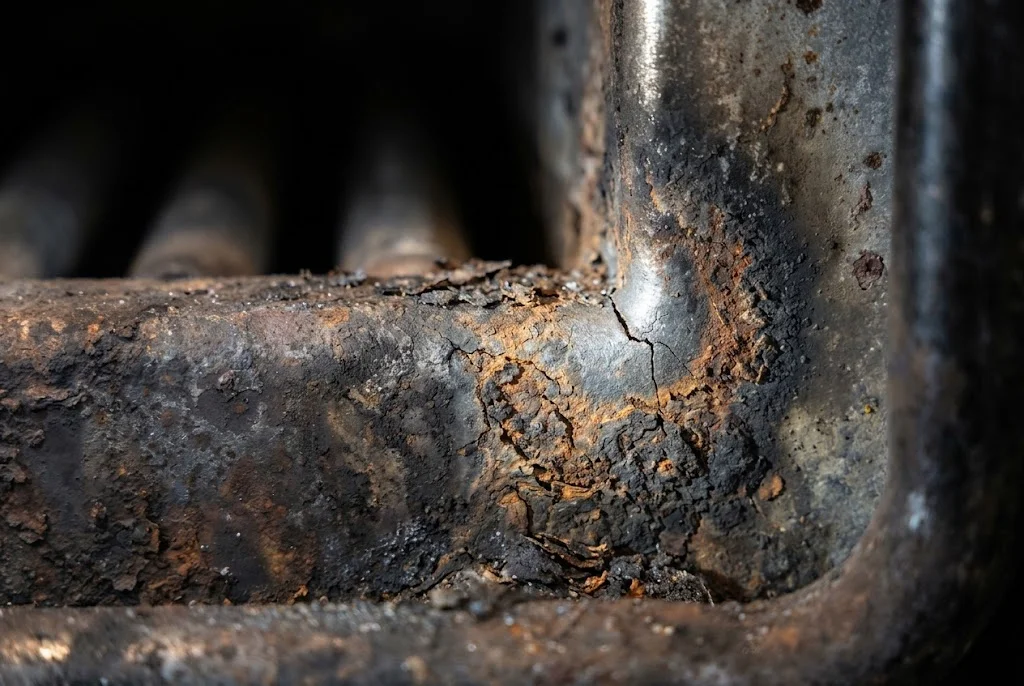
- Visible cracks, rust, or separation: corrosion, white powdery deposits, or warped metal on the heat exchanger.
- Unusual odours or noises: a sharp, harsh smell, or a booming or rattling sound as the burners light.
These signs can also come from blocked vents, dirty burners, or other problems, so none of them proves a crack on its own. That is why the next step is always a licensed inspection.
What causes a cracked heat exchanger
- Overheating from poor airflow: a clogged filter, closed vents, blocked returns, or a weak blower make the heat exchanger run too hot, cycle after cycle. This is the most preventable cause.
- Age and metal fatigue: thousands of heating and cooling cycles weaken the metal over time.
- Corrosion: condensation, chlorine from laundry and pool products, or a poorly vented furnace can rust the metal from the inside.
- An oversized furnace: short, hot cycles in a furnace too big for the home or ducts add stress. Our furnace size guide explains why.
- Poor combustion: incorrect gas pressure or dirty burners create hot spots.
- Installation and venting problems: undersized ducts or incorrect venting can shorten the life of the heat exchanger.
How a technician confirms it
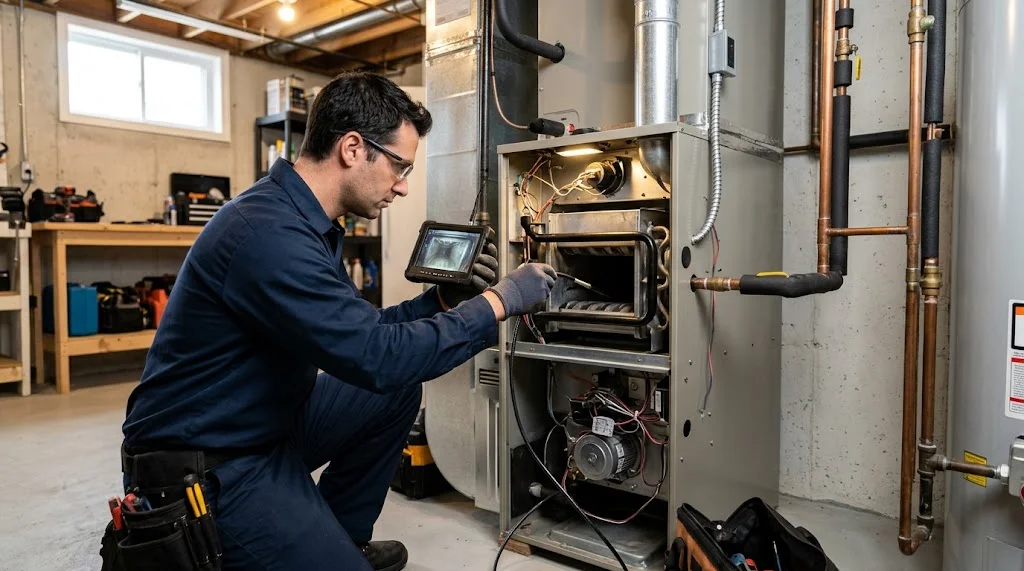
A cracked heat exchanger is hard to see, because most of the metal is hidden inside the furnace. A technician uses several checks together rather than relying on one test. They inspect the burners and heat exchanger with a light and an inspection camera, watch the flame closely as the blower starts and stops, and look for soot, rust, and heat damage. They measure carbon monoxide in the flue and in the supply air with a combustion analyzer, and they compare readings with the blower on and off. They also check the rollout and limit switches, the venting, and the airflow, since overheating is often the reason the crack formed.
A good technician shows you what they found. Ask for photos or a camera view of the crack, the CO readings, and the furnace model and serial number so you can check the warranty.
What a red tag means in Ontario
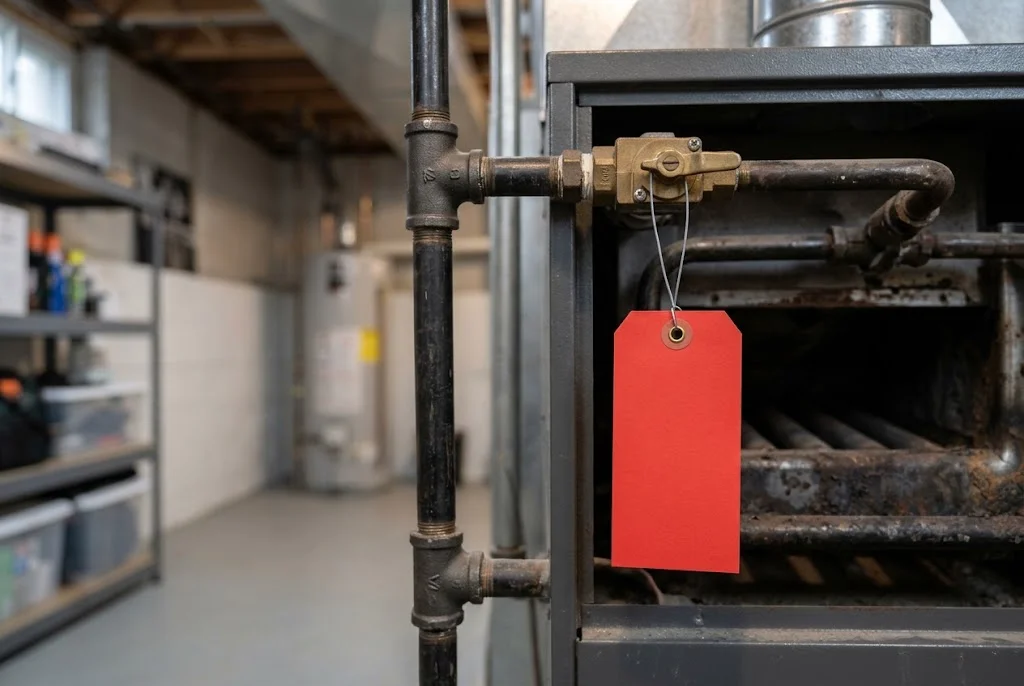
In Ontario, gas technicians follow Ontario Regulation 212/01. When a technician finds a condition they judge to be an immediate hazard, they must shut off the gas to the appliance, attach a warning notice, tell you in writing not to use it, and notify the gas distributor, which in Durham Region is usually Enbridge Gas. A cracked heat exchanger that is leaking combustion products into the air stream is commonly treated as an immediate hazard. This is what most people call a red tag.
For a condition that is unacceptable but not an immediate hazard, the gas may stay on, but the appliance is still tagged and the distributor is notified. The distributor then sets a deadline of no more than 90 days to correct it, and the gas can be shut off if it is not fixed in time. Once the furnace is repaired or replaced, the work is inspected and the tag is cleared through the gas distributor. If you are unsure about a red tag, you can ask a different licensed contractor for a second opinion, but the furnace must stay off until the condition is cleared.
Can a cracked heat exchanger be repaired?
In most cases, no. Welding or patching a heat exchanger is not a safe or approved fix for a residential furnace. The two real options are replacing the heat exchanger or replacing the furnace.
| Option | When it makes sense | Things to weigh |
|---|---|---|
| Replace the heat exchanger | A newer furnace still covered by the manufacturer’s heat exchanger warranty | Labour is significant, and the furnace is out of service while the part is ordered |
| Replace the furnace | An older furnace, an expired warranty, or other parts also failing | A new high efficiency furnace can lower gas bills and comes with a new warranty |
Many heat exchangers carry a long manufacturer warranty, so always check the model and serial number before deciding. Our guides on whether to repair or replace your furnace, how long a furnace lasts in Ontario, and high efficiency furnaces can help you decide. Our team handles furnace repairs and furnace replacement in Whitby and across Durham Region.
How to protect your heat exchanger
The best way to avoid a cracked heat exchanger is to keep the furnace from overheating. Change the filter every one to three months, keep supply registers open and return grilles clear, and keep the outdoor vent pipes free of snow and ice. Store laundry products, pool chemicals, and paint away from the furnace, since their vapours can corrode the metal. Test your carbon monoxide alarms every month. Most of all, book a yearly tune-up, where a technician inspects the heat exchanger, tests combustion, and checks airflow before winter. Our furnace maintenance guide lists everything a visit covers, and our maintenance and protection plans include it every year.
Key terms in this article
- Heat exchanger: the sealed metal chamber that transfers heat from the flames to your home’s air.
- Secondary heat exchanger: the extra heat exchanger in a high efficiency furnace that captures heat from the exhaust.
- Combustion analyzer: a meter that measures carbon monoxide and other gases in the flue and air.
- Flame rollout: flames escaping the burner area, which trips the rollout switch.
- Red tag: the common name for the warning notice placed on an appliance a technician has found unsafe.
- Gas distributor: the gas utility, such as Enbridge Gas, that is notified when an appliance is tagged.
Frequently asked questions
| Your cracked heat exchanger questions, answered |
|---|
| What are the signs of a cracked heat exchanger? Common signs of a cracked heat exchanger are a carbon monoxide alarm, flu-like symptoms at home that ease when you leave, a yellow or dancing burner flame, soot around the furnace, a tripped rollout switch, visible rust or cracks, and unusual odours or booming at ignition. A licensed technician must confirm it. |
| Is it safe to run a furnace with a cracked heat exchanger? No. A cracked heat exchanger can let combustion gases, including carbon monoxide, into your home’s air and can cause flame rollout. A furnace with a confirmed crack should stay off until the heat exchanger or the furnace is replaced. |
| Can a cracked heat exchanger be repaired? In most cases a cracked heat exchanger is not repaired. The safe options are replacing the heat exchanger, often worthwhile on a newer furnace still under warranty, or replacing the furnace. |
| What happens when a furnace is red tagged in Ontario? Under Ontario Regulation 212/01, if a technician finds an immediate hazard, they shut off the gas, attach a warning notice, tell you in writing not to use the appliance, and notify the gas distributor. For an unacceptable condition that is not immediately hazardous, the distributor sets a correction deadline of no more than 90 days. |
| What causes a furnace heat exchanger to crack? The most common cause is overheating from poor airflow, such as a clogged filter, closed vents, or a weak blower. Age and metal fatigue, corrosion, an oversized furnace, and poor combustion also contribute. |
Do not take our word for it alone. Read our 364 verified reviews on Google, and see the Heating, Refrigeration and Air Conditioning Institute of Canada for what accredited contractors are expected to deliver.
References and further reading