High Efficiency vs Mid Efficiency Furnace: AFUE Explained for Ontario Homes
High Efficiency vs Mid Efficiency Furnace: AFUE Explained for Ontario Homes
 Ben Amina
Aire One East Heating & Cooling, 1910 Dundas St E #117, Whitby
A high efficiency furnace is a condensing gas furnace that turns about 95 to 98 percent of the gas it burns into heat for your home, compared with roughly 78 to 84 percent for an older mid efficiency furnace. That difference is measured by a rating called AFUE, and it shows up on every heating bill. In Canada, new residential gas furnaces must now meet a minimum of 95 percent AFUE, so if you are replacing an older furnace in Durham Region, your new one will almost certainly be high efficiency. This guide explains what AFUE means, how the two types differ, how much you can save, what changes at installation, and when an upgrade makes sense. For pricing, see our new furnace cost guide.
- AFUE is the share of the fuel a furnace turns into usable heat over a year. A 96 percent AFUE furnace wastes about 4 percent.
- Mid efficiency furnaces are about 78 to 84 percent AFUE and vent through a chimney; condensing furnaces are 90 to 98 percent and vents through PVC pipes.
- Natural Resources Canada estimates that replacing a 20-year-old 78 percent furnace with a 95 percent model cuts annual energy costs by about 18 percent.
- New residential gas furnaces in Canada must meet a minimum of 95 percent AFUE.
- A condensing furnace needs a condensate drain and PVC venting, and an older water heater left alone in the chimney may need a liner.
Short answer: a high efficiency furnace (95 percent AFUE or higher) wastes far less gas than a mid efficiency furnace (about 78 to 84 percent AFUE), so it costs less to run, vents through PVC pipes instead of a chimney, and is now the standard for new gas furnaces in Canada.
If your furnace is 15 to 20 years old or more, upgrading usually pays off in lower bills and better comfort. Aire One East installs high efficiency furnaces across Durham Region. Call 905-576-7600.
What does AFUE mean?
AFUE stands for Annual Fuel Utilization Efficiency. It is the percentage of the fuel a furnace burns over a typical year that actually becomes heat inside your home. The rest escapes up the chimney or vent. A furnace with 80 percent AFUE turns 80 cents of every gas dollar into heat and loses 20 cents, while a 96 percent AFUE furnace loses only about 4 cents. You will find the AFUE rating on the furnace's EnerGuide label, in its specifications, or on the rating plate inside the cabinet.
High efficiency furnace vs mid efficiency furnace
| Feature | Mid efficiency furnace | High efficiency furnace |
|---|---|---|
| AFUE rating | About 78 to 84 percent | About 90 to 98 percent (95 percent or higher for new units) |
| Heat exchangers | One | Two, the second captures heat from the exhaust |
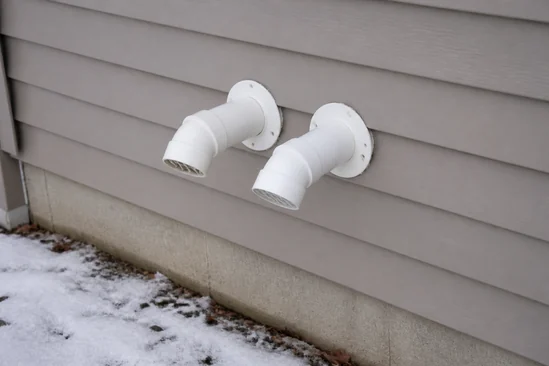
| Venting | Metal flue into a chimney, or power vented | Two white PVC pipes, usually out a side wall |
| Condensate | None | Yes, drains to a floor drain or condensate pump |
| Running cost | Higher | Lower |
| Available new in Canada | Only in limited replacement cases | Yes, the standard for new gas furnaces |
AFUE ranges from Natural Resources Canada, verified November 2026.
How a high efficiency furnace works
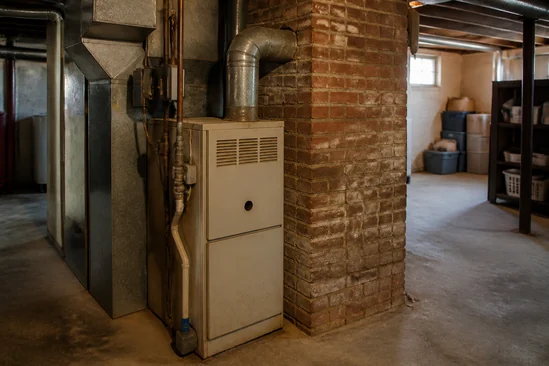
Every gas furnace burns fuel in a heat exchanger and blows household air across it. A mid efficiency furnace stops there, so its exhaust leaves hot, carrying heat up the chimney. A condensing model adds a second heat exchanger that pulls more heat out of the exhaust, cooling it so much that the water vapour in it condenses into liquid. That is why these furnaces are also called condensing furnaces. Because the exhaust is cool, it can safely leave through plastic PVC pipes instead of a chimney, and the condensate drains away through a small line or pump. Many models also use a two-stage or modulating burner and a variable-speed blower, which run longer at lower output for steadier temperatures and quieter operation.
How much does a high efficiency furnace save?
Natural Resources Canada estimates that replacing a 20-year-old furnace rated at 78 percent AFUE with a 95 percent model will reduce annual energy costs by about 18 percent. Replacing a very old conventional furnace, which can be as low as 60 percent AFUE, saves even more, close to 38 percent of the fuel. Your actual savings depend on your gas rates, how much you heat, your home's insulation, and how the new furnace is sized and installed. A new furnace with a variable-speed blower can also cut the electricity the fan uses. Pair the upgrade with sensible winter thermostat settings to stretch the savings further.
Canadian efficiency rules in 2026
Under Canada's Energy Efficiency Regulations, residential gas furnaces with an input of 225,000 Btu/h or less must meet a minimum AFUE of 95 percent. There are narrow exceptions, such as certain replacement non-condensing units and furnaces for relocatable buildings, but for most Durham homes, any new gas furnace you buy today is a condensing model. That means the real decision is usually not high or mid efficiency, but when to replace an older mid efficiency unit and which condensing model fits your home.
What changes when you upgrade
Moving from a mid efficiency furnace to a condensing furnace involves a few changes a licensed installer handles:
- New venting: two PVC pipes are run to an outside wall or the roof, installed to code with the right slope and clearances.
- Condensate drain: a drain line to a floor drain, or a condensate pump if no drain is nearby.
- Chimney liner: if a gas water heater stays in the old chimney on its own, the chimney may need an approved liner, or you may choose to replace the water heater with a model that does not need a chimney.
- Sizing: a heat load calculation makes sure the new furnace is the right size, since many older furnaces were oversized.
- Permits and safety checks: gas work in Ontario must be done by a TSSA-certified gas technician.
Our furnace installation service covers all of this, and we handle furnace replacement in Whitby and across Durham Region.
Is it worth upgrading to a high efficiency furnace?
If your current furnace is a mid efficiency or older conventional unit, especially one 15 to 20 years old or more, an upgrade is usually worth it: lower gas bills, steadier comfort, and no chimney to maintain for the furnace. If your older furnace still runs well and needs only small repairs, it can make sense to wait and plan the upgrade rather than replace it in an emergency. Our guides on how long a furnace lasts in Ontario and whether to repair or replace your furnace can help you decide. If you are also open to electric heat, compare a new gas furnace with the options in our heat pump vs furnace guide and our gas vs electric furnace guide.
Once your new furnace is in, a yearly tune-up keeps it running at its rated efficiency. Our furnace maintenance guide lists what each visit covers, and our maintenance and protection plans include it every year.
Key terms in this article
- AFUE: Annual Fuel Utilization Efficiency, the percentage of fuel a furnace turns into usable heat over a year.
- Condensing furnace: another name for a high efficiency furnace, which condenses water from its exhaust to capture extra heat.
- Secondary heat exchanger: the second heat exchanger in a high efficiency furnace that pulls heat from the exhaust.
- Condensate: the water a high efficiency furnace produces, drained to a floor drain or pump.
- Modulating burner: a burner that adjusts its output in small steps to match the heat your home needs.
Frequently asked questions
| Your furnace efficiency questions, answered |
|---|
| What is considered a high efficiency furnace? A high efficiency furnace is a condensing gas furnace with an AFUE of about 90 to 98 percent. New residential gas furnaces in Canada must meet at least 95 percent AFUE, and ENERGY STAR certified models are 95 percent or higher. |
| What is the difference between a mid efficiency and high efficiency furnace? A mid efficiency furnace is about 78 to 84 percent AFUE, has one heat exchanger, and vents hot exhaust through a chimney. A high efficiency furnace adds a second heat exchanger, reaches 95 percent or more, condenses water from its exhaust, and vents through PVC pipes. |
| How much can I save with a high efficiency furnace? Natural Resources Canada estimates that replacing a 20-year-old 78 percent AFUE furnace with a 95 percent model cuts annual energy costs by about 18 percent. Savings are higher when replacing an older conventional furnace and depend on your gas rates and home. |
| Can I still buy a mid efficiency furnace in Canada? For most homes, no. Canada's Energy Efficiency Regulations require new residential gas furnaces with an input of 225,000 Btu/h or less to meet at least 95 percent AFUE, with only narrow exceptions such as certain replacement non-condensing units. |
| Does a high efficiency furnace need a chimney? No. A high efficiency furnace vents through PVC pipes, usually out a side wall. If a gas water heater is left venting alone into the old chimney, the chimney may need an approved liner, which a licensed technician can install. |
Do not take our word for it alone. Read our 364 verified reviews on Google, and see the Heating, Refrigeration and Air Conditioning Institute of Canada for what accredited contractors are expected to deliver.
References and further reading