Furnace Vent Blocked by Snow: What to Do and How to Prevent It
Furnace Vent Blocked by Snow: What to Do and How to Prevent It
 Ben Amina
Aire One East Heating & Cooling, 1910 Dundas St E #117, Whitby
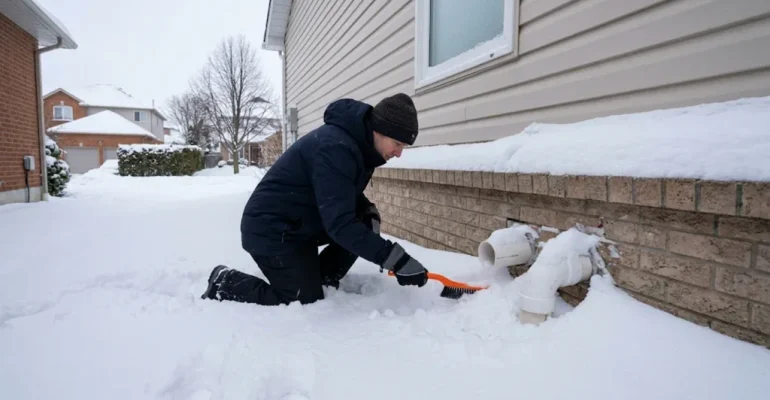
A furnace vent blocked by snow is one of the most common reasons a high efficiency furnace stops heating during a Durham Region snowstorm. Most furnaces installed in the last twenty years vent through two white plastic pipes on the side of the house: one brings in fresh air for combustion and one carries exhaust out. When drifting snow, a plow bank, or ice buries either pipe, the furnace senses that it cannot breathe and shuts itself off to protect your family. The good news is that a furnace vent blocked by snow is usually a quick fix you can handle yourself. This guide explains why it happens, the warning signs, how to clear the pipes safely, what to do if the furnace still will not start, and how to stop it from happening again.
- High efficiency furnaces vent through two side wall pipes, an intake and an exhaust, usually low on an outside wall.
- A furnace vent blocked by snow trips a safety switch that shuts the furnace off, and it may show a flashing code.
- Clear the snow by hand or with a soft brush, never with a shovel blade, heat gun, or flame.
- After clearing, you may need to reset the furnace by turning its power off for about 30 seconds.
- Keep at least a 30 cm (12 inch) clear zone around the pipes all winter, and keep a working carbon monoxide alarm on every floor.
Short answer: A furnace vent blocked by snow makes the furnace safety switch shut it off. Gently clear the snow and ice from both pipes, give the furnace a minute, and reset it once if needed. If it will not restart, or the vent keeps icing up, call a licensed technician.
Aire One East provides 24/7 furnace repair across Durham Region. Call 905-576-7600.
Why a furnace vent blocked by snow shuts the furnace off
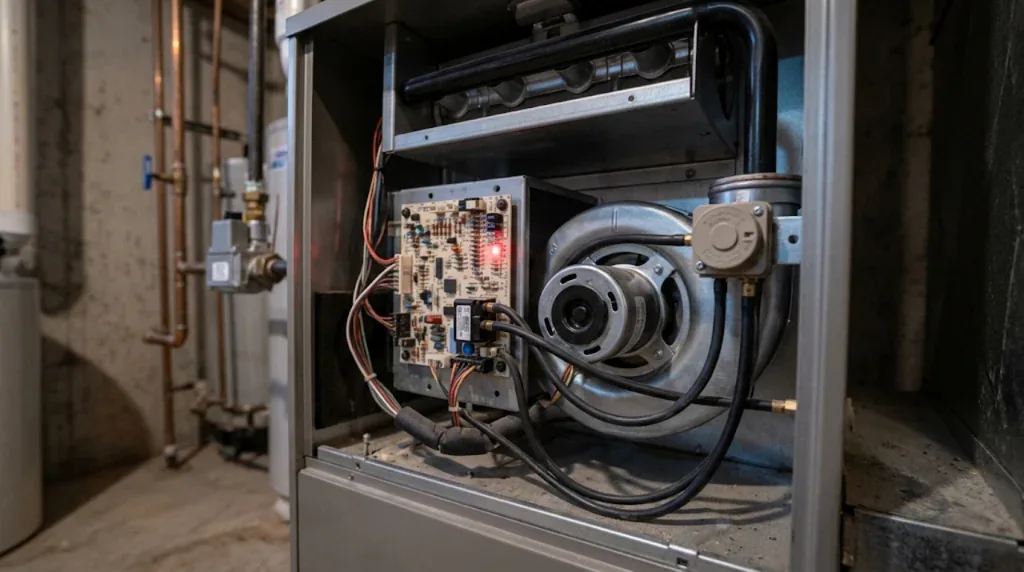
A high efficiency furnace uses a small fan called an inducer motor to pull in combustion air and push exhaust out through plastic venting. Before the burners light, a pressure switch checks that air is moving through the vent. If the intake or exhaust pipe is buried, the switch cannot prove airflow, so the furnace stops before it lights. That is a safety feature, not a breakdown. It keeps exhaust gases from backing up into your home.
A furnace vent blocked by snow usually happens in a few predictable ways in Durham Region:
- Drifting snow: wind piles snow against the side of the house where the pipes come out.
- Snow from the roof or a plow: snow sliding off a roof or thrown by a plow or snowblower lands on the pipes.
- Frost build up: the exhaust from a high efficiency furnace is warm and moist, so in very cold weather ice can form around the pipe opening and slowly close it.
- Low vent placement: pipes that sit close to the ground or the deck get buried first.
Older mid efficiency furnaces usually vent up a metal chimney through the roof instead, so they are less likely to have a furnace vent blocked by snow, although a chimney cap can still ice over.
Signs of a furnace vent blocked by snow
- The house is cooling down during or after a snowstorm, and the thermostat is calling for heat.
- You can hear the inducer fan start, run for a while, then stop without the burners lighting.
- The furnace tries again every few minutes and then gives up.
- The status light on the furnace control board is flashing a code, often the code for a pressure switch problem.
- Outside, one or both white pipes are buried, crusted with ice, or have a ring of frost around the opening.
If you see a flashing light, our furnace blinking light guide explains how to read the codes. A furnace vent blocked by snow often shows the same code as a failed pressure switch, so always check the pipes outside before assuming a part has failed.
How to clear a furnace vent blocked by snow safely
- Turn the thermostat down so the furnace stops trying to start while you work.
- Find both pipes. Most homes have two pipes side by side or one above the other. Some newer furnaces use a single concentric vent with one pipe inside another.
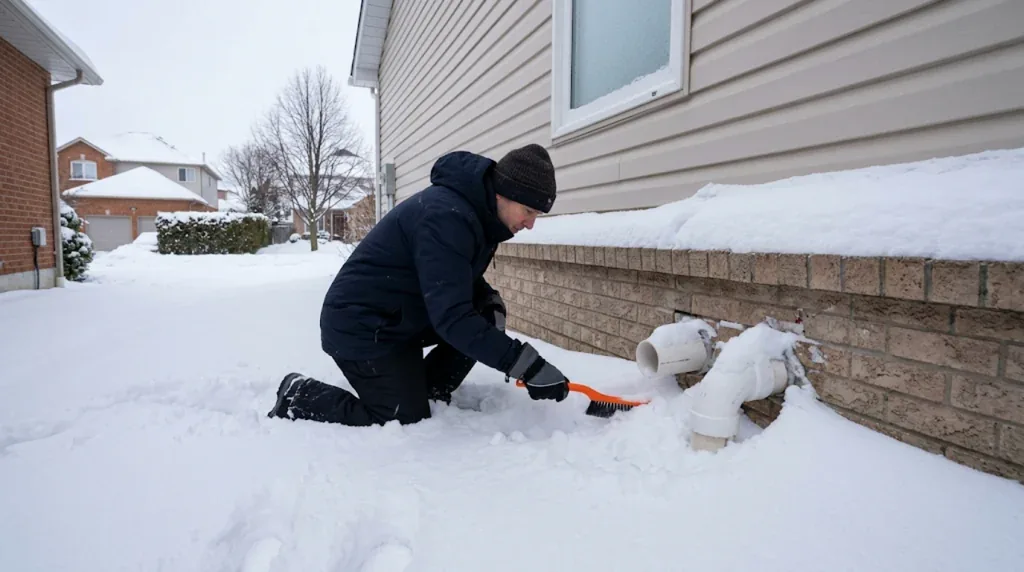
- Clear the snow by hand or with a soft brush, working outward from the pipes. Do not use a metal shovel blade near the pipes, because plastic venting cracks easily in the cold.
- Remove ice gently. Break it away with gloved hands. Never use a heat gun, torch, or hot water, and never chip at the pipe.
- Check inside the pipe opening for packed snow or an ice plug, and clear any screen.
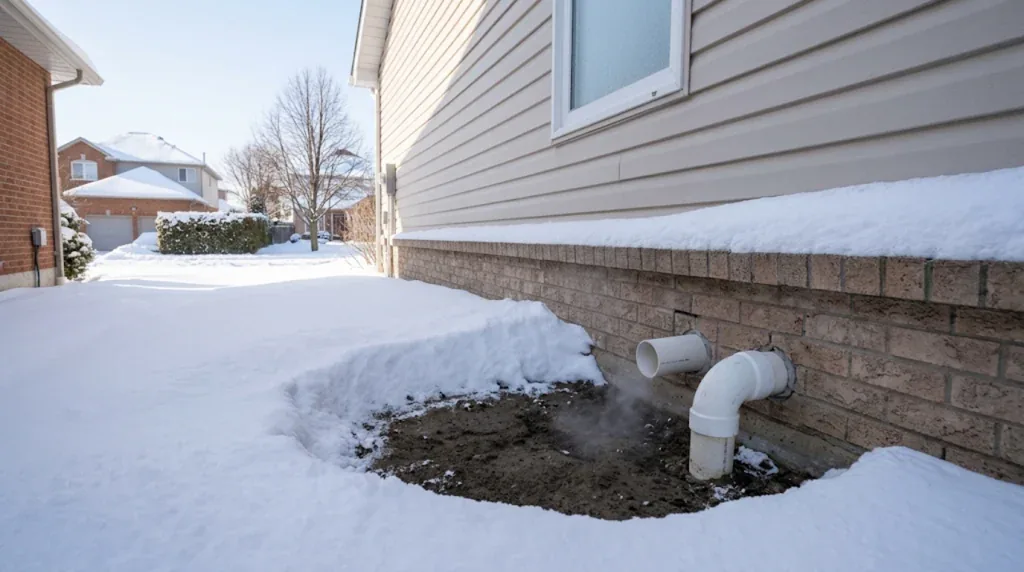
- Clear a wider space of at least 30 cm (about 12 inches) all around the pipes and down to the ground if you can.
- Turn the thermostat back up and listen. The furnace should start on its own within a few minutes.
In most homes a furnace vent blocked by snow takes only a few minutes to clear, and heat returns as soon as the pipes can breathe again.
What to do if the furnace still will not start
Many furnaces lock themselves out after several failed tries. If the vent is now clear and nothing happens, reset the furnace once: turn off the furnace service switch, which usually looks like a light switch near the furnace, or the furnace breaker, wait about 30 seconds, then turn it back on. Our furnace reset button guide walks through this step by step.
Only reset once. If the furnace locks out again, something else may be wrong, such as ice deep inside the exhaust pipe, a frozen or full condensate line, or a weak inducer motor. A plugged condensate drain can also shut down a high efficiency furnace in cold weather, which our furnace leaking water guide covers. At that point it is time to call a licensed technician.
How to prevent a furnace vent blocked by snow
- Check the pipes after every snowfall and every windy day, the same way you would check your driveway.
- Keep a clear zone of at least 30 cm (12 inches) around the pipes, and do not let snowblowers or plows throw snow toward that wall.
- Do not store anything in front of the vents, such as firewood, garbage bins, or patio furniture.
- Mark the spot with a stake or garden flag so you can find the pipes under deep snow.
- Watch for frost. If ice keeps forming on the exhaust, the vent may be too short, too close to the ground, or poorly sloped. A technician can check it.
- Ask about raising the vent. Installation codes and manufacturer instructions generally require the vent ends to sit at least 12 inches above the ground and above the expected snow line. If your pipes keep getting buried, a licensed technician can raise or relocate them.
When to call a technician
Call for service if the furnace will not run after you clear the vent and reset it once, if the exhaust pipe is cracked or loose, if ice keeps returning to the same spot, if you see water dripping inside around the furnace, or if your carbon monoxide alarm goes off. Our furnace carbon monoxide guide lists the warning signs. A furnace vent blocked by snow should never be ignored, because a damaged or partly blocked exhaust can be a safety problem as well as a comfort one.
Our licensed technicians handle furnace repairs around the clock in Whitby, Oshawa, Ajax, Pickering, Courtice, Bowmanville, Port Perry and Uxbridge. If you have a newer furnace and want to understand how it vents, our high efficiency furnace guide explains the difference between mid and high efficiency models, and our maintenance and protection plans include a vent inspection every year.
Key terms in this article
- Intake pipe: the pipe that brings outdoor air in for combustion
- Exhaust pipe: the pipe that carries combustion gases out of the house
- Pressure switch: a safety switch that confirms air is moving through the vent before the burners light
- Inducer motor: the small fan that moves air and exhaust through the vent
- Lockout: a safety state where the furnace stops trying to start after repeated failures
- Concentric vent: a single vent kit where the intake pipe surrounds the exhaust pipe
Frequently asked questions
| Your blocked furnace vent questions, answered |
|---|
| What happens if my furnace vent is blocked by snow? A furnace vent blocked by snow stops the pressure switch from confirming airflow, so the furnace shuts off before the burners light. It may try a few times, flash a code, and then lock out until the vent is cleared and the furnace is reset. |
| Is a furnace vent blocked by snow dangerous? Modern furnaces are designed to shut off when the vent is blocked, which protects you. A cracked, loose, or partly blocked exhaust pipe can still be a carbon monoxide risk, so keep working CO alarms on every floor and call a technician if anything looks damaged. |
| How do I unfreeze my furnace exhaust pipe? Turn the thermostat down, then gently break away ice with gloved hands and clear the opening. Do not use a heat gun, torch, or boiling water. If ice keeps forming, have a technician check the vent length, slope, and placement. |
| How far should snow be kept from furnace vents? Keep a clear zone of at least 30 cm, about 12 inches, around the intake and exhaust pipes all winter. If your pipes sit lower than the usual snow level, ask a licensed technician about raising them. |
| Do I need to reset my furnace after clearing the vent? Often the furnace restarts on its own. If it stays off, turn off the furnace service switch or breaker for about 30 seconds and turn it back on. Reset only once. If it locks out again, call for service. |
Do not take our word for it alone. Read our 364 verified reviews on Google, and see the Heating, Refrigeration and Air Conditioning Institute of Canada for what accredited contractors are expected to deliver.
References and further reading