Do Air Duct Cleaning Services Damage Your HVAC System?

Do Air Duct Cleaning Services Damage Your HVAC System?
Air duct cleaning damage is a fair thing to worry about, because it does happen, just not the way most people fear. Done properly by trained technicians, cleaning your ducts will not hurt your HVAC system. Done carelessly with the wrong tools, it genuinely can. This guide gives you the honest version so you can tell a safe job from a risky one before you book. It links to our vent and air duct cleaning service where relevant.
Aire One East is a Carrier Factory Authorized contractor, family-owned and serving Durham Region homeowners since 1991, with licensed technicians, 4.8 stars from 364 Google reviews, and 24/7 emergency service. For a duct inspection and honest advice, call 905-576-7600 or request a quote.

How Professional Duct Cleaning Works
Understanding the process makes it easy to spot who is doing it right. Proper duct cleaning is source removal: a technician puts the whole system under continuous negative pressure with a powerful, HEPA-filtered vacuum, then uses brushes, air whips, or compressed-air tools to loosen debris so the vacuum can carry it out of your home. Done this way, contaminants are captured, not blown around your living space.
According to NADCA, the industry standard body, the entire system should be cleaned, not just the ducts, including registers, grilles, coils, the blower, and the fan housing, because cleaning only part of it lets the system recontaminate itself. Sometimes the crew must cut small access openings in the ductwork and then seal them properly afterward, which takes real skill. That craftsmanship is exactly where the difference between a safe job and a damaging one shows up.
How Bad Duct Cleaning Damages HVAC Systems
Here is the honest part. When air duct cleaning damage happens, it is almost always because of untrained crews using the wrong equipment or too much force, not because cleaning is inherently risky. The common failure modes:
| What goes wrong | How it happens | The result |
|---|---|---|
| Torn or crushed ducts | Too much suction or aggressive brushing on flexible or older ducts | Air leaks, lost efficiency, higher bills |
| Damaged components | Rough handling of coils, fans, or the blower | Poor performance, costly repairs |
| Contaminants spread | Weak or non-HEPA vacuum collection | Air quality worse than before cleaning |
| Disturbed asbestos | Cutting or brushing older insulation without precautions | A serious health hazard |
| Leaky access holes | Service openings cut but not sealed correctly | Duct leaks, wasted energy |
General guidance based on EPA and NADCA information, verified July 2026. Damage risk depends on the contractor’s training and method.
One point the EPA stresses: an inadequate vacuum collection system can release more dust and contaminants than if you had left the ducts alone. In other words, a cheap or rushed cleaning can leave your home worse off. That is the real risk to weigh, and it is entirely avoidable with the right crew.
How a Good Contractor Protects Your System
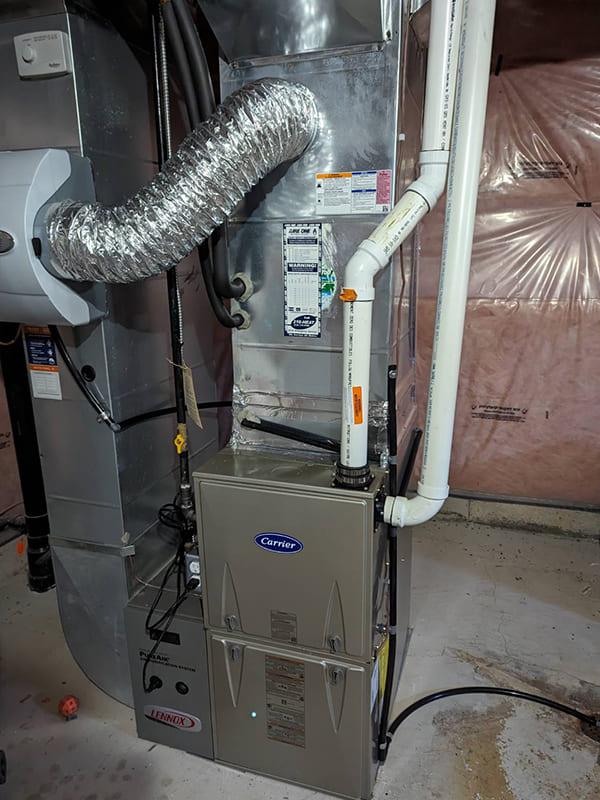
The safeguards are not complicated, they just take training and honesty. A contractor who protects your system will:
- Inspect first, confirming there is real contamination and checking the duct type before any tool goes in
- Follow NADCA standards, using continuous negative pressure and HEPA-filtered collection so debris leaves your home
- Match the method to the duct, since metal, fibreglass-lined, and flexible ducts each need different handling
- Skip harsh chemicals and unnecessary sealants, which the EPA and NADCA do not recommend for routine cleaning
- Seal every access opening they cut, and show you the before-and-after so you can verify the work
Here is why Durham families across Whitby, Oshawa, Ajax, Pickering, Courtice, Bowmanville, Port Perry, and Uxbridge trust Aire One East:
- Carrier Factory Authorized Dealer, a factory-verified standard for training and service
- Family-owned since 1991, serving a third generation of Durham Region homeowners
- 4.8 stars from 364 Google reviews, earned one visit at a time
- Trained, certified technicians who follow NADCA standards and inspect before they clean
- Upfront pricing, with your approval before any work starts
[INSERT AIRE ONE EAST DATA: e.g. number of duct inspections completed in Durham Region last year, or share where the system was found sound and cleaning was safe to proceed, with the number (N) and window, compiled by the service team. Publish only with a real sample of at least 30. Delete this line if no real figure is available.]
When Duct Cleaning Is Worth Booking
Fair and honest: you do not need routine duct cleaning on a fixed schedule, and neither the EPA nor NADCA recommends it as automatic maintenance. Book an inspection, and clean only when there is a real reason. Cleaning is genuinely worth it when:
- You can see mould inside hard-surface ducts or on HVAC components, or smell a musty odour when the system runs
- You have pests, with signs of rodents or insects nesting in the ductwork
- You just finished renovations or construction, when drywall dust and debris entered the system
- There is heavy visible debris blowing from the supply registers
One important note for older Durham homes: if there is any chance of asbestos in or near the ductwork or insulation, do not let anyone disturb it without proper testing and precautions. This is a safety issue first. A reputable contractor will flag it, not brush past it. If you are also wondering whether cleaning will cut everyday dust, that is a separate question we cover in our guide on duct cleaning and dust, and our maintenance protection plans keep the rest of your system healthy year-round.
Air Duct Cleaning and HVAC Damage FAQ
Can air duct cleaning damage your HVAC system?
It can if it is done carelessly. Untrained crews using too much force or the wrong tools can tear ducts, damage coils or fans, or spread contaminants with a weak vacuum. Done properly by trained technicians following NADCA standards, cleaning does not damage your system. The risk is in the contractor and method, not the cleaning itself.
How do I know if a duct cleaner is safe to hire?
Look for training and NADCA standards, an inspection before any work, HEPA-filtered vacuum collection, and a willingness to show you the contamination and the before-and-after. Avoid anyone who pushes routine cleaning as regular maintenance, uses harsh chemicals, or offers a suspiciously cheap whole-home special that balloons on site.
Can duct cleaning make my air quality worse?
Yes, if done badly. The EPA notes that an inadequate vacuum collection system can release more dust and contaminants than leaving the ducts alone. That is why continuous negative pressure and HEPA filtration matter. A qualified crew captures debris rather than stirring it into your living space.
What about asbestos in older Durham homes?
This is a real concern in older homes. Some insulation and building materials contained asbestos, and disturbing them during cleaning can release harmful fibres. Never let anyone cut or brush suspect materials without proper testing and precautions. A responsible contractor will identify the risk and stop, not work around it.
How often should air ducts actually be cleaned?
There is no fixed schedule. The EPA recommends cleaning only as needed, when there is visible mould, pests, heavy debris, or recent construction. NADCA suggests a duct inspection about once a year, then cleaning only if the inspection finds a real reason. Many homes go years without needing a cleaning.
Worried About Damage? Start With an Inspection
Aire One East inspects your ductwork first and cleans only when it is safe and worthwhile, following NADCA standards. Office hours Monday to Saturday, 8am to 8pm. Emergency service 24/7.
Call Now: 905-576-7600 Book a Duct Inspection Get A Free QuoteReferences
- U.S. Environmental Protection Agency, Should You Have the Air Ducts in Your Home Cleaned?
- NADCA, Proper Cleaning Methods
- NIH Division of Occupational Health and Safety, HVAC Duct Cleaning Fact Sheet
General guidance verified July 2026, subject to change. For asbestos or health concerns, consult a qualified specialist.