Running a Furnace on a Generator: How to Keep the Heat On in a Power Outage
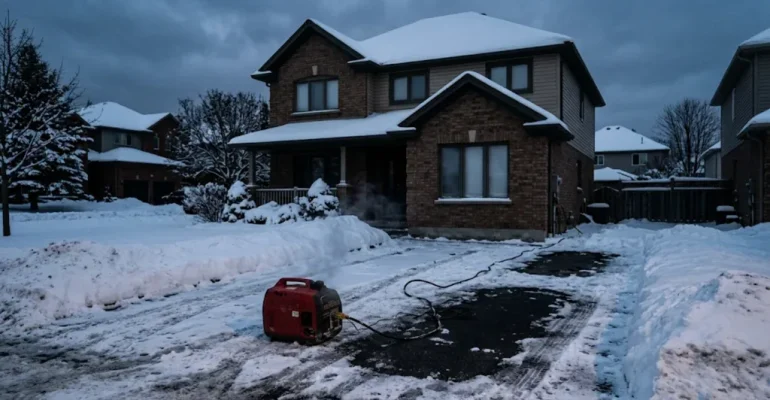
Running a Furnace on a Generator: How to Keep the Heat On in a Power Outage
 Ben Amina
Aire One East Heating & Cooling, 1910 Dundas St E #117, Whitby
Running a furnace on a generator is the most reliable way to keep a Durham Region home warm when an ice storm or windstorm knocks out the power. Many people are surprised to learn that a natural gas furnace stops working in an outage even though the gas is still flowing. The furnace needs electricity for its control board, igniter, inducer fan, and blower. Without power, there is no heat. A properly sized generator, connected the right way, can keep the furnace running for as long as the outage lasts. Connected the wrong way, it can damage the furnace, endanger utility workers, or fill a home with carbon monoxide. This guide explains how to run a furnace on a generator safely, what kind of generator to use, how it should be connected, and what to do if you do not have one.
- A gas or oil furnace needs electricity to run, so it stops working in a power outage.
- You can run a furnace on a generator if the generator is sized for the furnace and connected safely through a transfer switch or interlock.
- The safe connection is a transfer switch or interlock installed by a licensed electrician, not an extension cord into a wall outlet.
- Inverter generators give cleaner power that is gentler on modern furnace control boards.
- Run generators outdoors only, well away from windows, doors, and vents, and keep CO alarms working on every floor.
Short answer: Yes, you can run a furnace on a generator. Use a generator sized for your furnace, connect it through a transfer switch or interlock installed by a licensed electrician, and run the generator outdoors far from windows and vents. Never plug a generator into a wall outlet to back feed the house.
Aire One East can check that your furnace is ready for generator power across Durham Region. Call 905-576-7600.
Why a gas furnace needs electricity
Modern furnaces are controlled by electronics. When the thermostat calls for heat, the control board starts the inducer fan, checks the pressure switch, powers the igniter, opens the gas valve, proves the flame, and then starts the blower to move warm air through the ducts. Every one of those steps needs electricity. Even older furnaces with a standing pilot light still need power for the blower. That is why the heat goes off with the lights, and why so many Durham homeowners look into running a furnace on a generator after their first long winter outage.
The good news is that a furnace uses far less power than a whole house. The blower motor is the largest load, and it is much smaller than an electric water heater, stove, or dryer. That makes running a furnace on a generator practical for most homes.
Sizing for a furnace on a generator
The right size depends on your furnace, so start with the facts rather than a guess. Look at the rating label inside the furnace door, which lists the voltage and the amps the furnace draws, and note the size of the blower motor. A licensed electrician uses that information to choose a generator with enough running power and enough extra capacity for the moment the blower motor starts, which briefly draws more than it does while running.
When you plan a furnace on a generator setup, also plan for anything else you want to power at the same time, such as the fridge, a sump pump, a few lights, and phone chargers. A generator that is too small can stall or deliver unstable power. If you have a heat pump or electric baseboard heat instead of a gas furnace, you will need a much larger generator, which our heat pump in extreme weather guide discusses.
How to connect a furnace on a generator safely
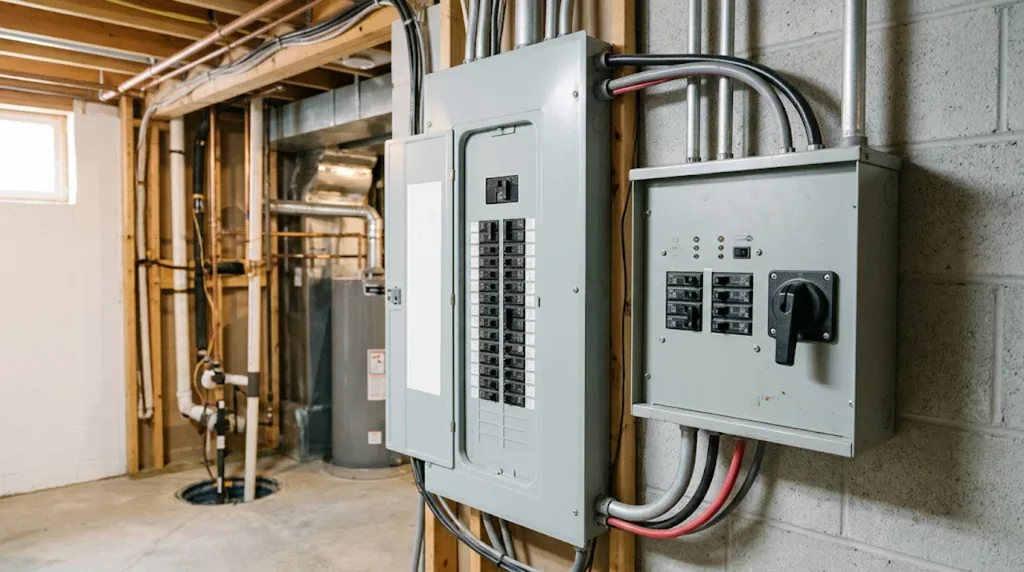
Most furnaces are hard wired to their own circuit, so you cannot simply plug them into a generator. There are three safe ways to connect them:
- A transfer switch: a small panel next to your main electrical panel that lets you switch selected circuits, including the furnace, from utility power to generator power.
- A generator interlock: a device on your main panel that makes it physically impossible to turn on the generator breaker and the main breaker at the same time.
- A standby generator: a permanently installed generator, often running on natural gas, that starts automatically when the power fails and connects through an automatic transfer switch.
In Ontario, this work should be done by a licensed electrical contractor with an Electrical Safety Authority permit. Never plug a generator into a dryer outlet or wall outlet to power the house, sometimes called back feeding. It can send power back into the lines and seriously injure utility crews, and it can start a fire in your home.
Why inverter generators are better for a furnace
The control board in a modern furnace is sensitive to the quality of the power it receives. Some lower cost generators produce power with voltage and frequency swings that can make the furnace act strangely, lock out, or flash error codes. An inverter generator produces cleaner, more stable power and is usually the better choice for running a furnace on a generator. If your furnace refuses to start on generator power but runs fine on utility power, power quality or the wiring connection is often the reason, and our furnace blinking light guide can help you read the code.
Generator placement when running a furnace on a generator
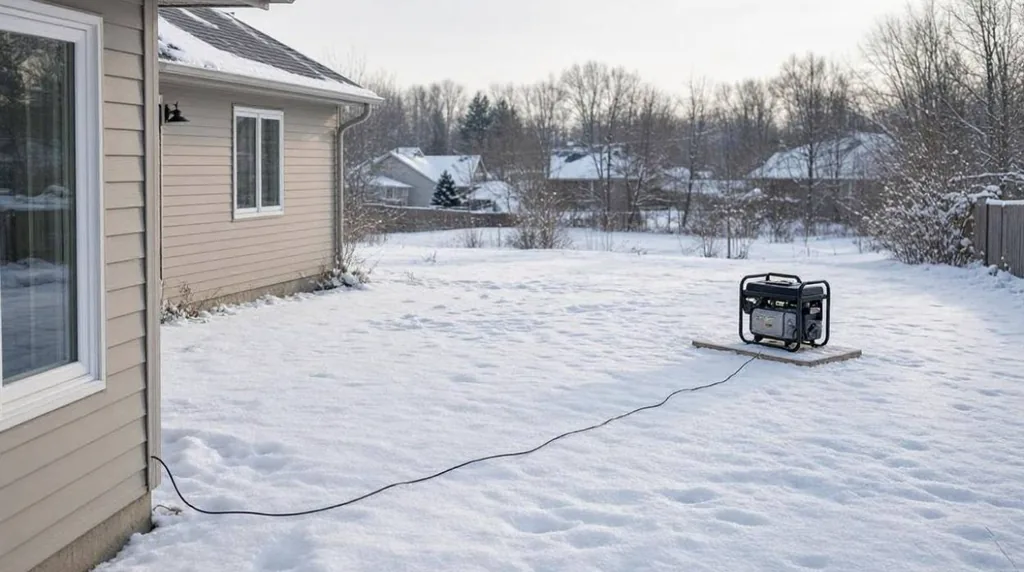
- Outdoors only. Never run a generator inside the house, in the garage, in a shed, or under a deck, even with the door open.
- Away from openings. Keep it well away from windows, doors, and the furnace intake and exhaust pipes, with the exhaust pointing away from the house.
- Protected from weather with a cover made for running generators, and on a level, dry surface.
- Keep CO alarms working on every floor and outside sleeping areas. Our furnace carbon monoxide guide explains the warning signs.
- Keep the furnace vents clear. Outages often come with snow and ice, so check the pipes. See our furnace vent blocked by snow guide.
What to do in an outage without a generator
- Keep doors closed and close curtains to hold heat in the rooms you are using.
- Gather the family in one interior room with blankets and warm clothing.
- Never use a barbecue, camp stove, or outdoor heater indoors to heat the house.
- If the outage will be long and the temperature is far below freezing, protect your pipes by opening cabinet doors and letting taps drip, and consider going to a warming centre.
- When power returns, the furnace should restart on its own. If it does not, follow our furnace reset button guide once, and call us if it still will not run.
Our technicians handle furnace repairs 24/7 across Durham Region, and our maintenance and protection plans include a check of the furnace controls before winter.
Key terms in this article
- Transfer switch: a switch that safely moves selected circuits from utility power to generator power
- Interlock: a device on the main panel that prevents the main and generator breakers from being on together
- Inverter generator: a generator that produces clean, stable power suitable for electronics
- Standby generator: a permanently installed generator that starts automatically in an outage
- Back feeding: sending generator power into a house through an outlet, which is dangerous and unsafe
- Rating label: the plate inside the furnace door that lists its voltage and amps
Frequently asked questions
| Your furnace on a generator questions, answered |
|---|
| Can you run a gas furnace on a generator? Yes, you can run a gas furnace on a generator. A gas furnace needs electricity for its controls, igniter, inducer, and blower, and a properly sized generator can supply it. Connect it through a transfer switch or interlock installed by a licensed electrician. |
| Why does my gas furnace not work when the power is out? The furnace uses electricity to run the control board, igniter, inducer fan, and blower. Without power it cannot light or move warm air, even though the gas supply is still on. |
| Can I plug my furnace into a generator with an extension cord? Most furnaces are hard wired, so they cannot be plugged in without modification. Never back feed the house through a wall or dryer outlet. Have a licensed electrician install a transfer switch, an interlock, or a dedicated generator inlet. |
| What type of generator is best for a furnace? For a furnace on a generator, an inverter generator or a standby generator with clean, stable power is best, because modern furnace control boards are sensitive to voltage and frequency swings. Size it using the furnace rating label and your other essential loads. |
| Where should I put a generator during a power outage? Outdoors only, on a level surface, well away from windows, doors, and furnace vents, with the exhaust pointing away from the house. Never run it in a garage or shed, and keep CO alarms working on every floor. |
Do not take our word for it alone. Read our 364 verified reviews on Google, and see the Heating, Refrigeration and Air Conditioning Institute of Canada for what accredited contractors are expected to deliver.
References and further reading