Furnace Blower Motor: Signs, Causes and Replacement
 Ben Amina
Aire One East Heating & Cooling, 1910 Dundas St E #117, Whitby
A furnace blower motor is the large motor in the lower part of your furnace that pushes warm air through the ducts and into every room. The burners make the heat, but the blower is what delivers it. In Ontario it also moves cool air from your air conditioner in summer, and many homes run it all year for air filtration, so it often works more hours than any other part of the system. When a blower motor starts to fail, you may notice weak airflow, a furnace that runs but leaves the house cold, new humming or squealing, or a hot electrical smell. This guide explains how a furnace blower motor works, the difference between PSC and ECM motors, the eight signs of trouble, what you can safely check, and what repair or replacement involves for homes across Durham Region.
- The blower motor moves heated air through your ducts, and it runs for both heating and air conditioning.
- Weak or no airflow, new noises, a burning smell, and a furnace that cycles off on high temperature are common warning signs.
- A dirty filter and a dust caked blower wheel are the most common reasons a blower works too hard and fails early.
- Older furnaces use PSC motors with a capacitor. Newer ones use variable speed ECM motors that use less electricity.
- Capacitor, motor, and control repairs belong with a licensed technician, because capacitors can hold a dangerous charge.
Short answer: if your furnace lights but little or no warm air comes out of the vents, or the furnace keeps shutting off and restarting, a weak or failing furnace blower motor is a likely cause. Humming without the fan turning often points to a failed capacitor on older motors.
Replace the filter, set the thermostat fan to AUTO, open your registers, then call a technician. Aire One East offers 24/7 furnace repair across Durham Region. Call 905-576-7600.
What does a furnace blower motor do?
In a heating cycle, the inducer fan starts first, the burners light, and the heat exchanger warms up. After a short delay, the control board starts the blower. The blower wheel, a drum shaped fan often called a squirrel cage, pulls cool air from the return ducts, pushes it through the filter and across the hot heat exchanger, and sends it out through the supply ducts to your rooms. When the thermostat is satisfied, the burners shut off, and the furnace blower motor keeps running for a minute or two to pull the remaining heat out of the furnace.
The blower also protects the furnace. If it is not moving enough air, heat builds up inside the cabinet, and a high limit switch shuts the burners off to prevent damage. That is why a weak blower often shows up as short cycling or a furnace that blows lukewarm air. It is a different part from the small inducer fan, which vents combustion gases. Our furnace inducer motor guide compares the two.
PSC vs ECM furnace blower motors
Most furnaces use one of two types of furnace blower motor.
| PSC motor | ECM motor | |
|---|---|---|
| Full name | Permanent split capacitor | Electronically commutated motor |
| Speed | A few fixed speeds | Variable speed, ramps up and down |
| Electricity use | Higher, especially with the fan on all the time | Lower, especially at low fan speeds |
| Common failure | Capacitor, bearings, windings | Electronic control module, bearings |
| Found in | Many older and basic furnaces | Most newer and high efficiency furnaces |
ECM motors are quieter and more efficient, which is why Ontario's building code has required them on furnaces in newly built homes for permits applied for after December 31, 2014. They are also more complex, so a failed ECM often needs either a new control module or a matched replacement motor programmed for your furnace. If you are weighing efficiency upgrades, our high efficiency furnace guide explains what else to look for.
8 signs of a failing furnace blower motor
- Weak airflow: air from the registers feels faint even with a clean filter and open vents.
- No airflow while the burners run: you can hear the burners, but nothing comes out of the vents.
- Humming without spinning: the motor gets power but the wheel does not turn, often a failed capacitor on a PSC motor.
- Squealing, grinding, or rattling: worn bearings or a loose or unbalanced blower wheel. Our furnace making noise guide covers each sound.
- A hot electrical or burning smell: an overheating motor or wiring. See our furnace smells like burning guide.
- Short cycling: the burners shut off early on high temperature because the blower is not moving enough air.
- Some rooms much colder than others: weak airflow reaches the far rooms last. Our uneven heating guide covers the other causes.
- The blower runs nonstop or never stops: a stuck relay, control board, or thermostat setting can keep it running.
Why a furnace blower motor fails
- Dirty filter: a clogged filter makes the motor strain and run hot. This is the most common cause of early failure.
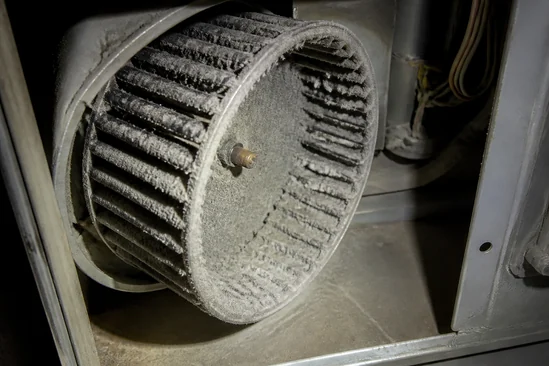
- Dirty blower wheel: dust packed into the blades cuts airflow and unbalances the wheel.
- Failed capacitor: on PSC motors, a weak capacitor makes the motor hum, start slowly, or not start at all.
- Worn bearings: long run times, especially with the fan on all year, wear the bearings out.
- Control module or board faults: ECM modules and furnace control boards can fail from age, heat, or power surges.
- Restricted ductwork: closed registers, blocked returns, or undersized ducts make the motor work against high pressure.
- Age: on an older furnace, the blower is often one of several parts reaching the end of its life.
What you can safely check
These checks rule out simple causes. None of them involve opening the blower compartment or touching wiring.
- Replace the furnace filter, and make sure it faces the right way, with the arrow pointing toward the furnace.
- Set the thermostat fan to AUTO and the system to HEAT, a few degrees above room temperature.
- Open all supply registers and make sure furniture or rugs are not covering return grilles.
- Check that the furnace power switch is on and the breaker has not tripped.
- Make sure the blower compartment door is closed tightly, since a door safety switch stops the furnace when it is loose.
Furnace blower motor repair or replacement
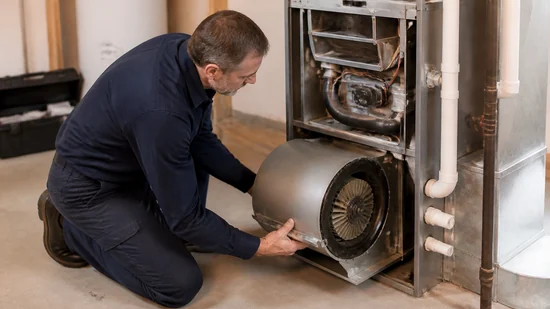
A technician starts by finding out why the blower is struggling. They check the filter and ducts, inspect and clean the blower wheel, test the capacitor on PSC motors, measure the voltage and current draw, and check the control board and relay. Many blower problems are fixed without a new motor. A failed capacitor is a quick replacement, a dirty wheel can be removed and cleaned, and a loose wheel can be tightened and balanced.
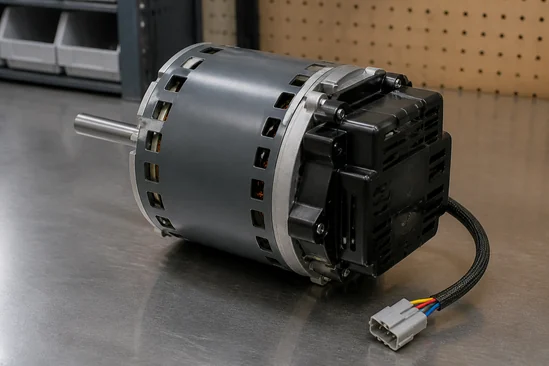
If the bearings or windings have failed, or an ECM module will not respond, the furnace blower motor is replaced with a matching motor for your furnace and set to the correct speed or program for heating and cooling. The technician then measures the temperature rise across the furnace to confirm it is moving the right amount of air, and runs a full heating cycle. Our team handles furnace repairs, emergency furnace repair in Ajax, and furnace repair in Oshawa across Durham Region 24/7. If the furnace has no heat at all, our furnace not working guide walks through the other causes.
If your furnace is older and other parts are failing too, our guides on how long a furnace lasts in Ontario and whether to repair or replace your furnace can help you decide.
How to make a furnace blower motor last
The single best thing you can do for a furnace blower motor is change the filter every one to three months, and more often with pets, renovations, or the fan running all the time. Keep supply registers open and return grilles clear so the motor is not fighting high pressure. Book a yearly tune-up, where a technician cleans the blower wheel if needed, checks the capacitor and current draw, and listens for worn bearings before they fail. Our furnace maintenance guide lists everything a visit covers, and our maintenance and protection plans include it every year, with priority service in a cold snap.
Key terms in this article
- Blower wheel: the drum shaped fan, or squirrel cage, that the blower motor turns.
- PSC motor: a permanent split capacitor motor with a few fixed speeds.
- ECM: an electronically commutated, variable speed motor that uses less electricity.
- Capacitor: a part that gives a PSC motor the boost it needs to start and run.
- High limit switch: a safety switch that shuts off the burners if the furnace overheats.
- Temperature rise: the difference between return air and supply air temperature, used to check airflow.
Frequently asked questions
| Your furnace blower motor questions, answered |
|---|
| How do I know if my furnace blower motor is bad? Common signs of a bad furnace blower motor are weak or no airflow from the vents while the burners run, humming without the fan turning, squealing or grinding, a hot electrical smell, short cycling on high temperature, cold rooms far from the furnace, and a blower that never stops. |
| Can a furnace run without the blower motor? The burners may light, but without the blower the heat stays inside the furnace. The high limit switch then shuts the burners off to prevent overheating, so the house does not warm up. A furnace with a failed blower motor needs repair before it can heat properly. |
| What is the difference between a PSC and ECM blower motor? A PSC motor has a few fixed speeds and uses a capacitor to start and run. An ECM is a variable speed motor with an electronic control module that uses less electricity, especially at low fan speeds. Most newer furnaces use ECM motors. |
| Why is my furnace blower humming but not spinning? On a PSC furnace blower motor, humming without spinning often means a failed capacitor, though seized bearings or a jammed wheel can also cause it. Turn the furnace off and call a technician, since capacitors can hold a dangerous charge. |
| Is it worth replacing a furnace blower motor? On a furnace in good condition, replacing a failed blower motor is usually worthwhile. On an older furnace with other failing parts, a technician can help you compare the repair with a replacement furnace. |
Do not take our word for it alone. Read our 364 verified reviews on Google, and see the Heating, Refrigeration and Air Conditioning Institute of Canada for what accredited contractors are expected to deliver.
References and further reading