Baseboard Heater vs Heat Pump: Which Is Better for Your Home?
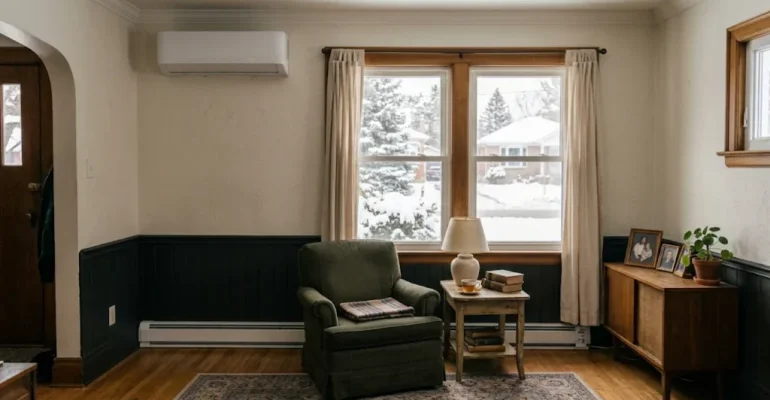
Baseboard Heater vs Heat Pump: Which Is Better for Your Home?
 Ben Amina
Aire One East Heating & Cooling, 1910 Dundas St E #117, Whitby
Baseboard heater vs heat pump is a question we hear often from Durham Region homeowners with electric heat, especially in older bungalows, condos, basement apartments, and homes without ductwork. Electric baseboard heaters are simple, quiet, and cheap to install, but every bit of heat they make comes straight from electricity. A heat pump works differently. It moves heat from the outdoor air into your home, so it can deliver more heat than the electricity it uses. That difference shows up on your hydro bill every winter. This guide compares the two side by side on how they heat, comfort, running costs, cooling, and upfront cost, and explains how a ductless heat pump can replace or work alongside the baseboards you already have.
- Electric baseboard heaters turn electricity directly into heat, one unit of heat for each unit of electricity.
- In a baseboard heater vs heat pump comparison, the heat pump moves heat from outside, so it delivers more heat than the electricity it uses.
- Homes without ducts can switch to a ductless heat pump without tearing open walls.
- A heat pump also cools in summer, while baseboards only heat.
- Many homeowners keep their baseboards as backup heat for the coldest nights.
Short answer: In the baseboard heater vs heat pump comparison, the heat pump usually wins on running costs and comfort because it moves heat instead of making it, and it also provides air conditioning. Baseboards cost less to install and need almost no maintenance. For homes without ducts, a ductless heat pump with the baseboards kept as backup is often the best mix.
Aire One East installs ductless heat pumps in baseboard heated homes across Durham Region. Call 905-576-7600.
How a baseboard heater and a heat pump make heat
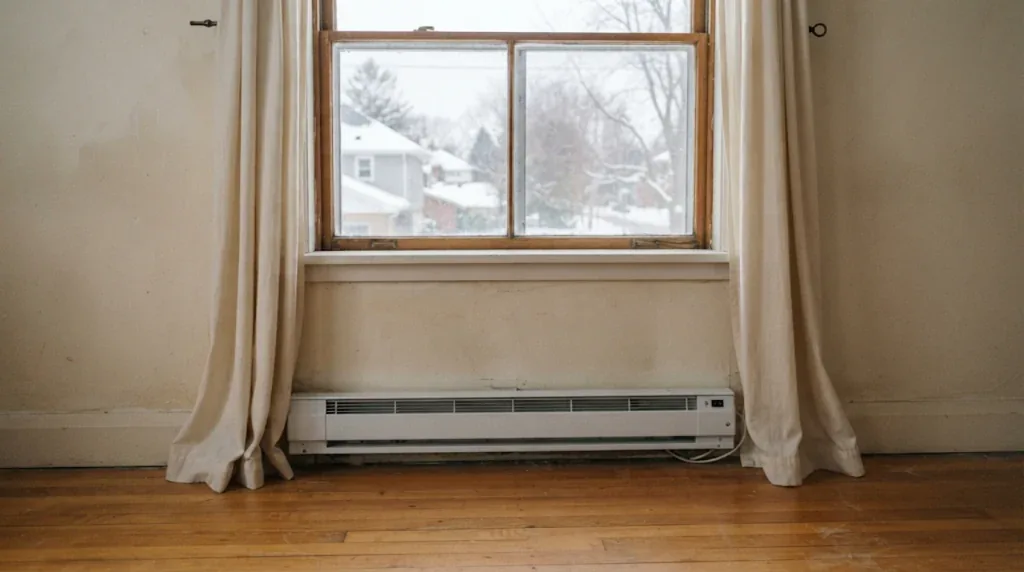
When people compare a baseboard heater vs heat pump, the first thing to understand is how each one makes heat. An electric baseboard heater is a resistance heater. Electricity passes through a metal element, the element gets hot, and the warm air rises into the room. It is simple and reliable, but it can never give you more heat than the electricity it uses.
A heat pump uses a refrigerant cycle, the same principle as your fridge, to pull heat from the outdoor air and move it inside. Because it moves heat rather than creating it, it can deliver more heat energy than the electrical energy it consumes. Natural Resources Canada explains this in its guide to heat pumps, listed in the references below. That is the core of the baseboard heater vs heat pump decision.
Baseboard heater vs heat pump: side by side
Here is how the baseboard heater vs heat pump comparison looks on the points that matter most:
- Running cost: a heat pump usually costs less to run for the same amount of heat. Baseboards are among the most expensive ways to heat a home with electricity.
- Comfort: baseboards heat one room at a time and can leave cold spots and dry air near the floor. A heat pump circulates air for more even temperatures.
- Cooling: a heat pump cools in summer. Baseboards only heat, so you would still need window or portable air conditioners.
- Upfront cost: baseboards are inexpensive to buy and install. A heat pump is a larger investment that pays back through lower running costs.
- Maintenance: baseboards need only a vacuum now and then. A heat pump needs filter cleaning and a yearly service.
- Space: baseboards take up wall space under windows where furniture cannot go. A ductless wall unit sits high on the wall.
Switching from baseboards to a ductless heat pump
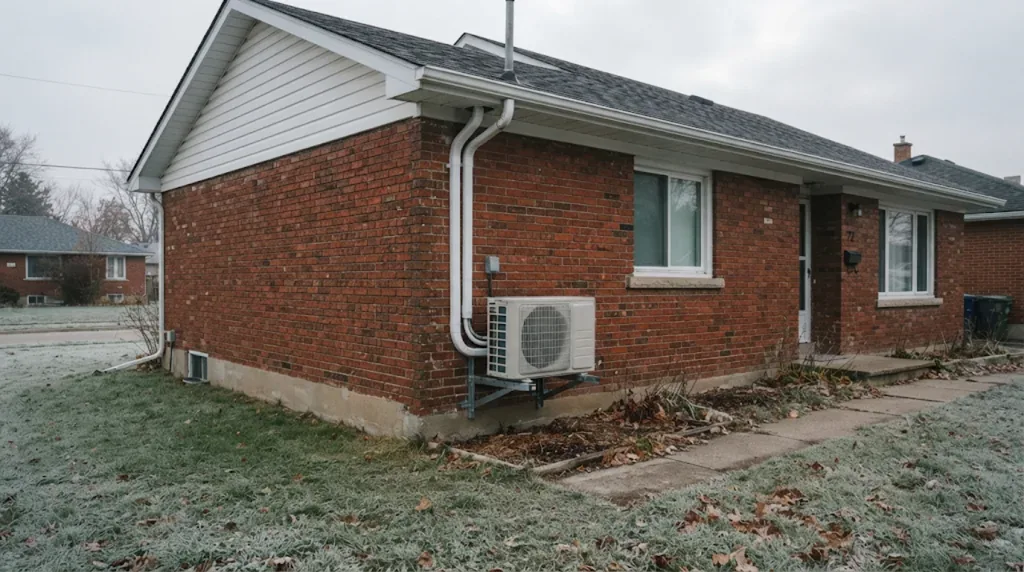
In a baseboard heater vs heat pump upgrade, the usual choice is a ductless heat pump. Most homes heated by baseboards have no ductwork, which is why a ductless heat pump, also called a mini split, is the usual upgrade. An outdoor unit connects to one or more indoor wall units through a small line set that passes through a hole in the wall. There is no need to open ceilings or build bulkheads.
A single zone system can heat and cool an open main floor, while a multi zone system can serve several rooms or a basement apartment. Our ductless mini split guide explains how the systems work, and our team can plan the layout during a free home visit.
Keeping baseboards as backup heat
Choosing the heat pump in the baseboard heater vs heat pump decision does not mean removing your baseboards. Many Durham homeowners leave them in place and set their thermostats a couple of degrees below the heat pump setting. The heat pump does most of the work, and the baseboards only switch on in rooms the heat pump does not reach well or on the very coldest nights. This is a simple way to get the comfort and savings of a heat pump while keeping a familiar backup. If you are comparing other options, our heat pump vs furnace guide covers homes that do have ductwork or a gas line.
Does a heat pump work in an Ontario winter?
This is often the deciding question in a baseboard heater vs heat pump comparison, and the answer is yes. Cold climate heat pumps are designed to keep heating well below freezing, and they handle typical Durham Region winters. On the coldest nights, the heat pump may need help from a backup source, which is another reason many people keep their baseboards. Our heat pump extreme weather guide explains how heat pumps cope with deep cold and ice storms, and our heat pump cost guide for Durham Region covers what affects the price of a system.
Baseboard heater vs heat pump: which is right for you?
Baseboards still make sense for a small room that is rarely used, a cottage you visit a few times a winter, or a quick fix while you plan a bigger upgrade. For a home you live in all year, a heat pump is usually the better long term choice because it lowers running costs and adds air conditioning.
Ask about current incentives and financing on our offers page, see our heat pump installation in Whitby and Oshawa pages, and our heat pump maintenance guide explains how to keep the system running well.
Key terms in this article
- Electric baseboard heater: a wall mounted resistance heater that warms a single room
- Resistance heat: heat made by passing electricity through a heating element
- Heat pump: a system that moves heat from outdoors to indoors in winter and the reverse in summer
- Ductless mini split: a heat pump with indoor wall units and no ductwork
- Zone: a room or area controlled by its own indoor unit or thermostat
- Cold climate heat pump: a heat pump designed to keep heating in very cold outdoor temperatures
Frequently asked questions
| Your baseboard heater vs heat pump questions, answered |
|---|
| Is a heat pump cheaper to run than baseboard heaters? Usually, yes. Baseboard heaters turn electricity directly into heat, while a heat pump moves heat from outside and delivers more heat than the electricity it uses, so it typically costs less to run for the same comfort. |
| Can I install a heat pump if my home has no ducts? Yes. A ductless heat pump, or mini split, connects an outdoor unit to indoor wall units through a small line set, so no ductwork is needed. |
| Should I remove my baseboard heaters after installing a heat pump? You do not have to. Many homeowners keep baseboards as backup heat and set them a couple of degrees below the heat pump so they only run on the coldest nights. |
| Does a heat pump work in a Durham Region winter? Yes. Cold climate heat pumps keep heating well below freezing. On the coldest nights they may need help from a backup heat source such as baseboards. |
| What is better for a basement apartment, baseboards or a heat pump? For a basement apartment that is lived in all year, a ductless heat pump usually gives lower running costs, more even heat, and air conditioning, while baseboards remain a simple backup. |
Do not take our word for it alone. Read our 364 verified reviews on Google, and see the Heating, Refrigeration and Air Conditioning Institute of Canada for what accredited contractors are expected to deliver.
References and further reading