How to Bleed Radiators: A Step by Step Guide for Hot Water Heat
How to Bleed Radiators: A Step by Step Guide for Hot Water Heat
 Ben Amina
Aire One East Heating & Cooling, 1910 Dundas St E #117, Whitby
How to bleed radiators is one of the most useful things a homeowner with hot water heat can learn. If your radiators feel warm at the bottom but cold at the top, or you hear gurgling in the pipes when the heat comes on, air is probably trapped inside the system. That air takes up space where hot water should be, so the radiator cannot give off its full heat. Many older homes in Oshawa, Whitby, and across Durham Region still have cast iron or panel radiators connected to a boiler, and bleeding them once a season keeps the heat even and the boiler working less hard. This guide explains how to bleed radiators safely, step by step, what tools you need, how to check the boiler pressure afterward, and when to call a technician instead.
- Radiators that are cold at the top and warm at the bottom usually have trapped air.
- You need a radiator key or a flat screwdriver, a cloth, and a small container.
- The first rule of how to bleed radiators is to turn the heat off and let them cool.
- Open the bleed valve until air stops hissing and a steady trickle of water appears, then close it.
- Check the boiler pressure gauge afterward, and never try to bleed a steam radiator.
Short answer: To bleed a radiator, turn off the heat and let the radiators cool, hold a cloth and container under the bleed valve, and turn the valve a quarter turn counterclockwise with a radiator key. Let the air hiss out, close the valve as soon as a steady trickle of water appears, then check the boiler pressure gauge.
Aire One East services boilers and hot water heating systems across Durham Region. Call 905-576-7600.
Why radiators need bleeding
Hot water heating systems are closed loops. The boiler heats water, a pump circulates it through the radiators, and the cooled water returns to the boiler. Over time, small amounts of air get into the loop, especially after a repair, a refill, or the first heat of the season. Because air is lighter than water, it collects at the top of the radiators. That is why knowing how to bleed radiators matters every heating season.
Signs you need to learn how to bleed radiators include cold spots at the top, gurgling or knocking in the pipes, some rooms heating slower than others, and a boiler that seems to run longer than usual. If those symptoms come with leaks or low pressure, read our common boiler problems guide first.
Tools you need to bleed radiators
Learning how to bleed radiators takes only a few simple tools:
- A radiator key that fits the square bleed screw, available at most hardware stores. Some newer valves take a flat screwdriver instead.
- An old cloth or towel to catch drips and protect the floor.
- A small container or cup to hold under the valve.
- Gloves, in case the water is still warm.
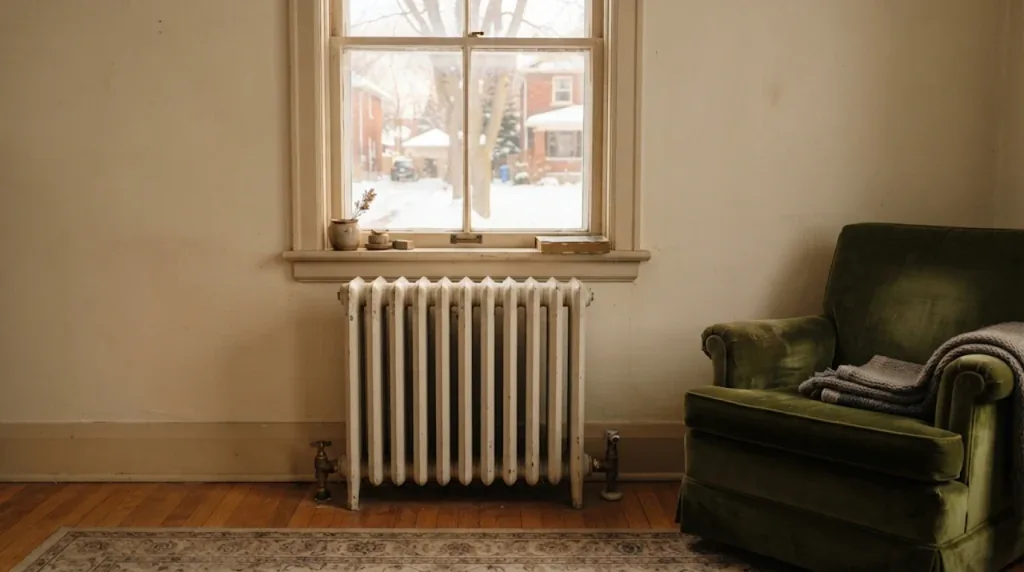
Before you start, find the bleed valve. It is a small fitting at the top corner of the radiator, usually on the side opposite the water inlet.
How to bleed radiators step by step
Here is how to bleed radiators safely in a typical hot water system:
- 1. Turn off the heat. Turn the thermostat down so the circulator pump stops, and let the radiators cool. Hot water under pressure can cause burns. Our winter thermostat settings guide explains how to return to your usual schedule afterward.
- 2. Start low and work up. Begin with radiators on the lowest floor and finish with those on the top floor, since air tends to rise to the highest points in the system.
- 3. Get ready to catch water. Hold the cloth and container under the bleed valve.
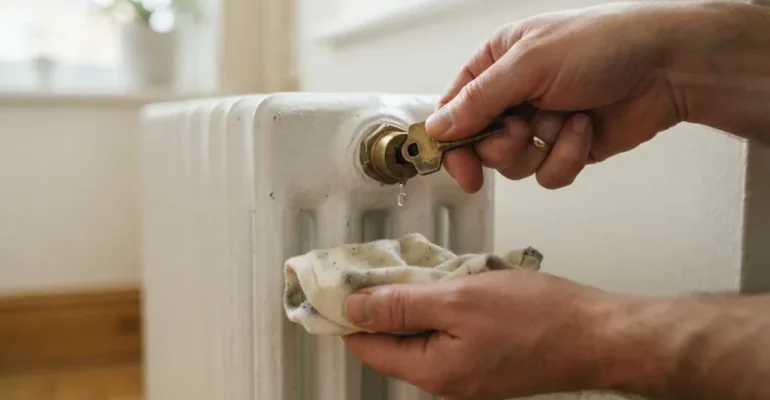
- 4. Open the valve slowly. Insert the key and turn it about a quarter turn counterclockwise. You should hear air hissing out.
- 5. Close it when water appears. As soon as the hissing stops and a steady trickle of water comes out, turn the key clockwise to close the valve. Do not overtighten.
- 6. Repeat for every radiator that was cold at the top.
- 7. Turn the heat back on and feel each radiator after it warms up. It should be warm from top to bottom.
Check the boiler pressure after bleeding
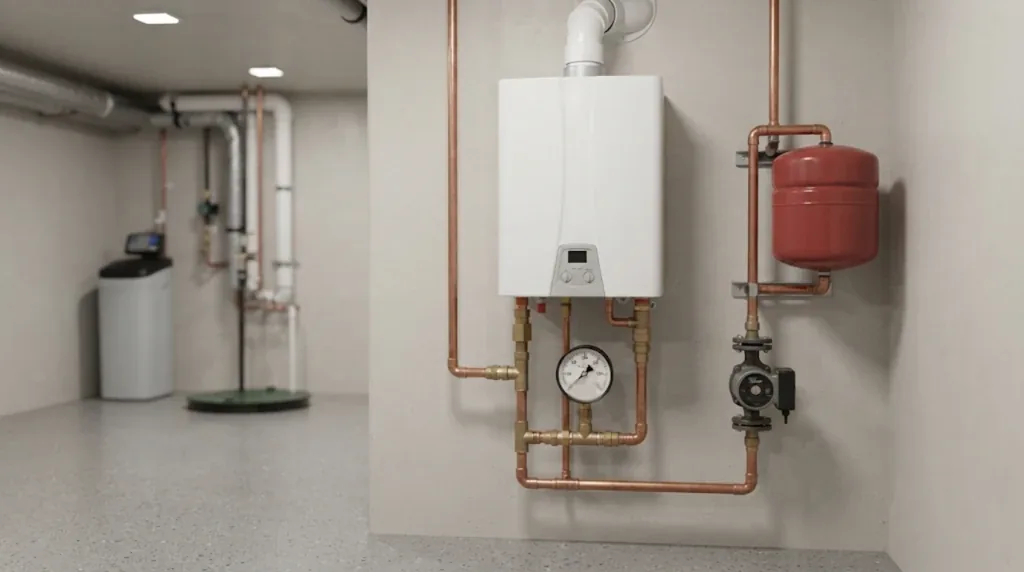
The last part of how to bleed radiators is checking the boiler. Letting air and a little water out of the system can lower the pressure. Once you finish, look at the pressure gauge on or near the boiler. Compare the reading with the normal range marked on the gauge or listed in your boiler manual. Many modern systems refill automatically through a fill valve. If the pressure stays below the normal range, or the boiler shows a low pressure fault, do not keep bleeding radiators. Call a technician to top up the system and find out why air is getting in. Our boiler vs furnace guide explains how these systems work.
Steam radiators are different
These steps on how to bleed radiators apply to hot water radiators only. Some very old homes have steam heat instead. Steam radiators usually have a small vent on the side, often shaped like a bullet or a small canister, rather than a bleed screw. Do not open or remove a steam vent while the system is running, since steam can cause serious burns. If a steam radiator stays cold or the vent hisses constantly, the vent may need replacing by a technician.
When knowing how to bleed radiators is not enough
Bleeding fixes trapped air, but it will not fix a failed circulator pump, a stuck zone valve, a leaking pipe, or a boiler that keeps losing pressure. Call a licensed technician if radiators are still cold after bleeding, if you have to bleed them every week, if water is leaking from a valve or pipe, or if the boiler shows error codes. If one room stays cold for other reasons, our uneven heating guide covers more causes. A yearly service through one of our maintenance and protection plans keeps a hot water system running smoothly through the winter.
Key terms in this article
- Bleed valve: a small valve at the top of a radiator used to let trapped air out
- Radiator key: a small key that fits the square bleed screw on a radiator
- Hydronic heating: a heating system that uses hot water pumped through radiators or pipes
- Circulator pump: the pump that moves hot water from the boiler to the radiators
- Pressure gauge: the dial on a boiler that shows system pressure
- Steam radiator: an older type of radiator heated by steam, with a vent instead of a bleed screw
Frequently asked questions
| Your how to bleed radiators questions, answered |
|---|
| How do I know if my radiators need bleeding? If a radiator is cold at the top and warm at the bottom, or you hear gurgling in the pipes, air is likely trapped inside and the radiator needs bleeding. |
| Should the heating be on or off when bleeding radiators? Off. Turn the thermostat down so the pump stops and let the radiators cool first. Hot water under pressure can cause burns, and air settles at the top when the water is still. |
| Which radiator should I bleed first? Start with the radiators on the lowest floor and work up to the top floor, since air tends to rise to the highest points in the system. |
| How often should I bleed my radiators? Once at the start of the heating season is usually enough, plus any time a radiator is cold at the top. If you need to bleed them often, air is getting in and a technician should check the system. |
| What should I do if the boiler pressure is low after bleeding? Many systems refill automatically. If the pressure stays below the normal range on the gauge or the boiler shows a fault, call a licensed technician to top up the system and find the cause. |
Do not take our word for it alone. Read our 364 verified reviews on Google, and see the Heating, Refrigeration and Air Conditioning Institute of Canada for what accredited contractors are expected to deliver.
References and further reading