Heat Pump Emergency Heat: What It Means and When to Use It
Heat Pump Emergency Heat: What It Means and When to Use It
 Ben Amina
Aire One East Heating & Cooling, 1910 Dundas St E #117, Whitby
Heat pump emergency heat is a setting on your thermostat that turns off the outdoor heat pump and runs your home on its backup heat source alone. It is there for one job: keeping you warm when the heat pump itself cannot run. Many Durham Region homeowners see the “EM HEAT” or “Emergency” option on their thermostat and are not sure whether to use it on a cold night. In most cases you should not. A modern heat pump is built to keep running through an Ontario winter, and switching to emergency heat too early can make your home more expensive to heat without making it any warmer. This guide explains what heat pump emergency heat actually does, how it differs from auxiliary heat, when it is the right choice, and the signs that mean it is time to call a technician.
- Heat pump emergency heat turns off the outdoor unit and heats the home with the backup source only.
- Auxiliary heat (AUX) comes on automatically to help the heat pump; emergency heat (EM) is a manual switch.
- Use emergency heat only when the heat pump is damaged, stuck in ice, or not producing heat.
- Backup heat usually costs more to run than the heat pump, so do not leave emergency heat on all winter.
- If you need emergency heat, book a heat pump repair so the outdoor unit can be checked.
Short answer: Heat pump emergency heat is a manual thermostat setting that shuts off the outdoor heat pump and runs only the backup heat, such as electric heat strips or a gas furnace. Use it only when the heat pump has stopped working or is damaged, and call a technician. In normal cold weather, leave the thermostat on regular heat.
Aire One East repairs heat pumps across Durham Region, including nights and weekends. Call 905-576-7600.
What heat pump emergency heat does
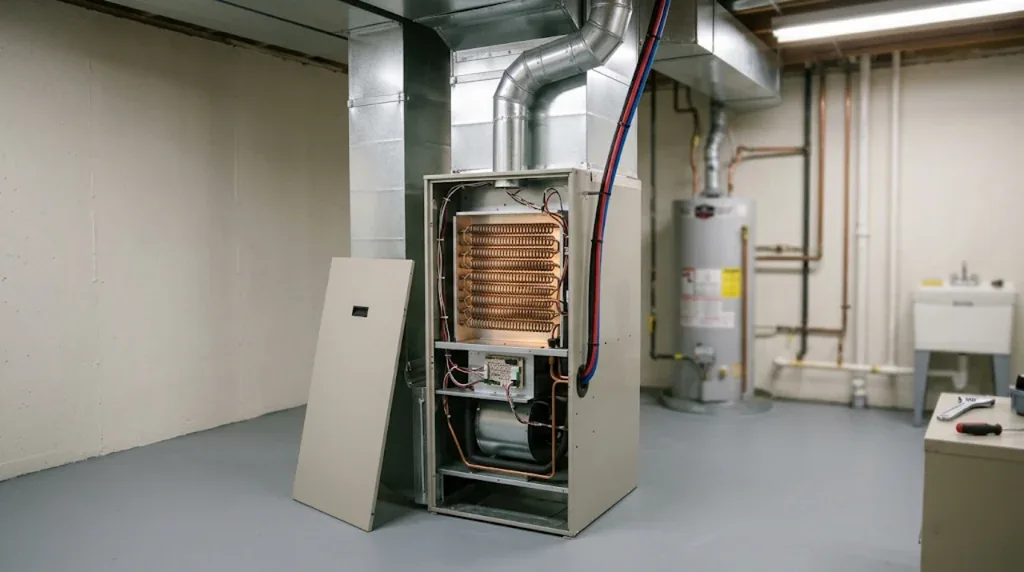
A heat pump heats your home by moving heat from the outdoor air to the inside, even when it is cold outside. Most heat pumps in Ontario are paired with a second heat source for backup. In an all electric system, that is a set of electric heat strips inside the indoor air handler. In a dual fuel heating system, the backup is a gas furnace.
When you choose heat pump emergency heat on the thermostat, the outdoor compressor is locked out completely. The thermostat runs only the backup source, and the indoor fan moves that heat through your ducts. On most thermostats, a light or an “EM HEAT” message stays on as long as this mode is active, so you know the heat pump itself is not running.
Auxiliary heat vs heat pump emergency heat
These two settings use the same backup heat, which is why they are easy to confuse. The difference is who turns them on and why.
- Auxiliary heat (AUX): comes on automatically and works together with the heat pump. It helps during the defrost cycle, on the coldest nights, or when you raise the thermostat several degrees at once. Seeing AUX on the display now and then is normal. Our heat pump defrost mode guide explains why.
- Emergency heat (EM): is a manual setting that you choose. It replaces the heat pump instead of helping it, and it stays on until you switch it back.
In short, auxiliary heat is a helper and heat pump emergency heat is a replacement. If AUX is running constantly in mild weather, that is a sign the heat pump is struggling and should be checked.
When to use heat pump emergency heat
Use heat pump emergency heat only when the heat pump cannot do its job. Common situations include:
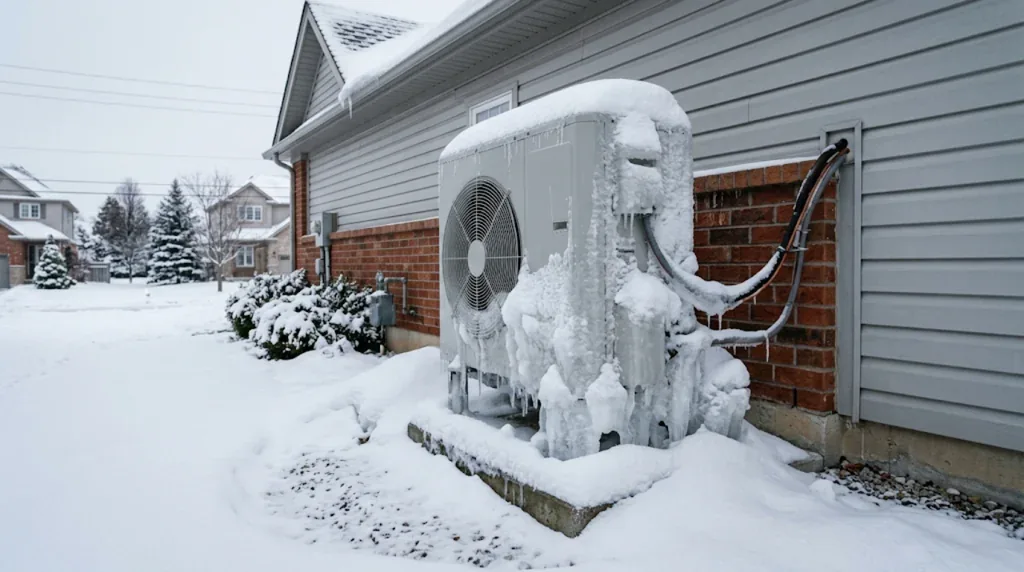
- The outdoor unit is covered in a thick block of ice that does not clear after a defrost cycle.
- A tree branch, ice from the roof, or snow removal has damaged the outdoor unit.
- The outdoor fan is not spinning, or the unit is making a loud grinding or banging noise.
- The heat pump runs but the air from the vents stays cold for a long time.
- A technician has asked you to switch to emergency heat until a repair is done.
In each case, switching to emergency heat protects the outdoor unit from further damage and keeps the house warm while you arrange a repair.
When not to use heat pump emergency heat
Cold weather on its own is not a reason to use emergency heat. Cold climate heat pumps are designed to keep heating well below freezing, and the system will bring in auxiliary heat automatically when it needs help. Turning on heat pump emergency heat during a normal cold snap simply replaces efficient heat with backup heat, which usually costs more to run.
It is also normal to see steam rising from the outdoor unit or hear a whoosh when it switches into defrost. Those are not emergencies. Our heat pump extreme weather guide covers what is normal in a deep freeze.
How to switch emergency heat on and off
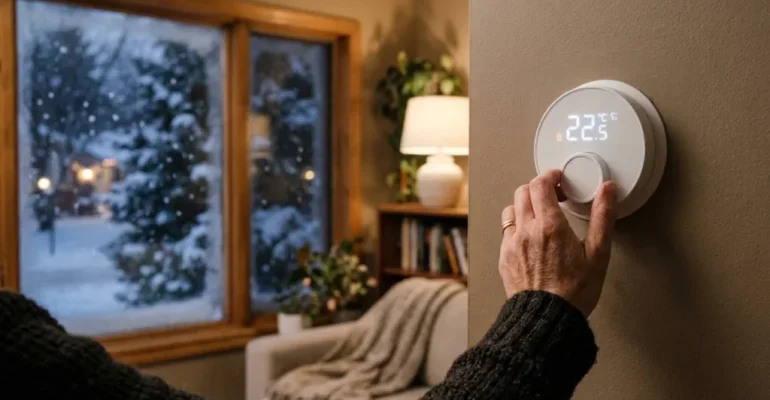
- Find the mode setting. On most thermostats, press Mode or System and look for “EM HEAT”, “Emergency”, or “Emergency Heat”. Smart thermostats often place it under the heating settings in the app.
- Select emergency heat and confirm the indicator appears on the display.
- Set a comfortable temperature and avoid large jumps, since the backup heat will do all the work.
- Switch back to Heat as soon as the heat pump is repaired.
Labels vary between brands, so check your thermostat manual if you cannot find the setting. If the thermostat screen is blank or it will not change modes, see our thermostat not working guide.
What it means when you need backup heat
Needing heat pump emergency heat is a sign that something is wrong with the heat pump. Common causes include a failed capacitor, a defrost control problem, low refrigerant, an outdoor fan motor that has stopped, or ice damage. Our heat pump not working guide walks through the safe checks you can try first.
Running on backup heat for a few days is fine, but it is not a long term fix. Book a heat pump repair in Durham Region so a licensed technician can find the cause. Regular heat pump maintenance before winter, or one of our maintenance and protection plans, catches many of these problems early.
Key terms in this article
- Emergency heat (EM): a manual thermostat setting that runs only the backup heat and locks out the heat pump
- Auxiliary heat (AUX): backup heat that turns on automatically to help the heat pump
- Heat strips: electric heating elements inside the air handler used for backup heat
- Air handler: the indoor unit that holds the fan and coil of a heat pump system
- Defrost cycle: a short cycle that melts frost from the outdoor coil in winter
- Dual fuel: a heat pump paired with a gas furnace as the backup heat source
Frequently asked questions
| Your heat pump emergency heat questions, answered |
|---|
| What does emergency heat do on a heat pump? Heat pump emergency heat turns off the outdoor heat pump and heats the home with the backup source only, such as electric heat strips in the air handler or a gas furnace in a dual fuel system. |
| Should I use emergency heat when it is very cold outside? No. Cold weather alone is not a reason to use emergency heat. A modern heat pump keeps heating below freezing and brings on auxiliary heat automatically when it needs help. |
| What is the difference between AUX heat and EM heat? AUX heat turns on automatically and helps the heat pump. EM heat is a manual setting that replaces the heat pump entirely and stays on until you switch it back. |
| Is it expensive to run heat pump emergency heat? Backup heat usually costs more to run than the heat pump itself, especially electric heat strips. That is why emergency heat should only be used until the heat pump is repaired. |
| How long can I run my heat pump on emergency heat? You can run it for as long as needed to stay warm while you arrange a repair, but it is a temporary measure. Book a heat pump repair so the outdoor unit can be fixed. |
Do not take our word for it alone. Read our 364 verified reviews on Google, and see the Heating, Refrigeration and Air Conditioning Institute of Canada for what accredited contractors are expected to deliver.
References and further reading