Carbon Monoxide Detector Placement: Where to Put CO Alarms in Your Home
Carbon Monoxide Detector Placement: Where to Put CO Alarms in Your Home
 Ben Amina
Aire One East Heating & Cooling, 1910 Dundas St E #117, Whitby
Carbon monoxide detector placement decides whether an alarm wakes your family in time. Carbon monoxide, often called CO, is a gas you cannot see, smell, or taste. It can come from a furnace, boiler, water heater, gas fireplace, stove, or a car running in an attached garage. In Ontario, homes with a fuel burning appliance, a fireplace, or an attached garage must have working CO alarms next to each sleeping area, and since January 1, 2026 the Ontario Fire Code also requires one on every storey. This guide explains where alarms should go, the spots to avoid, how to test and replace them, and what to do if one sounds in your Oshawa, Whitby, or Durham Region home.
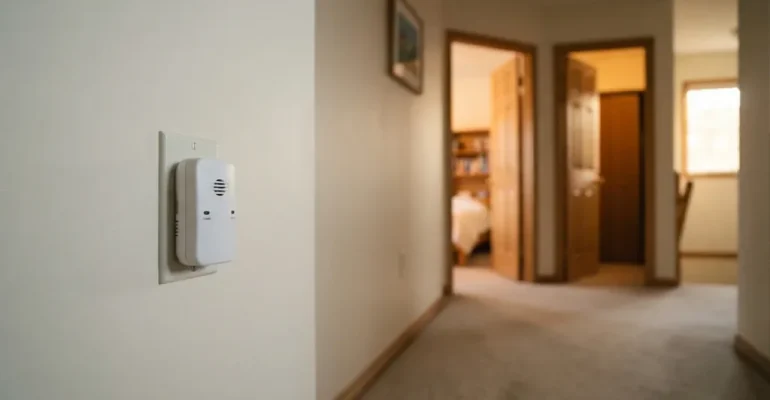
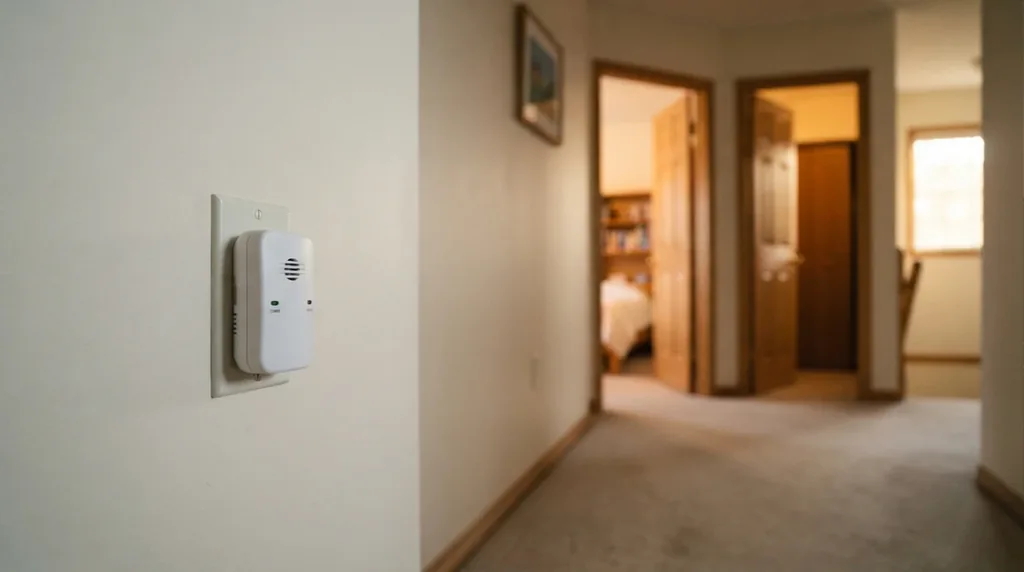
- Good carbon monoxide detector placement starts in the hallway outside each sleeping area.
- Ontario now requires a CO alarm on every storey of a home with a fuel burning appliance, a fireplace, or an attached garage.
- Follow the manufacturer’s instructions for mounting height and distance from appliances.
- Test alarms monthly, change batteries yearly, and replace the unit when it reaches its end of life.
- If an alarm sounds, get everyone outside and call 911 from outside.
Short answer: For carbon monoxide detector placement in Ontario, put an alarm in the hallway outside each sleeping area and at least one on every storey, including the basement. Mount it where the manufacturer says, away from bathrooms, fans, and the furnace itself. Test it monthly and replace it when it reaches the end of its life.
Aire One East checks furnaces, boilers, and water heaters for carbon monoxide across Durham Region. Call 905-576-7600.
What the Ontario Fire Code requires
The Ontario Fire Code requires working CO alarms in any home that has a fuel burning appliance, a fireplace, or an attached garage. Alarms must be installed next to each sleeping area, and from January 1, 2026, a CO alarm is also required on every storey of the home. Homeowners are responsible for installing and maintaining alarms, and landlords are responsible in rental units. It is illegal to remove a CO alarm or tamper with it, for example by taking the batteries out. Our furnace carbon monoxide guide explains where the gas comes from in a heating system. The sections below turn those rules into practical carbon monoxide detector placement for each level of your home.
Carbon monoxide detector placement: the best spots
These are the spots we recommend for carbon monoxide detector placement in a typical Durham Region home:
- Outside every sleeping area: in the hallway that leads to the bedrooms, so the alarm wakes people who are sleeping.
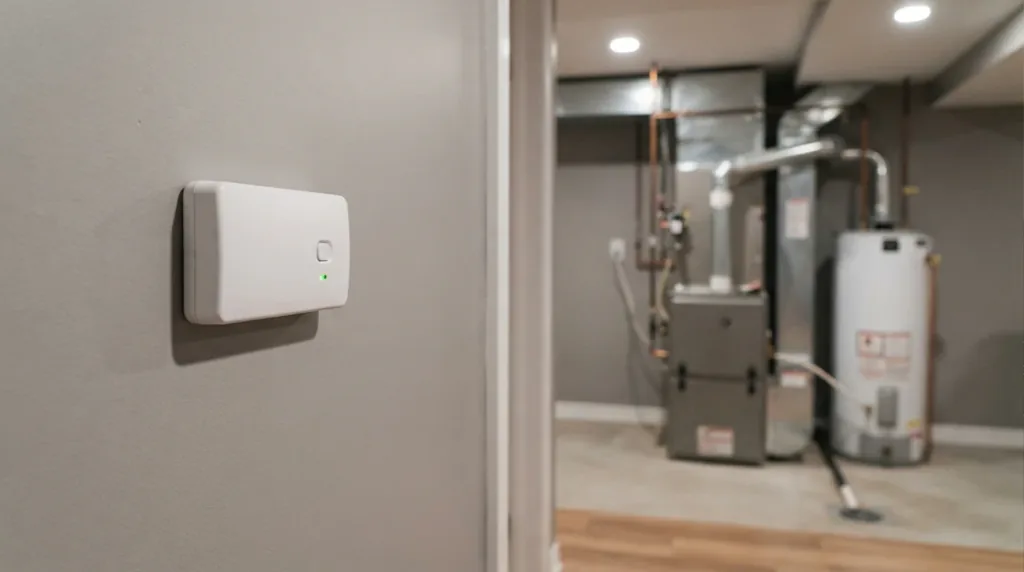
- Every storey: including the basement, where the furnace and water heater usually sit.
- Near the garage door: in the room next to an attached garage, since car exhaust is a common source.
- Mounting height: CO mixes with air, so follow the height on the package. Many models work on the wall or the ceiling, and plug in units sit near an outlet.
- Large homes: add an alarm in each separate bedroom wing.
Places to avoid when mounting a CO alarm
Poor carbon monoxide detector placement causes two problems: false alarms that people learn to ignore, and real alarms that nobody hears. Avoid these spots:
- Right beside the furnace, boiler, or water heater, where a short burst at start up can cause false alarms.
- Bathrooms and other humid rooms.
- Near windows, doors, fans, or vents, where fresh air can dilute the reading.
- Behind curtains or furniture, where air cannot reach the sensor.
- In the garage itself, unless the alarm is rated for it.
A good rule is to keep the alarm a few metres from fuel burning appliances, or the distance the manufacturer gives. If your furnace vent gets blocked by snow, exhaust can back up into the house, as our furnace vent blocked by snow guide explains.
Choosing the right CO alarm
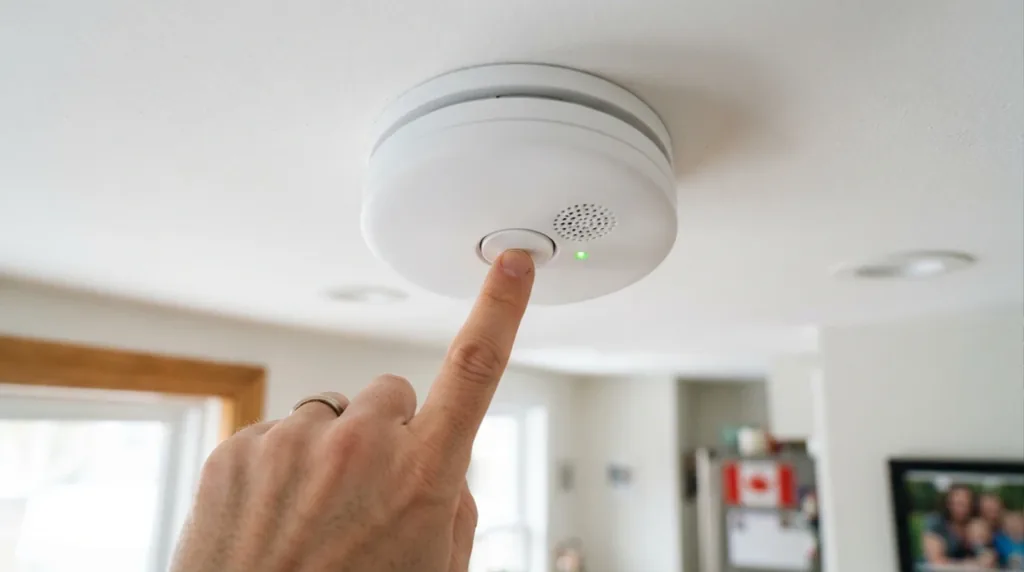
Good carbon monoxide detector placement only works if the alarm itself is reliable. Look for an alarm with a CSA, ULC, or ETL certification mark. Combination smoke and carbon monoxide alarms are allowed in Ontario and save space in hallways. Hardwired alarms with battery backup can be linked so that every alarm sounds when one detects CO. Battery and plug in alarms are easy to add on storeys that do not have one yet. Every alarm has a replacement date or an end of life warning, so write the install date on the back.
Testing and replacing your alarms
Even careful carbon monoxide detector placement will not help if the alarm is dead, so build these habits:
- Press the test button once a month.
- Change batteries at least once a year, or when the alarm chirps.
- Gently vacuum dust off the vents as the manual describes.
- Replace the whole unit when it reaches the end of life the manufacturer lists.
- Test again after any renovation, painting, or long time away from home.
What to do if your CO alarm sounds
If a CO alarm goes off, get everyone, including pets, out of the house right away and call 911 from outside. Do not go back in until emergency responders say it is safe. If anyone has headaches, dizziness, nausea, or feels unusually tired, tell the responders. After the home is cleared, have a licensed gas technician inspect every fuel burning appliance before you use them again. Our furnace repair team can find the source, and yearly furnace maintenance and boiler service include a carbon monoxide check. If you smell gas rather than hear an alarm, see our furnace smells like gas guide. Good carbon monoxide detector placement, paired with yearly service, is the best protection your family has.
Key terms in this article
- Carbon monoxide (CO): a colourless, odourless gas made when fuel does not burn completely
- Fuel burning appliance: a furnace, boiler, water heater, fireplace, or stove that burns gas, oil, propane, or wood
- Sleeping area: the bedrooms and the hallway that serves them
- Storey: one level of a home, including the basement
- Combination alarm: one device that detects both smoke and carbon monoxide
- End of life warning: a chirp or signal that the alarm must be replaced
Frequently asked questions
| Your carbon monoxide detector placement questions, answered |
|---|
| Where should a carbon monoxide detector be placed? In the hallway outside each sleeping area and on every storey of the home, including the basement, mounted where the manufacturer recommends. |
| Is a CO alarm required on every floor in Ontario? Yes. Since January 1, 2026, the Ontario Fire Code requires a CO alarm on every storey of a home with a fuel burning appliance, a fireplace, or an attached garage. |
| How far should a CO alarm be from a furnace? Keep it a few metres away, or the distance the manufacturer gives, so short bursts at start up do not cause false alarms. |
| Should a CO detector be high or low on the wall? Carbon monoxide mixes with air, so follow the mounting height on the package. Many alarms can go on the wall or ceiling. |
| Can I use a combination smoke and CO alarm? Yes. Combination alarms are allowed in Ontario as long as they carry a recognized certification mark such as CSA, ULC, or ETL. |
Do not take our word for it alone. Read our 364 verified reviews on Google, and see the Heating, Refrigeration and Air Conditioning Institute of Canada for what accredited contractors are expected to deliver.
References and further reading