Boiler Maintenance: A Yearly Checklist for Ontario Homes
 Ben Amina
Aire One East Heating & Cooling, 1910 Dundas St E #117, Whitby
Boiler maintenance keeps hot water heating systems safe, quiet, and efficient through a long Ontario winter. Many older homes in Oshawa, Whitby, Bowmanville, and across Durham Region still heat with a gas boiler and radiators or in-floor heat, and these systems can run for decades when they are looked after. A boiler works differently from a furnace. It heats water and pumps it through pipes, so it has its own parts to check, such as the pressure relief valve, the expansion tank, and the circulator pump. This guide explains what a yearly professional tune up includes, the simple checks you can do between visits, and the signs that your boiler needs service before the coldest weeks arrive.
- Yearly boiler maintenance by a licensed technician, ideally in the fall, keeps a gas boiler safe.
- A tune up checks the burner, venting, safety controls, pressure, and carbon monoxide levels.
- Homeowners can check the pressure gauge, bleed radiators, and look for leaks.
- Low pressure, banging pipes, and cold radiators are early warning signs.
- Working carbon monoxide alarms are a must in any home with a gas boiler.
Short answer: Boiler maintenance means a yearly tune up by a licensed gas technician, plus a few simple checks by the homeowner. The technician cleans and tests the burner, checks the venting, safety controls, expansion tank, pump, and pressure, and tests for carbon monoxide. Between visits, watch the pressure gauge, bleed radiators, and look for leaks.
Aire One East services gas boilers and hot water heating systems across Durham Region. Call 905-576-7600.
Why boiler maintenance matters
A boiler burns gas to heat water, so the same safety rules apply as with any gas appliance. A dirty burner wastes fuel and can produce carbon monoxide, a blocked vent can push exhaust back into the house, and a stuck safety valve can let pressure build. Regular service catches these problems early. It also keeps the boiler running efficiently and helps it last longer, which matters because boilers are larger and more involved to replace than most furnaces. Our boiler vs furnace guide explains how the two systems differ.
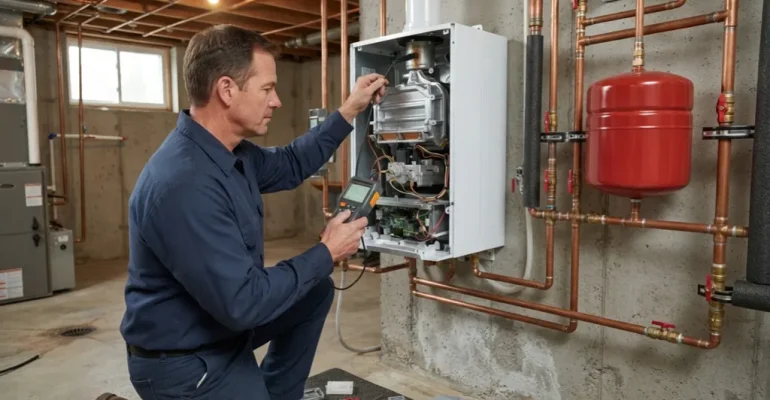
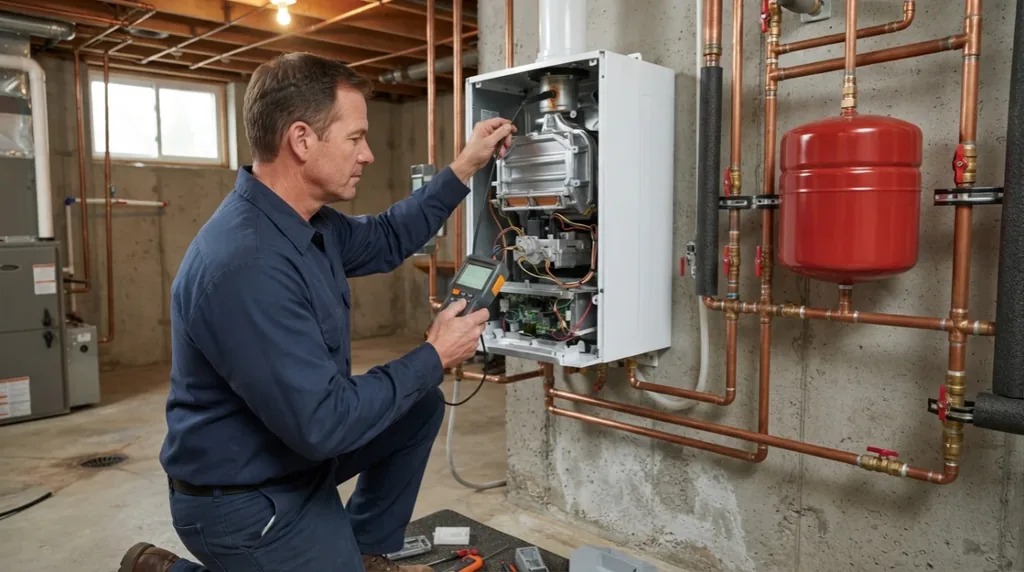
What a professional boiler maintenance visit includes
- Inspect and clean the burner and check the flame.
- Inspect the heat exchanger for corrosion, leaks, or soot.
- Check the venting and chimney or plastic pipes for blockages and leaks.
- Test the carbon monoxide level and the gas pressure.
- Test safety controls, including the high limit, the pressure relief valve, and the low water cut off if your boiler has one.
- Check the expansion tank charge, the circulator pump, and the system pressure.
- Check the condensate drain and neutralizer on a high efficiency boiler.
- Look for leaks at valves, fittings, and radiators.
Simple checks you can do between visits
Good boiler maintenance also includes a few simple checks you can do yourself:
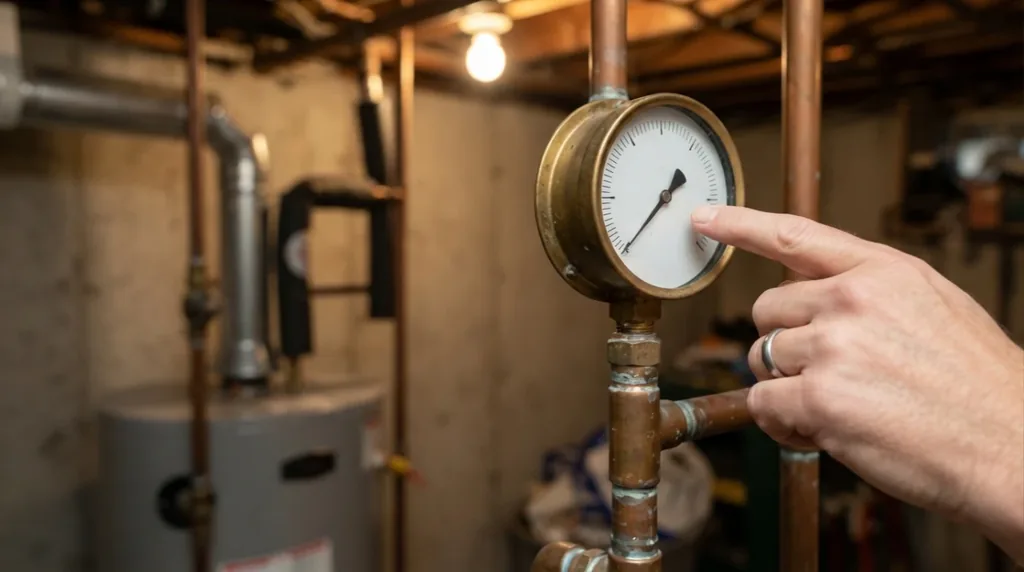
- Pressure gauge: most home systems read around 12 to 15 psi when cold. Follow the range on your boiler label, and call if it keeps dropping or climbs near the relief valve setting.
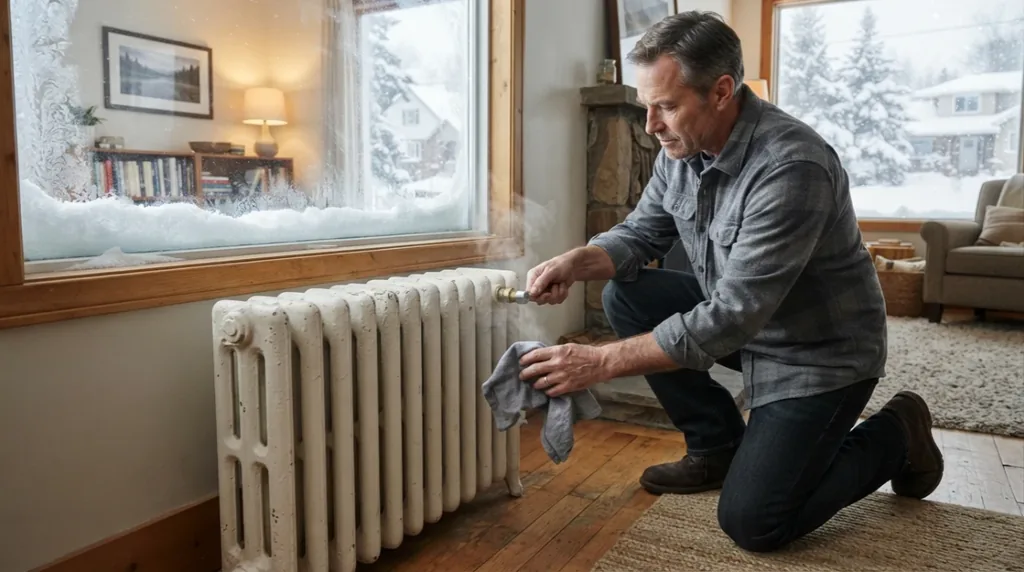
- Bleed radiators: if radiators are cold at the top, trapped air is the usual cause. Our how to bleed radiators guide shows the steps.
- Look for leaks: check under the boiler, around valves, and at radiator connections.
- Keep it clear: do not store boxes, paint, or cleaners near the boiler.
- Test your alarms: press the test button on your carbon monoxide alarms each month.
Signs your boiler needs service now
- Banging, gurgling, or whistling from the boiler or pipes.
- Pressure that keeps dropping, which can point to a leak or a failing expansion tank.
- Water dripping from the pressure relief valve.
- Some radiators staying cold even after bleeding.
- A yellow or flickering flame, soot, or a smell of exhaust.
- The pilot or burner going out again and again.
Our common boiler problems guide explains these in more detail. Most of them are caught early with regular boiler maintenance.
When to schedule boiler maintenance
The best time is early fall, before you need steady heat. Technicians are busier once the first cold snap hits, and a problem found in October is much easier to fix than a breakdown in January. If your boiler also heats your domestic hot water, regular service matters even more, since a problem affects both heat and hot water at once. A maintenance protection plan books your boiler maintenance visit each year so it does not slip.
Boiler safety and carbon monoxide
Any home with a gas boiler needs working carbon monoxide alarms, which our carbon monoxide guide explains. If an alarm sounds, everyone should leave the house and call 911 from outside. If you smell gas, leave and call Enbridge Gas or 911, as our gas smell guide describes. Work on burners, venting, gas valves, and safety controls must be done by a technician licensed by the TSSA. Regular boiler maintenance is the best way to keep those risks low.
Key terms in this article
- Boiler: an appliance that heats water for radiators, baseboards, or in-floor heating
- Pressure relief valve: a safety valve that opens if system pressure gets too high
- Expansion tank: a tank that absorbs the expansion of hot water in the system
- Circulator pump: the pump that moves hot water through the heating loops
- Low water cut off: a safety control that shuts the boiler off if water runs low
- Bleeding: letting trapped air out of a radiator through its small valve
Frequently asked questions
| Your boiler maintenance questions, answered |
|---|
| How often does a boiler need maintenance? Boiler maintenance by a licensed technician should happen once a year, ideally in early fall before the heating season. |
| What is included in boiler maintenance? A technician cleans and checks the burner, venting, heat exchanger, safety controls, expansion tank, pump, and pressure, and tests for carbon monoxide. |
| What should the pressure be on my boiler? Most home systems read around 12 to 15 psi when cold. Follow the range on your boiler label and call if it keeps dropping or rising. |
| Why is my boiler losing pressure? Common causes are a small leak, a failing expansion tank, or a pressure relief valve that is letting water out. A technician should check it. |
| Can I service my own boiler? Homeowner boiler maintenance is limited to checking the pressure, bleeding radiators, and looking for leaks. Burner, venting, gas, and safety control work must be done by a licensed technician. |
Do not take our word for it alone. Read our 364 verified reviews on Google, and see the Heating, Refrigeration and Air Conditioning Institute of Canada for what accredited contractors are expected to deliver.
References and further reading