Gas vs Electric Furnace: Which Wins in Ontario? (2026)
Gas vs Electric Furnace: Which Wins in Ontario? (2026)

Aire One East Heating & Cooling, 1910 Dundas St E #117, Whitby
Gas vs electric furnace is the choice between a furnace that burns natural gas to make heat and one that heats with electric elements. For a Durham home facing real Ontario winters, the right answer usually comes down to running cost, heating power, and whether your home has a gas line. This guide compares them side by side. For new systems, see our furnace installation page.
- In gas vs electric furnace, a gas furnace usually costs less to run in Ontario because natural gas is cheaper than electricity.
- An electric furnace costs less up front and is simpler to install, with no gas line or venting needed.
- Gas furnaces heat faster and stronger, which suits a cold Durham winter; electric furnaces work harder in deep cold.
- An electric furnace has no combustion, so no carbon monoxide risk, while a gas furnace needs venting and a yearly safety check.
- For most Durham homes on natural gas, a high-efficiency gas furnace wins; electric suits homes with no gas line.
Short answer: in gas vs electric furnace, choose a gas furnace if your home has a natural gas line and you want lower running costs and stronger heat, and an electric furnace if you have no gas line or want the lowest up-front cost.
For gas vs electric furnace, Aire One East sizes and installs both across Durham Region, and can also compare a heat pump. Call 905-576-7600.
Gas vs electric furnace: how they differ
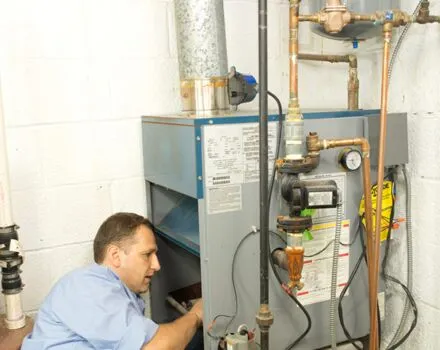
The heart of gas vs electric furnace is how each one makes heat. A gas furnace burns natural gas (or propane) in a set of burners, and a blower moves that warmed air through your ducts. An electric furnace passes electricity through heating elements, much like a giant toaster, and blows the heated air through the same ducts. Both are forced-air systems, but the fuel source changes the cost, the installation, the safety needs, and how each performs in the cold. Here is how gas vs electric furnace stacks up for a Durham homeowner.
| Feature | Gas furnace | Electric furnace |
|---|---|---|
| Energy source | Natural gas or propane | Electricity |
| Efficiency | AFUE about 80 to 98 percent | Near 100 percent at the unit |
| Up-front cost | Higher | Lower |
| Running cost in Ontario | Usually lower, gas is cheaper | Usually higher, electricity costs more |
| Cold-weather heating | Strong and fast | Slower, works harder in deep cold |
| Typical lifespan | 15 to 20 years | 20 to 30 years |
| Safety | Combustion, needs venting and CO checks | No combustion, no carbon monoxide |
| Installation | Needs a gas line and venting | Simpler, no venting required |
Gas vs electric furnace: cost and efficiency
On up-front price, an electric furnace usually wins gas vs electric furnace, because it costs less to buy and is simpler to install with no gas line or venting. But the picture flips on running cost. In Ontario, natural gas is generally cheaper per unit of heat than electricity, so a gas furnace usually costs less to run over a long, cold heating season, which is why it is the most common choice across Durham. On efficiency, an electric furnace converts nearly all the electricity it draws into heat at the unit, while a gas furnace is rated by AFUE, with high-efficiency models reaching the mid-to-high 90s. The catch is that cheaper gas often makes a gas furnace cheaper to operate even at a lower efficiency rating, which settles gas vs electric furnace for many Durham homes.
Which is better for an Ontario winter?
For a cold Ontario winter, a gas furnace usually has the edge in gas vs electric furnace, because it produces strong heat quickly and keeps running costs down through months of heavy use. An electric furnace can absolutely keep a Durham home warm, but in a deep freeze it works harder and the higher electricity cost adds up over a long season. Where an electric furnace shines is a home with no natural gas connection, since it avoids the cost of bringing in a gas line. It is also worth knowing there is a third option: a cold-climate heat pump heats far more efficiently than an electric furnace and can pair with a gas furnace in a dual-fuel setup.
Which should you choose?
Put simply, gas vs electric furnace comes down to your home and your priorities. Choose a gas furnace if you have a natural gas line, want lower running costs, and need strong heat for a cold Durham winter, which fits most homes in the region. Choose an electric furnace if your home has no gas connection, you want the lowest up-front cost, or you value not having any combustion in the house. And before deciding either, it is worth pricing a heat pump, which our heating team can compare for you, since it often beats an electric furnace on running cost. A maintenance plan keeps whichever you choose running safely.
Key terms in this article
- Gas furnace: a furnace that burns natural gas or propane in burners to heat air.
- Electric furnace: a furnace that heats air with electric resistance elements, with no combustion.
- AFUE: Annual Fuel Utilization Efficiency, a furnace's heating efficiency rating; modern gas units reach the mid-to-high 90s.
- Heat exchanger: the gas-furnace part that separates combustion gases from your home air; a crack can leak carbon monoxide.
- Dual-fuel: a heat pump paired with a gas furnace that takes over in deep cold.
Frequently asked questions
| Your furnace questions, answered |
|---|
| Is a gas or electric furnace better in Ontario? For most Ontario homes on natural gas, a gas furnace is better in gas vs electric furnace because it costs less to run and heats strongly through a cold winter. An electric furnace is the better choice for homes with no gas line or a preference for no combustion. |
| Is a gas furnace cheaper to run than electric? Usually yes in Ontario, because natural gas is generally cheaper per unit of heat than electricity. Over a long heating season, that difference adds up, which is why gas furnaces are the most common choice across Durham Region despite a higher up-front cost. |
| Which lasts longer, a gas or electric furnace? An electric furnace typically lasts longer, about 20 to 30 years, because it has fewer moving parts and no combustion. A gas furnace usually lasts 15 to 20 years. Regular maintenance is what pushes either toward the upper end of its range. |
| Is an electric furnace safer than a gas furnace? An electric furnace has no combustion, so there is no carbon monoxide risk and no venting to maintain. A gas furnace is very safe when properly installed and inspected yearly, but it does require a working CO alarm and a check for a cracked heat exchanger. |
| Should I get a heat pump instead of a furnace? For many Durham homes, it is worth considering. A cold-climate heat pump heats far more efficiently than an electric furnace, cools in summer, and can pair with a gas furnace in a dual-fuel setup. We compare all the options so you can choose on the numbers. |
Do not take our word for it alone. Read our 364 verified reviews on Google, and see the Heating, Refrigeration and Air Conditioning Institute of Canada for what accredited contractors are expected to deliver.