Duct Sealing: Signs of Leaky Ducts and How Sealing Helps
 Ben Amina
Aire One East Heating & Cooling, 1910 Dundas St E #117, Whitby
Duct sealing closes the gaps, loose joints, and holes in your heating and cooling ductwork so the warm air your furnace or heat pump makes actually reaches your rooms. In many Durham Region homes, ducts run through unfinished basements, attics, garages, and wall cavities, and over the years the seams loosen and old tape dries out and falls off. Every leak lets heated air escape into spaces you do not live in, while dusty, unconditioned air gets pulled back into the system. The result is rooms that never warm up, a furnace that runs longer than it should, and more dust on your furniture. This guide explains how duct sealing works, the signs your ducts are leaking, the materials that last, which parts you can do yourself, and when to call a professional.
- Duct sealing closes gaps and loose joints so heated air reaches your rooms instead of the basement or attic.
- Signs of leaky ducts include cold rooms, extra dust, high bills, and a furnace that runs a long time.
- Mastic sealant and approved foil tape last much longer than cloth duct tape.
- Ducts in attics, garages, and crawl spaces should be sealed and then insulated.
- Sealing works best when it is paired with a check of airflow, filters, and the furnace.
Short answer: Duct sealing is the process of closing leaks in your ductwork with mastic sealant or approved foil tape so heated and cooled air reaches your rooms. It improves comfort in cold rooms, reduces dust, and helps your furnace or heat pump work less. Ducts in unheated spaces should be sealed and insulated.
Aire One East inspects and services ductwork across Durham Region. Call 905-576-7600.
Where ducts leak in a typical home
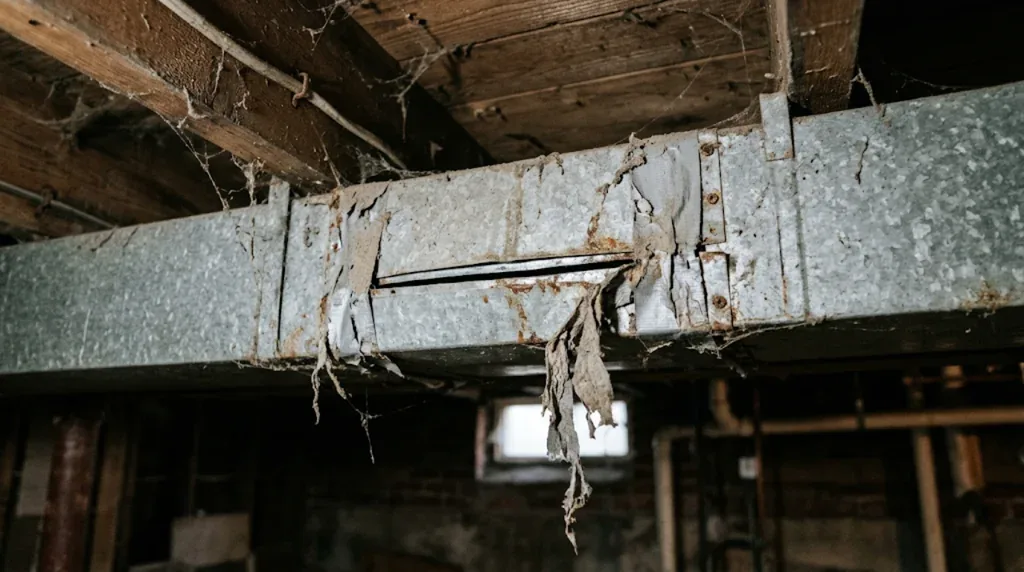
Leaks happen anywhere two pieces of ductwork meet. The most common spots are the joints between straight runs, the elbows, the connections to the furnace plenum, the boots behind floor and wall registers, and return air panels that use the space between floor joists. Older tape dries out, screws work loose, and renovations can leave connections half finished.
The leaks that matter most are in spaces you do not heat, such as an attic, garage, or crawl space. There, escaping warm air is simply lost. ENERGY STAR, listed in the references, notes that sealing leaky ducts helps a heating and cooling system run more efficiently. That is the main reason sealing is worth doing.
Signs your home needs duct sealing
- Rooms that never get warm, especially the ones farthest from the furnace. Our uneven heating guide covers other causes too.
- More dust than usual, because leaky return ducts pull in dusty air from the basement or wall cavities.
- Heating bills that keep climbing with no change in how you use the thermostat.
- A furnace or heat pump that runs for long stretches but struggles to reach the set temperature.
- Ductwork you can see with gaps, crushed sections, or peeling tape.
- Weak airflow from some registers while others blow hard.
How professionals seal ductwork
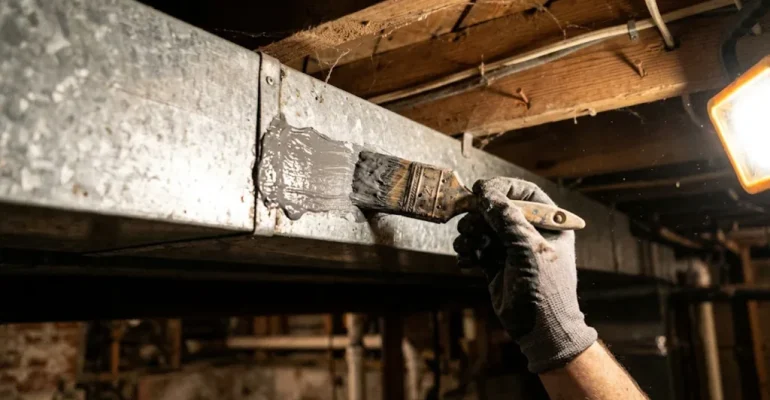
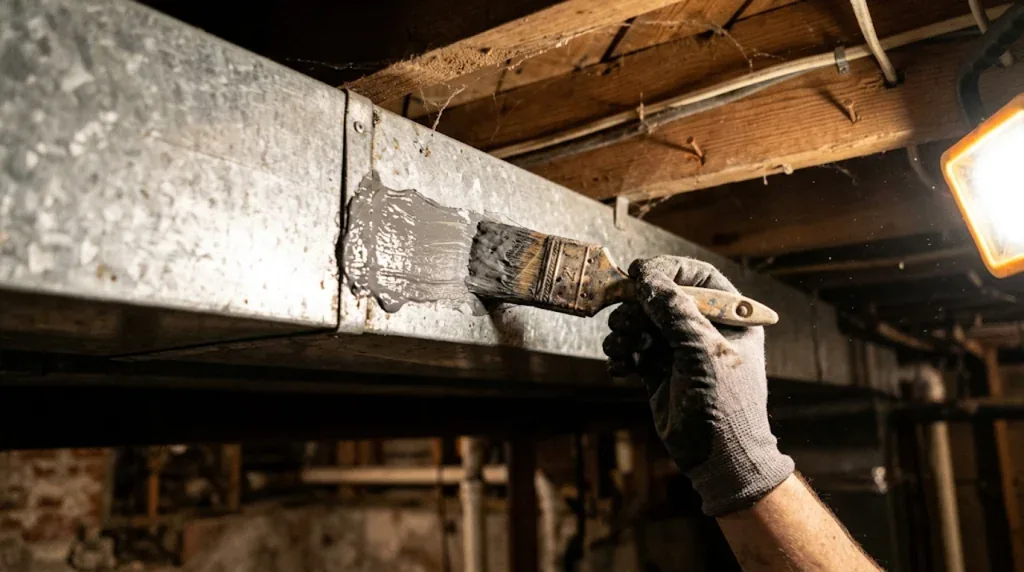
A technician starts by inspecting every accessible run of ductwork and the connections at the furnace. In many homes, the main leaks are at the plenum, the trunk joints, and the branch takeoffs. These are cleaned and sealed with a brushed on mastic sealant, which dries into a flexible, airtight layer, or with foil tape rated for ductwork. Larger gaps are fastened with sheet metal screws first, then sealed.
Some contractors also offer duct sealing from the inside, where a sealant is blown through the system to close small leaks that cannot be reached. After sealing, the technician checks airflow at the registers and makes sure the furnace is not straining against too little return air.
Duct sealing you can do yourself
If your basement ductwork is exposed, you can seal many of the joints yourself:
- Turn off the furnace or heat pump at the thermostat before you start.
- Wipe the joint clean so the sealant can stick.
- Brush water based mastic over the seam, or apply foil tape rated for ducts and press it down firmly.
- Do not use cloth duct tape. Despite the name, it dries out and falls off.
- Never seal over the furnace flue pipe or anything that carries exhaust gases.
Replace the furnace filter when you finish, since sealing can loosen dust. Our furnace filter guide explains which filter to use.
Insulating ducts after sealing
Ducts that run through an attic, garage, or crawl space lose heat through the metal itself, even when every joint is tight. After duct sealing, wrap those runs in duct insulation to keep the air warm on its way to your rooms. Inside the heated part of the house, insulation is less important. If condensation is a problem on cooling ducts in summer, insulation helps there too. For homes with very uneven floors, our HVAC zoning guide explains another way to balance comfort.
Duct sealing, cleaning, and maintenance together
Duct sealing and duct cleaning solve different problems. Cleaning removes dust and debris that has built up inside, while sealing stops new dust and lost heat from leaking in and out. Many homeowners book them together. Our air duct cleaning and dust guide explains the difference, and our vent and air duct cleaning service covers homes across Durham Region.
It also helps to have the furnace checked at the same visit, since a dirty blower or clogged filter can mimic the signs of leaky ducts. Our furnace maintenance guide and maintenance and protection plans cover what a tune up includes.
Key terms in this article
- Mastic: a thick sealant brushed onto duct joints that dries into a flexible, airtight layer
- Plenum: the large box on the furnace where ductwork connects
- Trunk line: the main duct that carries air from the furnace to the branch ducts
- Return duct: a duct that carries air from the rooms back to the furnace
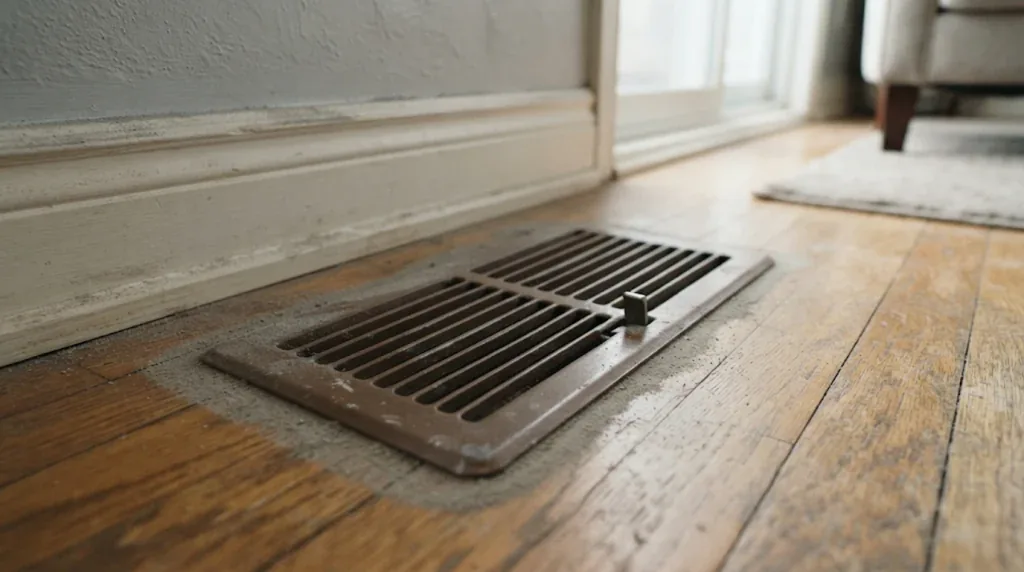
- Register: the grille on a floor, wall, or ceiling where air enters or leaves a room
- Foil tape: an aluminum tape rated for sealing ductwork, unlike cloth duct tape
Frequently asked questions
| Your duct sealing questions, answered |
|---|
| What is duct sealing? Duct sealing is the process of closing gaps, loose joints, and holes in heating and cooling ductwork with mastic sealant or approved foil tape, so conditioned air reaches your rooms instead of leaking out. |
| How do I know if my ducts are leaking? Common signs are rooms that never get warm, more dust than usual, rising heating bills, weak airflow from some registers, and visible gaps or peeling tape on the ductwork. |
| Can I seal my own ducts? Yes, for exposed basement ductwork. Turn off the system, clean the joints, and use mastic or foil tape rated for ducts. Do not use cloth duct tape, and never seal the furnace flue. |
| Is duct sealing the same as duct cleaning? No. Duct cleaning removes dust and debris from inside the ducts. Duct sealing closes leaks so dust and heat stop escaping or getting in. Many homeowners do both. |
| Should ducts be insulated after sealing? Ducts that run through attics, garages, or crawl spaces should be insulated after sealing to keep the air warm on its way to your rooms. |
Do not take our word for it alone. Read our 364 verified reviews on Google, and see the Heating, Refrigeration and Air Conditioning Institute of Canada for what accredited contractors are expected to deliver.
References and further reading